There is no single price for industrial liquid cold glue in Kenya. The price per kilogram or per litre depends on the grade, what you are bonding, how fast your line runs, how much you buy and how it is delivered. This guide explains each of those, so you can ask for a quote that gets a straight answer and compare two quotes fairly.
The short answer
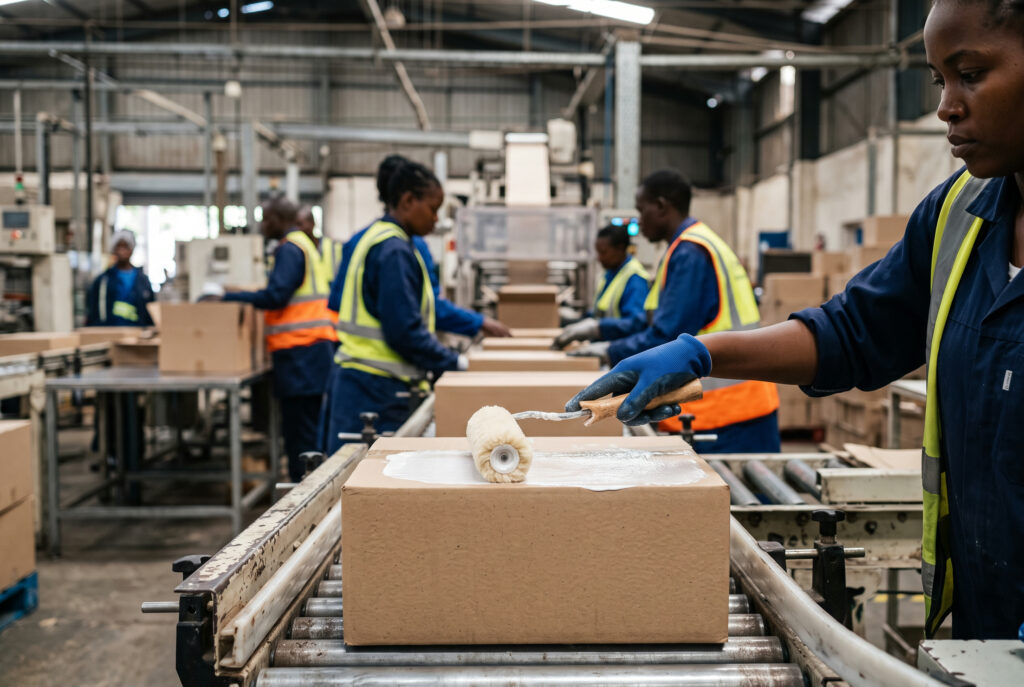
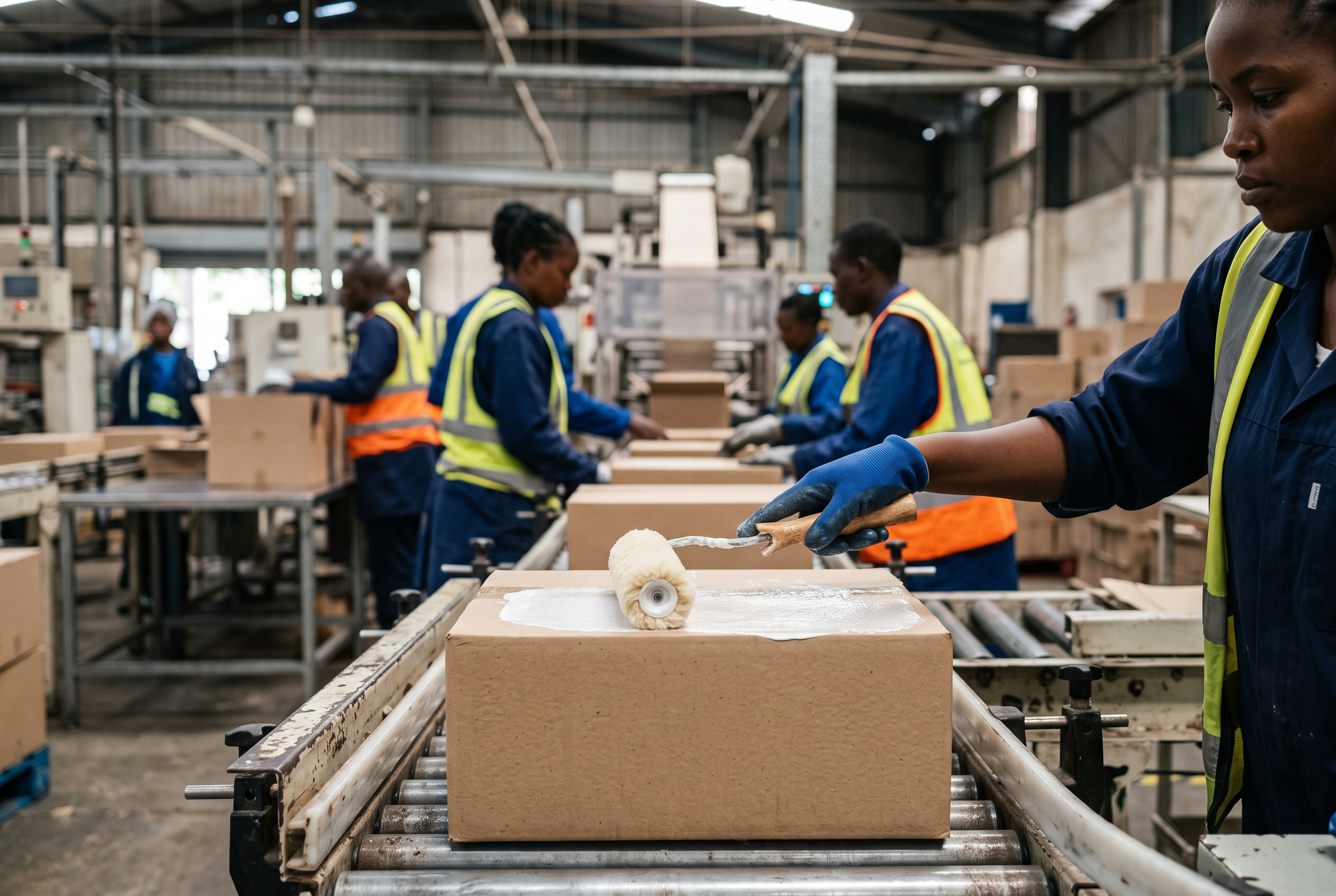
Search for glue prices in Kenya and most results are small bottles of school and craft glue, or wood glue sold by the tin. A factory that glues cartons, paper bags, labels or envelopes buys something different.
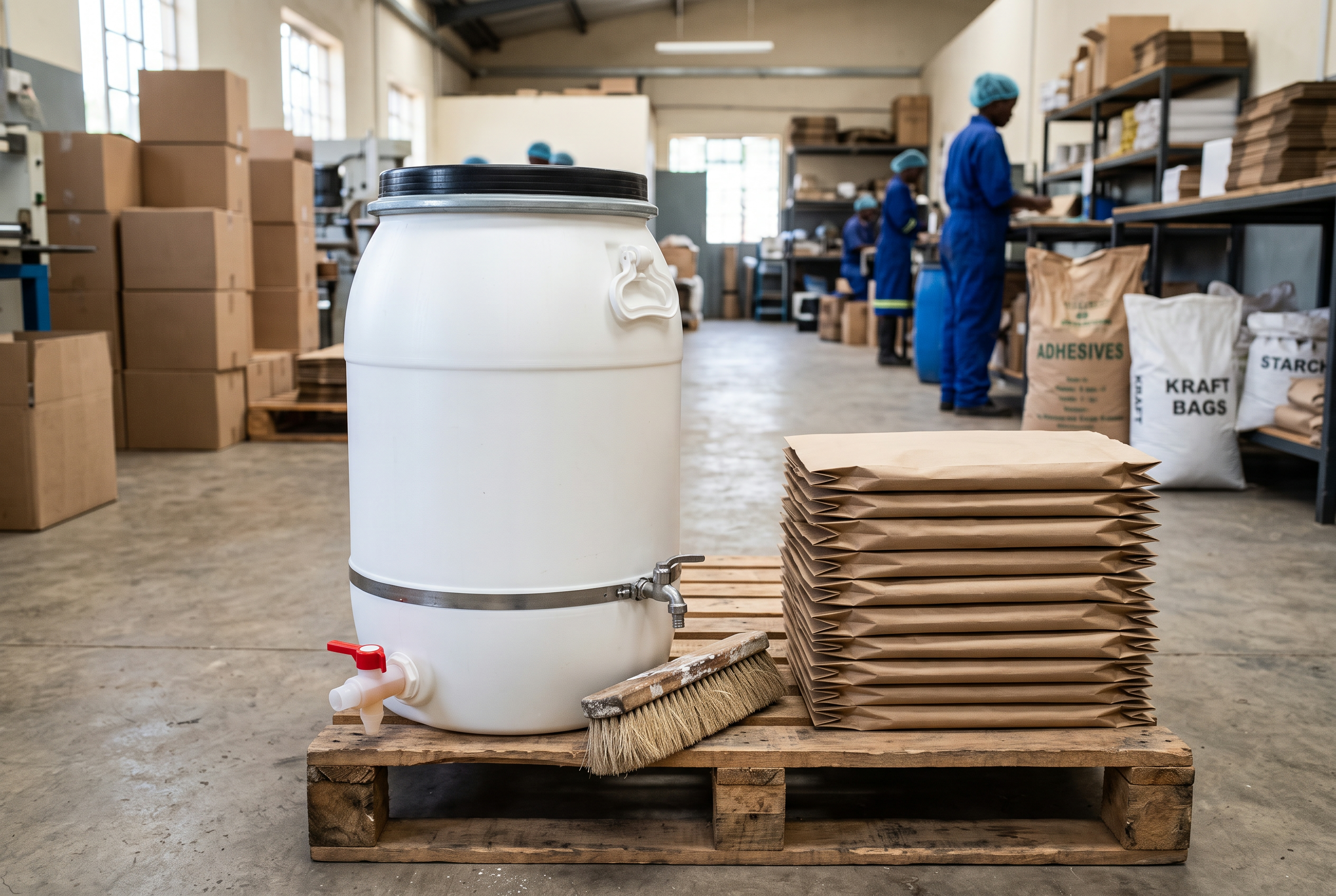
Thika Wax Works makes water-based liquid cold glues under the Tiger Glue name. They are cold-applied, dry clear and come in 20 kg or 20 litre containers, with a 150 kg pack for one grade. The price depends on the seven things below.
Price factors
Why one cold glue costs more than another
Two drums of white liquid glue can look the same and behave very differently on your line. These are the things that change the price, and what to tell your supplier about each.
| What changes the price | What it means for you |
|---|---|
| Grade of glue | Slow-speed grades for hand work are priced differently from fast-setting grades made for high-speed machines. Say which kind of line you run. |
| What you are bonding (the scope of the job) | Kraft paper, recycled board, labels, envelopes, folders and cartons each need a different tack and open time. The harder the surface, the more specialised the grade. |
| Line speed and how you apply it | A fast machine needs a glue that grabs quickly. Hand application suits a glue with a longer working time, so you can reposition the paper. |
| Pack size | Our glues come in 20 kg or 20 litre containers, and one grade also comes in 150 kg. Larger packs usually work out cheaper per kg. |
| Volume and how often you order | A one-off drum costs more per kg than a standing monthly order. Say how many containers you expect to use each month. |
| How long you will buy for | A trial order and a six-month or twelve-month supply are quoted differently. A longer commitment usually gives you a steadier price. |
| Delivery | Thika, Nairobi, upcountry and export orders have different delivery costs. Always compare prices with delivery included. |
Cost per unit
Price per kg is not what you actually pay
The cost that matters is the cost of glue on each carton, bag or label you finish. That depends on how much glue your machine or brush puts down, not only on the price of the drum.
Use this simple sum:
Cost of glue per unit = price per kg ÷ 1,000 × grams of glue on each unit
Here is an example with round numbers, to show the arithmetic. These are not our prices. A line makes 10,000 paper bags a day and uses 1.5 g of glue on each. That is 15 kg of glue a day. Now suppose glue A costs 10% more per kg than glue B, but it spreads thinner and you use 20% less per bag. Glue A is then the cheaper glue to run, even though its drum costs more.
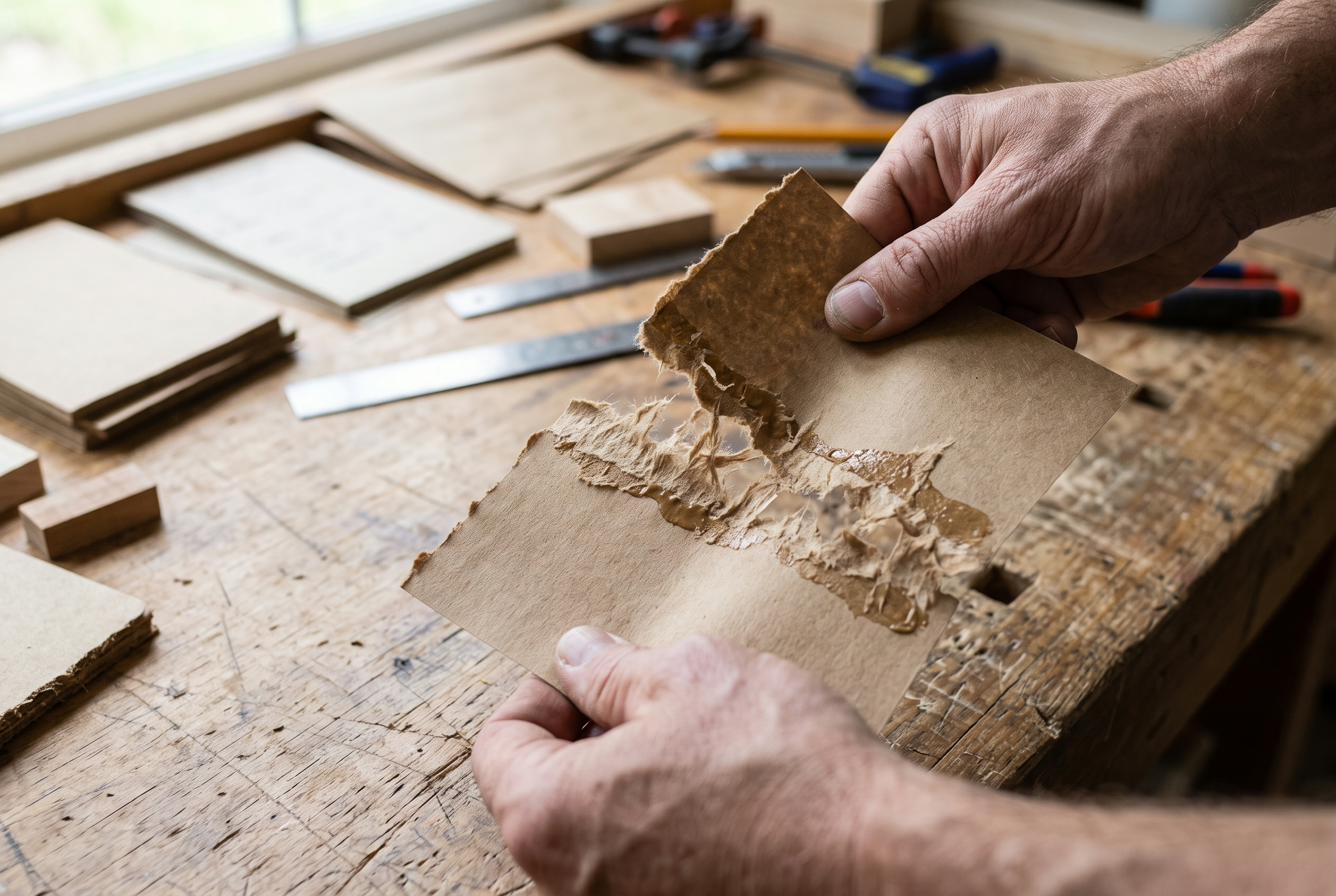
A cheaper glue can also cost you in other ways. If it dries slowly, warps the paper or lets seams open, you pay for slower lines and rejected goods. A glue that grabs fast and dries clear keeps the line moving.
Comparing quotes
How to compare two quotes fairly
- Ask for the price per kg and per container, and check the pack size is the same. Some glues are sold by the litre and some by the kilogram.
- Check that delivery is included in both quotes.
- Ask which grade is quoted and what it is meant for. A cheaper quote may be for a grade that does not suit your machine.
- Ask for a sample you can test on your own line before you commit to a bulk order.
- Ask how long the price holds and what the payment terms are.
Get a quote
What to tell us to get a fast, accurate quote
You do not need to know the grade. Send us these details and we will recommend one:
- What you are bonding, for example paper bags, cartons, labels, envelopes or folders.
- Whether you glue by hand, with a roller or on a machine, and how fast the line runs.
- How many units you finish a day, or how much glue you use now.
- How many 20 kg or 20 litre containers you expect to need each month.
- Where we should deliver, and when you want to start.
- How long you plan to buy for: a trial, six months or a year.
See our liquid cold glues range for what we supply, or ask for a quote.
Applications
Where liquid cold glue is used
Our liquid cold glues are water-based and applied cold, with no heating needed. They are used for carton sealing, label attachment, high-speed paper packaging, envelopes and folders, and slower hand-applied craft paper packaging. They dry clear, have low odour, and have a shelf life of two years.
To go deeper, read our guides on liquid cold glues, how to apply liquid adhesives, cold glue for paper bags, hot melt against cold glue for cartons and why glue fails on cardboard.
FAQ
Your questions answered
How much does cold glue cost in Kenya?
It depends on the grade, the pack size, your monthly volume and delivery. Factory-grade cold glue is quoted per kg or per container, so the best way to get a real figure is to send us what you are bonding and how much you use.
What is cold glue?
Cold glue is a water-based liquid adhesive that is applied without heat. It is used on paper, cardboard and other porous materials, by hand, with a roller or on a machine.
What is the difference between cold glue and hot melt?
Cold glue is a liquid that sets as the water leaves the paper, and needs no heating. Hot melt is melted in a tank and sets as it cools. Cold glue suits porous surfaces and slower or hand-fed work. Hot melt suits fast machines and a wider range of surfaces.
Is liquid cold glue safe to use?
Our liquid cold glues are water-based with low odour and low VOC, which makes them easier on workers than solvent glues. Follow the safety data sheet and keep it away from food.
How long does liquid cold glue last in the container?
Our liquid cold glues have a shelf life of two years. Keep the container closed and stored away from frost and direct heat.
What will liquid cold glue not stick to?
It works best on porous surfaces such as paper, board and cardboard. It struggles on oily, waxy and plastic surfaces that water cannot soak into. Test a sample first.
What pack sizes do you supply?
Most of our liquid cold glues come in 20 kg or 20 litre containers. One grade is also available in 150 kg. Ask us if you need something different.
Can I get a sample before a bulk order?
Yes. Tell us what you are bonding and we will recommend a grade. Ask for a sample you can test on your own line before you order in bulk.
Get a price for your line
Send us what you are bonding, how you apply the glue and your monthly volume. We will recommend a grade and quote for it.

Akshay Chandaria is the Sales Director at Thika Wax Works Limited, a manufacturer of industrial waxes, hot melt and cold glue adhesives, floor polishes, cleaning products and construction chemicals for businesses across Kenya.