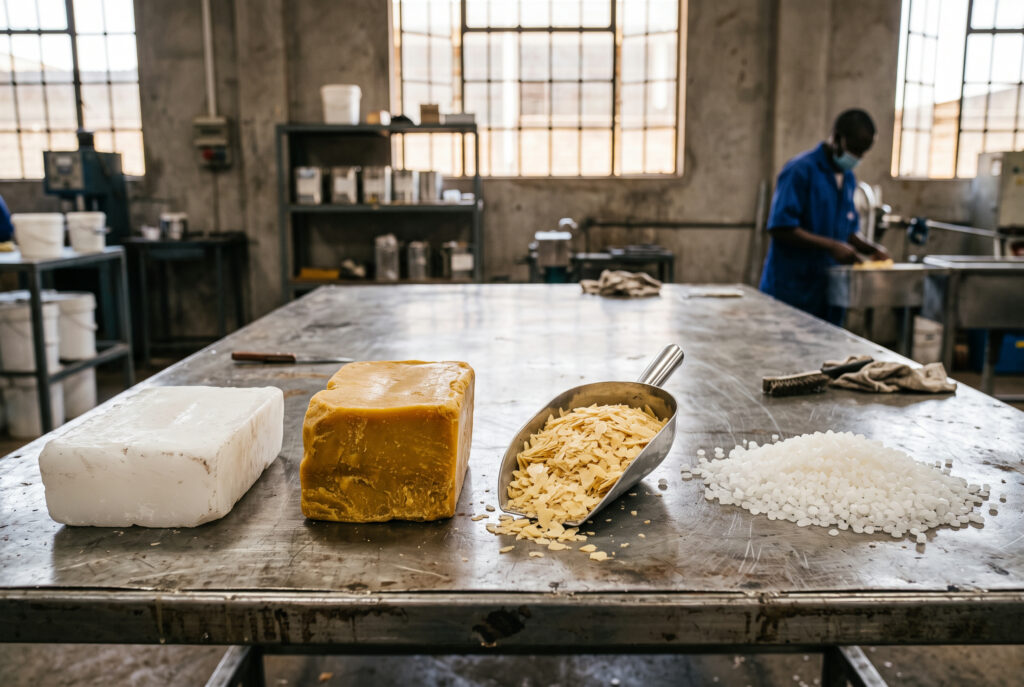
There is no single price for wax in Kenya. Paraffin, candle wax, beeswax, carnauba and moulded wax are different products, and the price per kilogram depends on which one you need, how refined it is, how much you buy and how it is delivered. This guide explains each of those, so you can ask for a quote that gets a straight answer and compare two quotes fairly.
The short answer
Search for wax prices in Kenya and you will find small packs of candle wax and beeswax for hobbies and crafts. A candle maker, packaging plant or cosmetics factory buys wax by the sack and needs a quote built around its own job.
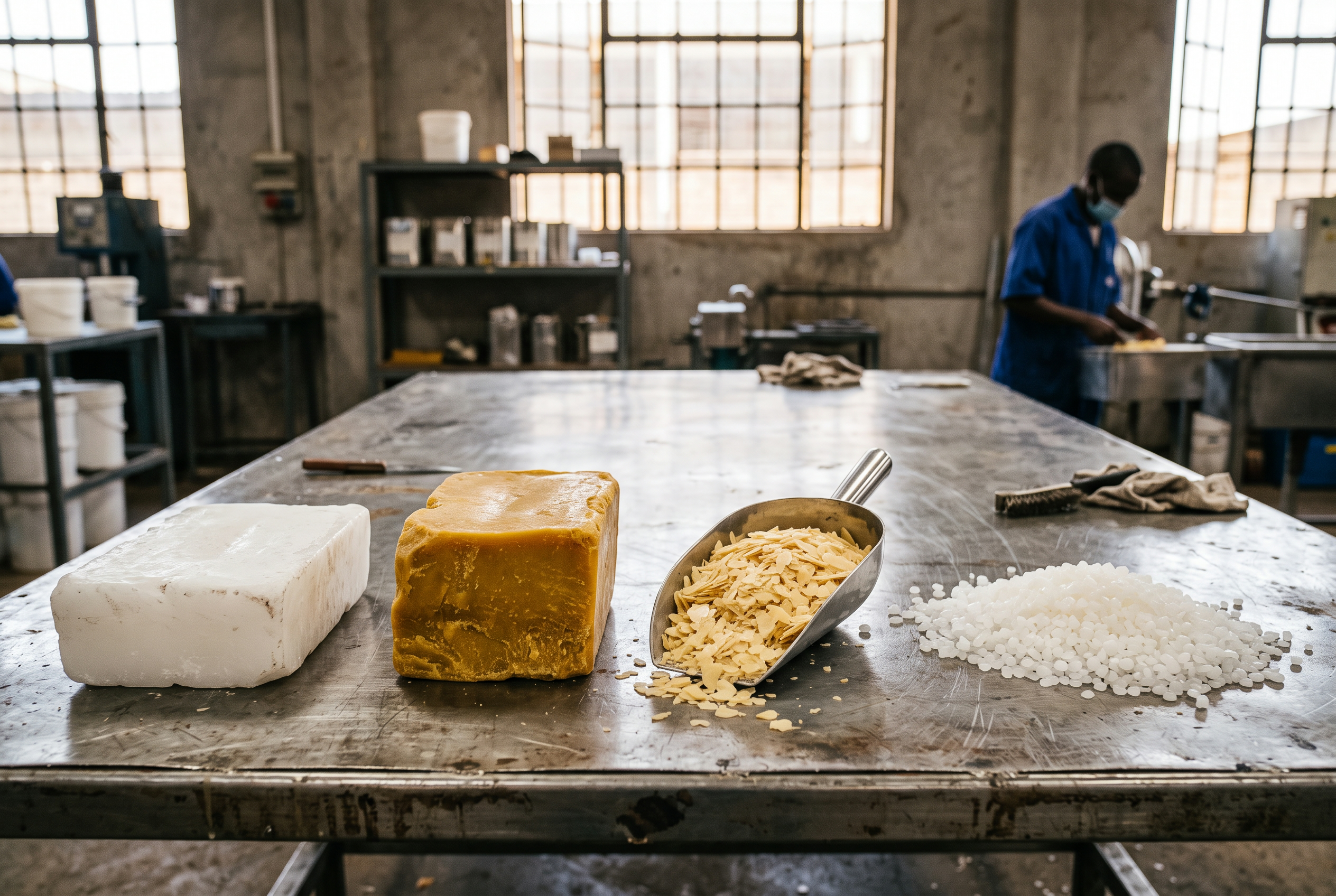
Thika Wax Works supplies paraffin wax, customised candle wax, premium beeswax, carnauba wax, moulded wax and waxes for wrappers and packaging, in packs from 10 kg to 33 kg. The price depends on the seven things below.
Price factors
Why one wax costs more than another
Two blocks of wax can look the same and behave very differently in your process. These are the things that change the price, and what to tell your supplier about each.
| What changes the price | What it means for you |
|---|---|
| Type of wax | Paraffin is the most affordable. Natural waxes such as beeswax and carnauba are priced higher, and carnauba is the hardest and glossiest of them. |
| Refining grade | Fully refined and semi-refined paraffin are priced differently. The more refined the wax, the cleaner and whiter it is, and the more it usually costs. |
| Melting point and blend (the scope of the job) | Candle wax, packaging wax and polish wax need different melting points. Our candle wax blends melt at 58 to 62°C, beeswax at 62 to 65°C and carnauba at 82 to 86°C. A custom blend is priced for what it has to do. |
| Form and pack size | Wax comes as slabs, blocks, flakes and moulded pieces, in packs from 10 kg to 33 kg depending on the product. Say which form your process needs. |
| Purity and end use | Wax for food coating, cosmetics or pharmaceutical use is held to a higher standard than wax for general polishing. Tell us where the wax ends up. |
| Volume and how often you order | A one-off sack costs more per kg than a standing monthly order. Say how many kilograms you expect to use each month. |
| Delivery | Thika, Nairobi, upcountry and export orders have different delivery costs. Always compare prices with delivery included. |
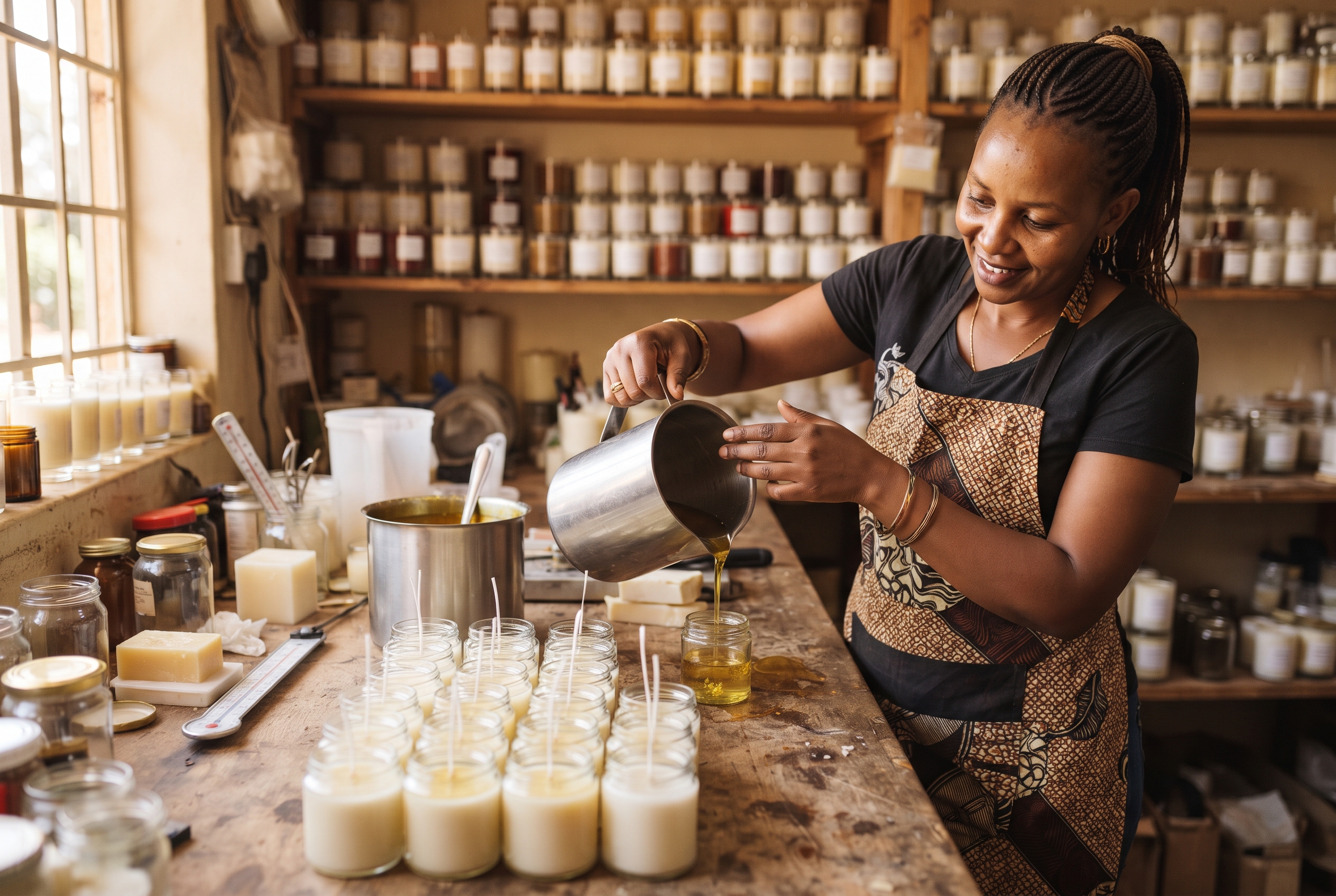
Cost per product
Price per kg is not what you actually pay
The cost that matters is the cost of wax in each candle, wrapper or finished pack you sell, and what the wax does to your reject rate. A cheap wax that causes defects can cost more than a better one.
Use this simple sum:
Cost of wax per candle = price per kg ÷ 1,000 × grams of wax in each candle
Here is an example with round numbers, to show the arithmetic. These are not our prices. A jar candle holds 200 g of wax, so a 25 kg sack fills 125 jars. Now suppose wax A costs 10% more per kg than wax B, but wax B gives you one rejected jar in every ten because of frosting or tunnelling, and wax A gives you one in fifty. Wax A is then the cheaper wax to run, even though its sack costs more.
Our customised candle wax is blended to hold fragrance and burn cleanly, and to avoid defects such as tunnelling and frosting.
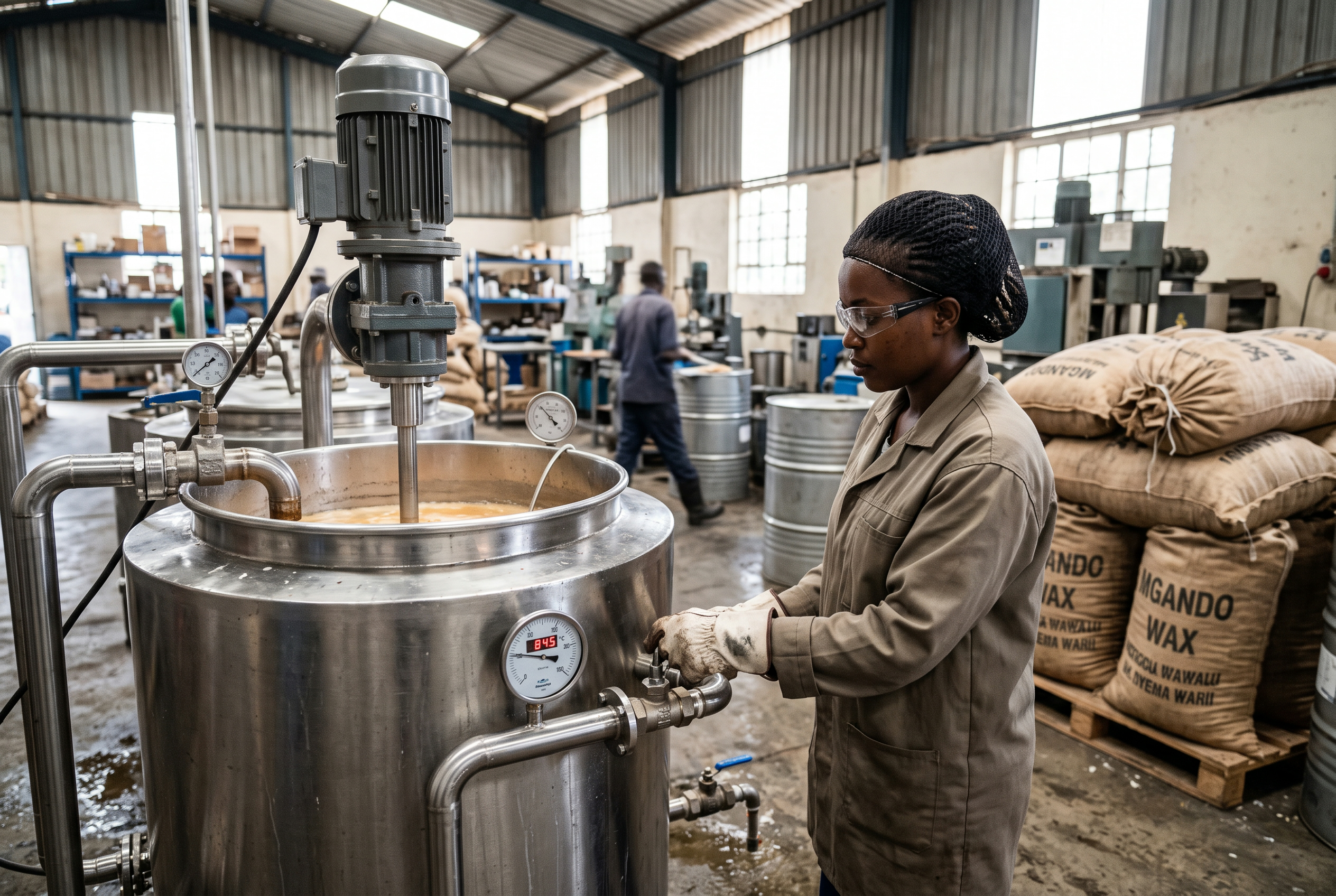
Comparing quotes
How to compare two quotes fairly
- Ask for the price per kg and per sack, and check the pack size is the same.
- Check that delivery is included in both quotes.
- Ask for the melting point and refining grade of what is quoted. A cheaper quote may be for a grade that does not suit your process.
- Ask for a sample you can test, for example by pouring a few candles, before you commit to a bulk order.
- Ask how long the price holds and what the payment terms are.
Get a quote
What to tell us to get a fast, accurate quote
You do not need to know the grade. Send us these details and we will recommend one:
- What you are making, for example candles, wrappers, polish, cosmetics or moulded parts.
- The melting point or wax type you use now, if you know it.
- Whether you need slabs, flakes, blocks or moulded wax.
- How many kilograms you expect to need each month.
- Where we should deliver, and when you want to start.
- How long you plan to buy for: a trial, six months or a year.
See our waxes range for what we supply, or ask for a quote.
Applications
Where our waxes are used
Our waxes are used for candles, food wrapping and bread and chewing gum wrappers, polishes, cosmetics, pharmaceutical coatings, investment casting and rubber compounding. Every wax has a shelf life of two years.
To go deeper, read our guides on paraffin wax grades, paraffin against microcrystalline wax, beeswax for polishes, carnauba wax and choosing a bulk wax supplier.
FAQ
Your questions answered
How much does wax cost per kg in Kenya?
It depends on the type of wax, the refining grade, the pack size and your monthly volume. Paraffin, candle wax, beeswax and carnauba are all priced differently, so the best way to get a real figure is to send us what you are making and how much you use.
What is the difference between paraffin wax and candle wax?
Paraffin wax is a base wax used in many products. Candle wax is usually a blend of paraffin, microcrystalline and synthetic waxes, tuned for a clean burn, fragrance hold and a smooth surface.
What is the melting point of candle wax?
It depends on the blend. Our customised candle wax melts at 58 to 62°C, which suits the East African climate. Ask for the data sheet of the blend you are quoted.
Is beeswax more expensive than paraffin?
Usually yes. Beeswax is a natural product with a limited supply, so it costs more per kg than paraffin. It is chosen for cosmetics, food coatings and natural polishes, where its properties matter.
What is carnauba wax used for?
Carnauba is the hardest natural wax. It gives a high-gloss, water-repellent finish and is used in polishes, shoe and leather polish, food coatings, cosmetics and pharmaceutical tablet glazing.
What pack sizes do you supply?
Pack sizes depend on the wax: 10 kg for moulded wax, 15 kg for beeswax, 25 kg for candle wax, carnauba and wrapper wax, and 25 to 33 kg for paraffin.
How long does wax last in storage?
Our waxes have a shelf life of two years. Keep them clean, dry and away from direct heat.
Can I get a custom wax blend?
Yes. We blend paraffin, microcrystalline and synthetic waxes to suit your process. Tell us the melting point and the performance you need, and we will recommend a blend.
Get a price for your wax
Send us what you are making, the wax or melting point you need and your monthly volume. We will recommend a grade and quote for it.

Akshay Chandaria is the Sales Director at Thika Wax Works Limited, a manufacturer of industrial waxes, hot melt and cold glue adhesives, floor polishes, cleaning products and construction chemicals for businesses across Kenya.