There is no single price for industrial hot melt adhesive in Kenya. The price per kilogram depends on the type of glue, what you are bonding, how much you buy and how it is delivered. This guide explains each of those, so you can ask for a quote that gets a straight answer and compare two quotes fairly.
The short answer
Search for “hot melt glue price” in Kenya and most results are craft glue sticks and glue guns, sold in small packs for hobbies and repairs. That is a different product from what a factory uses.
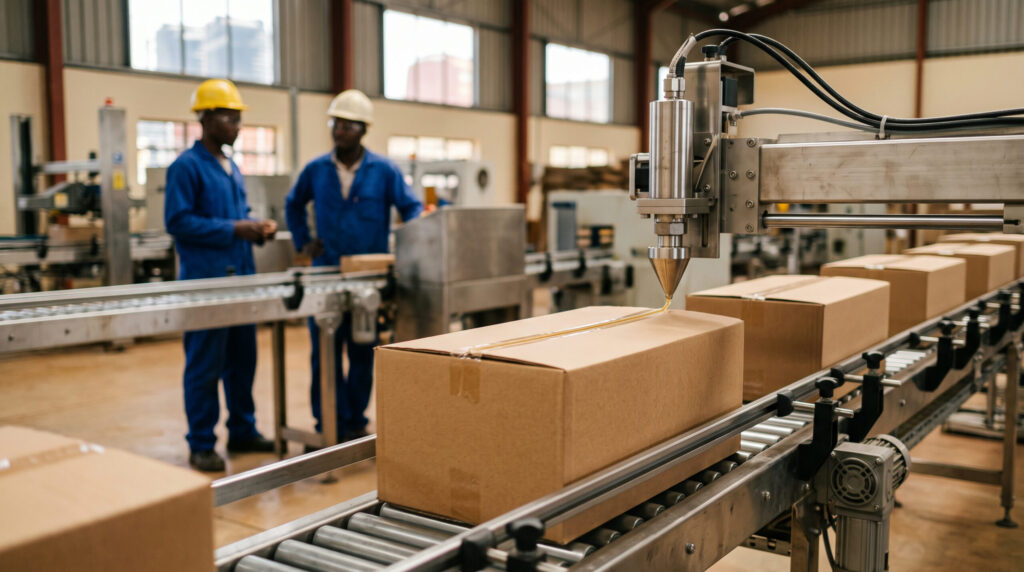
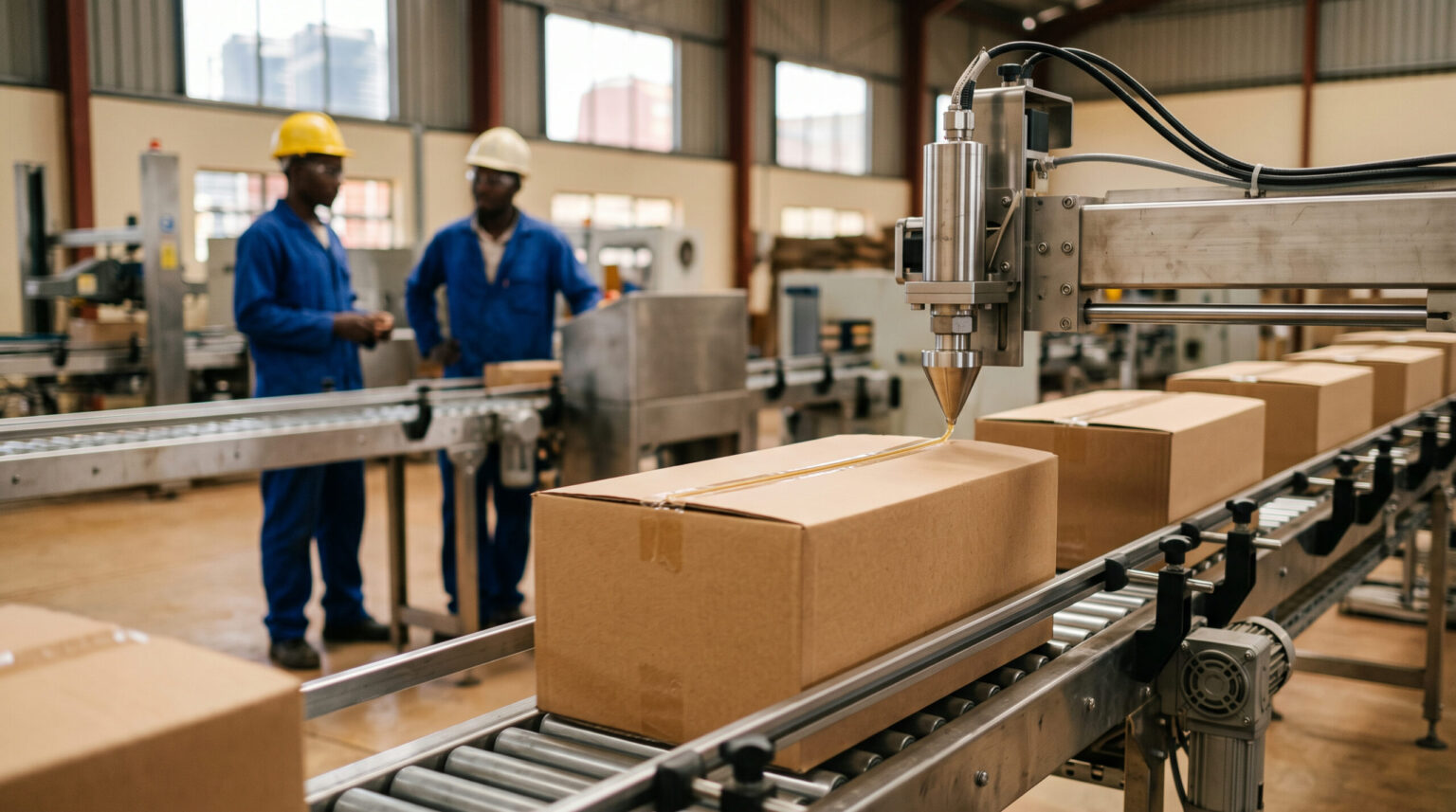
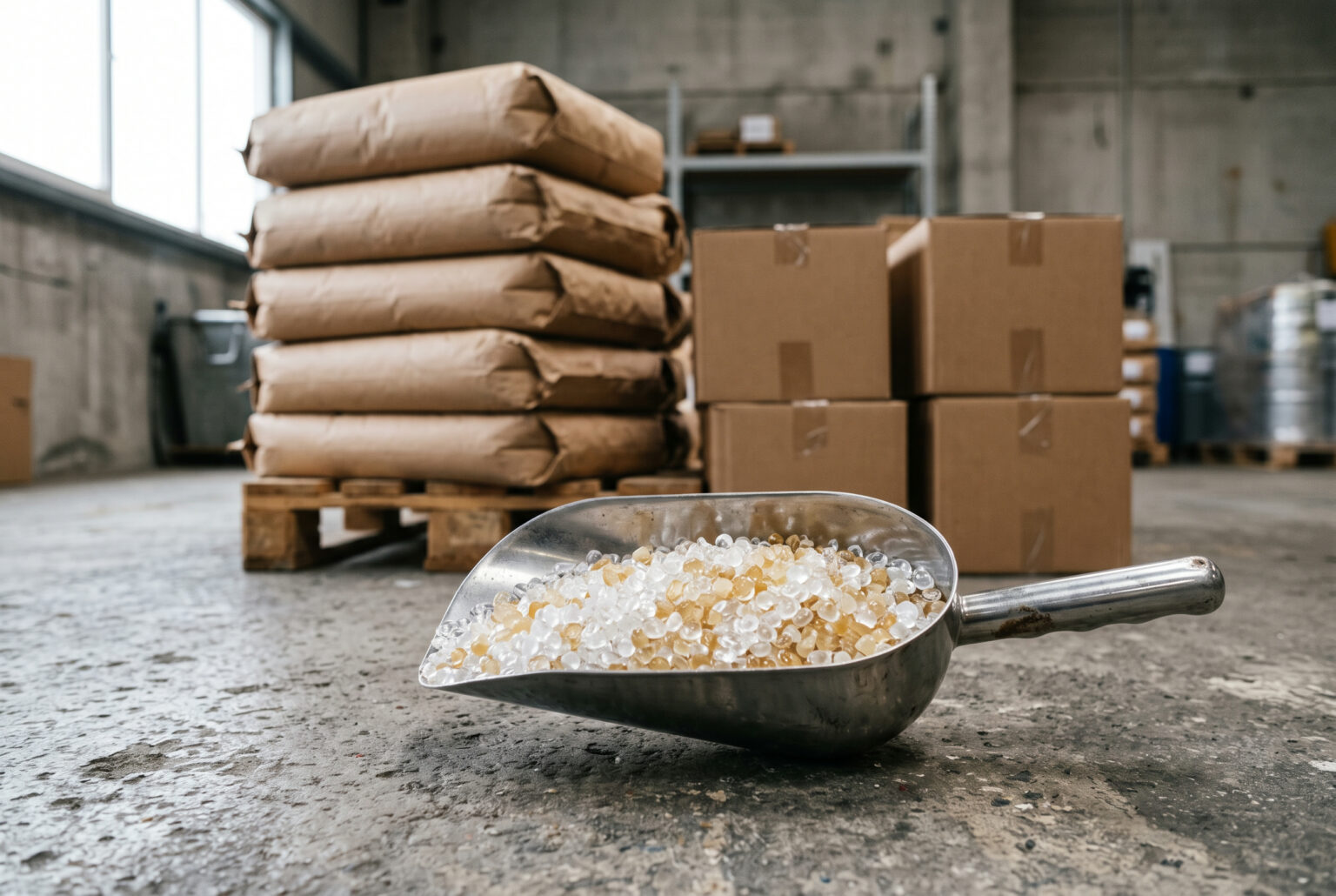
Thika Wax Works supplies factory-grade hot melt, as granules in 20 kg bags. It is quoted per kg or per bag, and the price moves with the seven things below.
Price factors
Why one hot melt adhesive costs more than another
Two bags of hot melt can look the same and behave very differently on your line. These are the things that change the price, and what to tell your supplier about each.
| What changes the price | What it means for you |
|---|---|
| Type and grade of glue | General-purpose grades are cheaper. Grades made for hard jobs, such as pressure-sensitive glue or glue for difficult surfaces, usually cost more. |
| What you are bonding (the scope of the job) | Cartons, paper sacks, books, foam, filters and nappies each need a different grade. The more demanding the surface, the more specialised the glue. |
| How fast your line runs | A fast line needs glue that sets quickly. A slower line can use a glue that sets more slowly. |
| Heat and storage conditions | If cartons sit in a hot store or a hot truck, you need glue that holds when it is warm. Tell us where the product ends up. |
| Volume and how often you order | A one-off bag costs more per kg than a standing monthly order. Our hot melt comes in 20 kg bags, so say how many bags a month you expect to use. |
| How long you will buy for | A trial order and a six-month or twelve-month supply are quoted differently. A longer commitment usually gives you a steadier price. |
| Delivery | Thika, Nairobi, upcountry and export orders have different delivery costs. Always compare prices with delivery included. |
Cost per carton
Price per kg is not what you actually pay
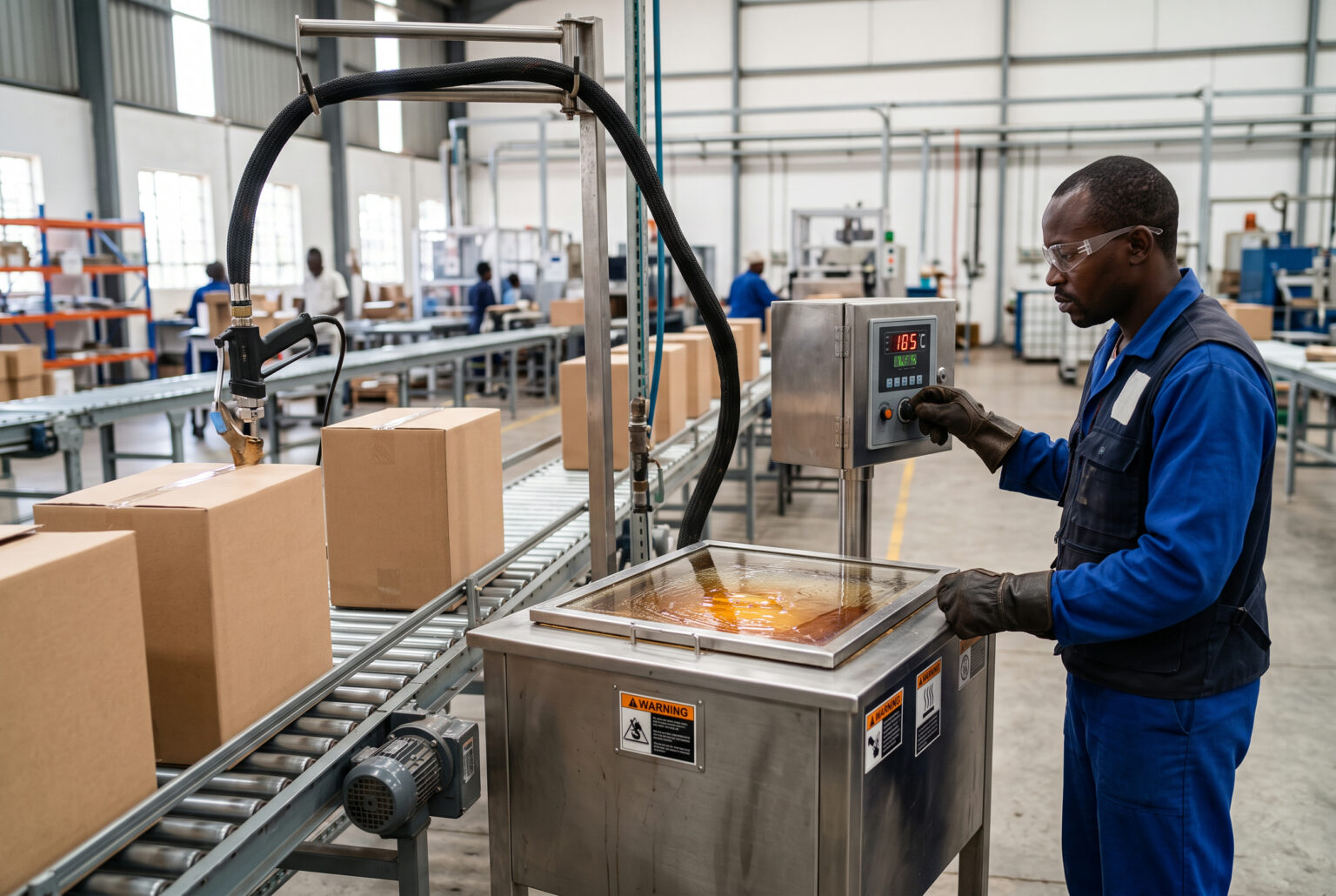
The cost that matters is the cost of glue on each carton, book or pack you finish. That depends on how much glue your machine puts down, not only on the price of the bag.
Use this simple sum:
Cost of glue per carton = price per kg ÷ 1,000 × grams of glue on each carton
Here is an example with round numbers, to show the arithmetic. These are not our prices. A line seals 10,000 cartons a day and puts 2 g of glue on each. That is 20 kg of glue a day, which is one 20 kg bag a day. Now suppose glue A costs 10% more per kg than glue B, but a good glue lets you run a thinner bead and use 15% less per carton. Glue A is then the cheaper glue to run, even though its bag costs more.
A cheaper glue can also cost you in other ways. If it chars in the tank, blocks the nozzle or lets cartons pop open, you pay for stopped lines and returned goods. A glue that is heat-stable and resists charring keeps the line moving.
Comparing quotes
How to compare two quotes fairly
- Ask for the price per kg and the price per bag, and check the bag size is the same.
- Check that delivery is included in both.
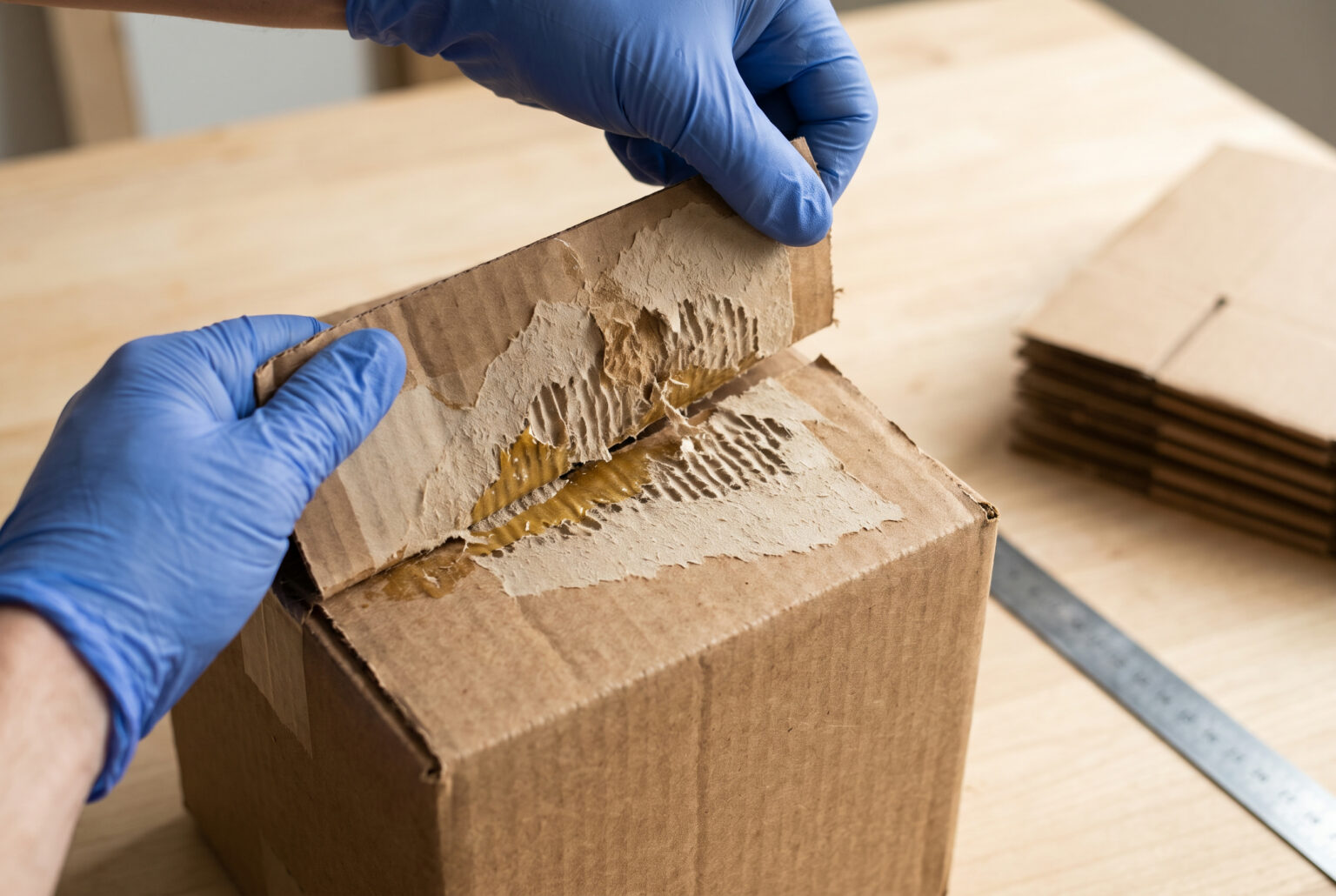
- Ask which grade is quoted and what it is meant for. A cheaper quote may be for a grade that does not suit your job.
- Ask for a sample you can test on your own line before you commit to a bulk order.
- Ask how long the price holds and what the payment terms are.
Get a quote
What to tell us to get a fast, accurate quote
You do not need to know the grade. Send us these details and we will recommend one:
- What you are bonding, for example cartons, paper sacks, books, filters or foam.
- The machine or applicator you use, and its make if you know it.
- How many units you finish a day, or how much glue you use now.
- How many 20 kg bags you expect to need each month.
- Where we should deliver, and when you want to start.
- How long you plan to buy for: a trial, six months or a year.
See our hot melt adhesives range for the applications we supply, or ask for a quote.
Applications
Where hot melt is used
Our hot melt is used for carton sealing, case and tray forming, labelling, flour packet sealing, bookbinding, filters, mattress construction and nappies. It bonds paper, cardboard, plastics, wood and fabrics, it is solvent-free, and it has a shelf life of two years.
To go deeper, read our guides on pellets, pillows and sticks, hot melt against cold glue for cartons, pressure-sensitive hot melt, bookbinding and application methods.
FAQ
Your questions answered
How much does a hot glue gun cost in Kenya?
Craft glue guns are sold in shops for hobby and repair work, and prices vary by shop and size. They are a different product from factory equipment. Factory melters and applicators are priced by the machine supplier, and that is a separate cost from the glue.
What is the difference between hot melt and hot glue?
They are the same kind of product. “Hot glue” usually means craft sticks used in a hand-held gun. “Hot melt adhesive” in industry usually means granules, pillows or blocks melted in a tank and applied by machine.
What is the melt temperature of hot melt glue?
It depends on the grade. Most hot melts are applied somewhere between about 120°C and 200°C. Low-temperature grades suit heat-sensitive materials. Ask for the data sheet of the grade you are quoted.
Is hot melt glue waterproof?
Many hot melts resist moisture and humidity, but resistance depends on the grade and the surfaces. Tell us if your product will get wet or travel in a cold chain, so we can suggest a suitable grade.
How long does hot melt glue last?
Our hot melt has a shelf life of two years in the bag. How long a bond lasts depends on the surfaces, the heat and how the product is handled.
What will hot melt glue not stick to?
It struggles on oily, waxy or silicone-coated surfaces, and on some plastics such as polyethylene and polypropylene unless they are treated. Test a sample first.
What are the disadvantages of hot melt glue?
It softens when it gets hot, it can burn skin while molten, and it needs the right equipment. The wrong grade for the job can also fail. Matching the grade to your job avoids most of this.
What is hot melt glue used for?
In factories it is used for packaging, bookbinding, labelling, filters, mattresses and nappies. At home and school it is used for crafts and quick repairs.
Get a price for your line
Send us what you are bonding, your machine and your monthly volume. We will recommend a grade and quote for it.

Akshay Chandaria is the Sales Director at Thika Wax Works Limited, a manufacturer of industrial waxes, hot melt and cold glue adhesives, floor polishes, cleaning products and construction chemicals for businesses across Kenya.