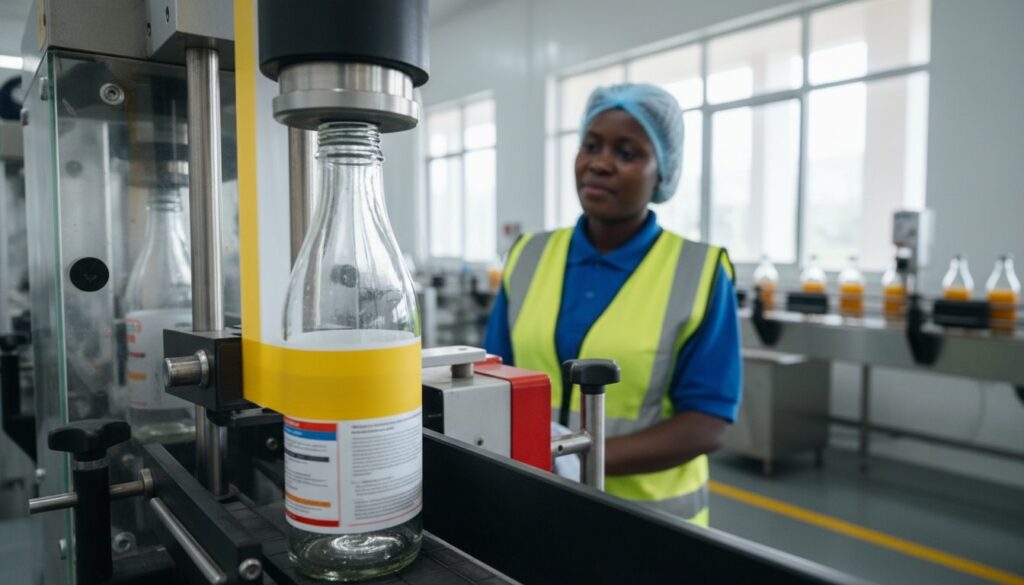
Imagine spending 12 hours labeling a fresh batch of juice bottles, only to find the edges peeling up before they even leave your Nairobi warehouse. This is a common headache when using glues that dry too quickly or fail when the Kenyan sun heats up a storage room. This is exactly why pressure sensitive hot melt adhesive has become a staple in local manufacturing. Think of it like a piece of high-quality tape that stays permanently sticky. It doesn’t turn into a brittle rock once it cools down. Instead, it remains ready to grab onto a surface the moment you press it down, making it a reliable partner for your packaging needs.
Since the 1950s, Thika Wax Works has provided over 60 years of expertise to help makers find the right tools for their craft. We understand that you need a bond that lasts without requiring expensive machinery. You’ll learn how this “forever-sticky” glue works and how it differs from standard hot melt. We’ll also help you identify the best options to improve your production speed. By choosing a trusted, Made in Kenya solution, you’re ensuring your products stay secure while supporting our local economy. You can explore our industrial adhesive solutions to find your perfect match. Let’s see how this simple change can bring peace of mind to your workshop.
Key Takeaways
- Learn how pressure sensitive hot melt adhesive acts like a friendly handshake, staying sticky long after it cools to grab onto surfaces with just a light touch.
- Discover the difference between glues that hold on forever and those that peel away cleanly, helping you choose the right “personality” for your specific packaging needs.
- See how this tireless glue keeps your brand labels looking sharp and secure on bottles and bags, even when they get wet or cold in the fridge.
- Understand why “Made in Kenya” quality protects your business from the messy production jams and falling labels caused by cheaper, low-grade alternatives.
- Gain the confidence to select a reliable adhesive backed by the same heritage of excellence that Kenyan families and industries have trusted since the 1950s.
What is Pressure Sensitive Hot Melt Adhesive?
Imagine a glue that never really goes to sleep. Most glues work by drying out or cooling down until they become hard like a rock. But a pressure sensitive hot melt adhesive is different. It stays “tacky” or sticky even after it has completely cooled down to room temperature. It’s the same technology you find on the back of a sticker or a Band-Aid. You don’t need to add water or use a heater at the moment you want to stick it. You simply press it against a surface, and it holds tight immediately.
Since the 1950s, Thika Wax Works has been a trusted name in Kenya for manufacturing high-quality hot melt adhesives. We understand that local businesses need products that work every single time without fail. This specific type of glue is a favorite because it’s so easy to handle. It’s basically “ready-to-go” stickiness that stays active for a long time, providing a reliable bond for everything from food packaging to industrial labels.
To better understand how this “sticky forever” glue works, watch this helpful video:
Regular Hot Melt vs. Pressure Sensitive
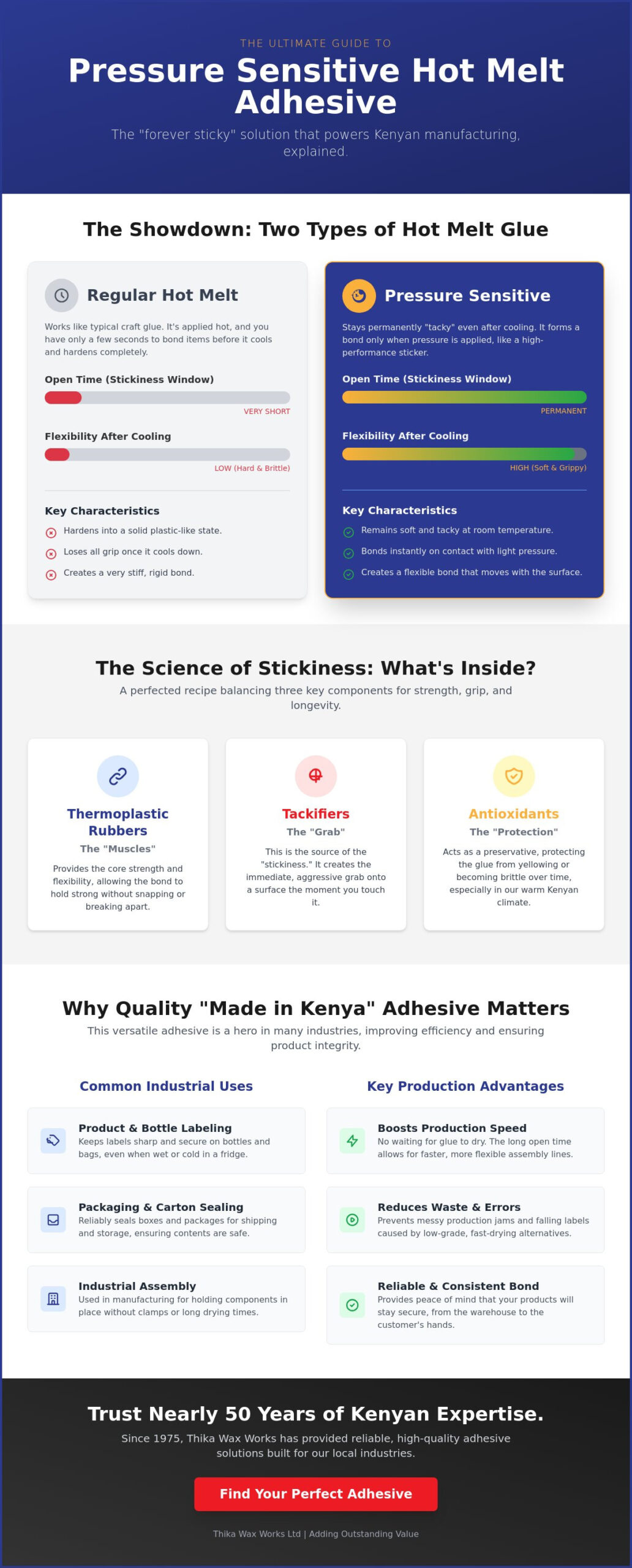
If you’ve ever used a standard glue gun for a school project, you know that the glue turns into a hard piece of plastic once it gets cold. That is regular Hot-melt adhesive. It creates a very stiff bond. If you don’t stick your items together within a few seconds of applying the heat, the glue cools down and loses its grip. It becomes useless until you melt it again.
A pressure sensitive hot melt adhesive stays soft and “grippy,” much like a piece of chewing gum. This difference is a big deal for production lines in Kenya. It means you don’t have to rush your assembly process. You can coat a label with glue now and stick it onto a bottle minutes or even hours later. This flexibility helps factories move faster and reduces the amount of wasted material.
The Secret Ingredients
What makes this glue so special? It’s all about the recipe we’ve perfected over decades. At Thika Wax Works, we follow a tradition of excellence to ensure every batch is perfect for our customers. There are three main parts to the mix:
- Thermoplastic Rubbers: These are the “muscles” of the glue. They give it the strength to hold things together without snapping or breaking apart.
- Tackifiers: These provide the “grab.” They are what make the glue feel sticky to your finger the moment you touch it.
- Antioxidants: These act as “protection.” They ensure the glue doesn’t turn yellow or become brittle over time, even in our warm Kenyan climate.
By balancing these three ingredients, we create a product that is both strong and easy to use. It’s a simple solution for complex industrial needs, backed by over 60 years of manufacturing expertise right here in Nairobi.
The Secret Behind the Stick: How It Works
Most glues work by drying out. You apply a liquid, wait for the water or solvent to evaporate, and the glue turns into a hard crust. That isn’t how pressure sensitive hot melt adhesive behaves. This glue stays “alive” and ready to work long after it has cooled down. At Thika Wax Works, we’ve manufactured these reliable bonds since the 1950s, and we’ve seen how this unique chemistry keeps Kenyan industries moving every single day.
The Molecular Handshake
Think of the molecules in this adhesive as millions of tiny, flexible fingers. When you bring two surfaces together, these fingers reach out to grab the other side. Scientists call this a “viscoelastic” bond. It means the glue acts like a mix of a liquid and a solid at the same time. Because it never truly turns into a brittle rock, it stays flexible. This flexibility is why a label on a plastic bottle doesn’t pop off when you squeeze the bottle; the glue simply stretches and moves with the plastic.
The strength of this bond comes from the specific formulation of hot melt PSAs, which allows the molecules to stay tangled together like a permanent handshake. This internal strength ensures that the glue doesn’t just pull apart when under stress. It’s a balance of “grab” and “hold” that we’ve perfected over decades of local manufacturing to suit our specific regional climate.
Why Pressure is the Key
The “pressure” part of the name is there for a reason. If you just lay a piece of tape gently on a box, it might fall off. This happens because surfaces that look flat to our eyes are actually full of microscopic mountains and valleys. To get a real bond, the glue must flow into those tiny gaps. This process is called “wetting.”
- The Firm Press: When you apply pressure, you’re forcing the glue into those microscopic valleys.
- Factory Rollers: In large Kenyan packaging plants, heavy rollers apply hundreds of pounds of force to ensure the glue “wets” the cardboard perfectly.
- Rough Surfaces: If you’re working with dusty or rough materials, you need even more pressure to push past the debris and reach the solid surface underneath.
Temperature also plays a big role in how well the glue grabs. If the room is too cold, the glue gets stiff and can’t flow into those tiny gaps. If it’s too hot, it might become too runny. We design our products to handle the Kenyan heat, ensuring that whether you’re in Mombasa or Nairobi, the bond stays firm. You can explore our range of hot melt solutions to see which one fits your specific factory setup.
Permanent vs. Removable: Finding Your Perfect Match
Choosing the right glue is like picking the right shoes for a journey. You wouldn’t wear heavy work boots to a wedding, and you wouldn’t wear thin sandals to a construction site. Pressure sensitive hot melt adhesive comes in two distinct personalities. One is built to stay forever, while the other is designed to let go without leaving a scar. Understanding these two types helps you save money and protect your products from unnecessary damage.
The Permanent Bond
The permanent bond is the heavy lifter of the adhesive world. Once it touches a surface, it starts to form a lasting relationship. You’ll find this glue on shipping labels and heavy duty boxes moving through Nairobi’s busy logistics hubs. It’s the best choice for product assembly where safety and durability come first. Since the 1950s, Thika Wax Works has provided these reliable solutions to industries across Kenya, ensuring that once a package is sealed, it stays sealed.
A unique fact about this glue is that it actually gets stronger as time passes. It “wets out” the surface. This means it flows into every tiny microscopic bump and groove on the material. In our Kenyan climate, this strength is vital. Whether your packages sit in the 35 degree heat of Garissa or the damp cold of the Highlands, a high quality pressure sensitive hot melt adhesive keeps its grip. We’ve perfected these formulas to ensure they don’t fail when the weather gets tough.
The Removable Bond (Fugitive Glue)
Sometimes, you need a bond that knows when to quit. This is where removable glue, often called “fugitive glue,” comes in. Many people call it “booger glue” because it’s rubbery and peels off easily. You see this when you peel a new credit card off a letter or find a sample sachet inside a magazine. It’s a temporary handshake rather than a permanent hug.
The beauty of this adhesive is that it protects the surface underneath. It doesn’t tear the paper or leave a sticky mess behind. It provides just enough grip to keep an item in place during transport, but it lets go the moment a customer pulls it. For businesses using flyers or promotional items, this is a game changer. You can learn more about how to use fugitive glue for marketing materials to keep your brand looking professional. It ensures your customers aren’t frustrated by sticky residue on their new purchases.
Since the 1950s, we’ve helped Kenyan businesses find the exact balance they need for their packaging. If you’re unsure which personality fits your project, our team is ready to help. Visit our hot melt adhesives page to see our full range of professional solutions.
Everyday Uses: Where You Encounter This Sticky Hero
You might not see it, but pressure sensitive hot melt adhesive works hard around your home and workplace every single day. Since the 1950s, Thika Wax Works has understood that a reliable glue is the backbone of a good product. It’s the reason your breakfast cereal box stays closed and your shipping cartons don’t pop open during a long truck ride from Nairobi to Mombasa. This glue is a silent worker that keeps our lives organized and safe.
This “sticky hero” is used in many industries because it stays tacky and ready to bond. Here are the most common places you will find it:
- Packaging: It seals the bags of maize flour and the boxes of milk you buy at the local supermarket.
- Labeling: It keeps brand names stuck firmly to plastic bottles and glass jars.
- Hygiene: It’s the essential glue used to hold together the layers of baby diapers and sanitary pads.
- Construction: It’s found in specialized tapes and insulation materials that help keep Kenyan homes cool.
In the hygiene industry, this glue is vital. It holds the different layers of products together without feeling stiff. It stays flexible so it doesn’t poke or scratch, providing comfort for families across the country. Builders also rely on it for heavy-duty tasks. It’s found in the strong tapes used for roof repairs. These tapes can handle the hot sun without melting away, ensuring your home stays protected for years.
Labels and Stickers
Ever wonder why the label on your cold soda bottle doesn’t peel off when it gets wet in the fridge? That’s the power of pressure sensitive hot melt adhesive. This glue has what experts call high initial tack. Think of it like a handshake that never lets go. It grabs the surface of the bottle instantly. In a factory where 500 bottles move past a machine every minute, there’s no time to wait for glue to dry. We help local businesses stay competitive by providing high-quality industrial adhesives that work perfectly on these high-speed lines.
Product Assembly and Packaging
Old-fashioned liquid glues are often messy. They take a long time to dry and can spill on your products. This special hot melt is different. It seals a box in less than 2 seconds. This speed helps Kenyan manufacturers pack thousands of items every hour without stopping. It’s also a safer and cleaner choice for the workers because it doesn’t release heavy fumes or create a slippery mess on the factory floor. You can find more details in our guide on hot melt adhesive for product assembly.
Are you looking for a sticky solution that never lets you down? Contact Thika Wax Works today to find the best adhesive for your business needs.
Why Quality Matters: Selecting the Best Local Adhesive
Choosing a cheap glue is like buying a pair of shoes with soles that fall off after one walk. It might save you a few shillings today, but it will cost you much more in repairs tomorrow. When a pressure sensitive hot melt adhesive fails, your labels peel off like old wallpaper. This leads to production jams that can stop a factory line for 30 minutes or more. These delays are expensive and frustrating. Since the 1950s, Thika Wax Works has seen how poor quality glue hurts local businesses. We test every single batch in our lab to make sure the stickiness is exactly the same every time you open a new bag.
The Kenyan Advantage
Kenya has unique weather that affects how glue works. Our humidity and afternoon heat can make imported glues behave badly. They might get too soft in Mombasa or too brittle in the cold mornings of Limuru. We formulate our adhesives right here to handle our specific climate. When you buy “Made in Kenya” products, you get glue that hasn’t spent three months sitting in a hot shipping container on the ocean. This freshness means the glue stays strong and ready for work. Plus, if you have a technical question, our team can provide support quickly. You’re supporting the local economy while getting international quality standards.
Getting Started with Thika Wax Works
Every material is different. A glue that sticks to a cardboard box might not work on a shiny plastic bottle. This is why we always suggest asking for a sample to test on your specific packaging. It is the smartest way to avoid mistakes before you start a big production run. It’s also helpful to understand the difference between our pressure sensitive hot melt adhesive and our liquid cold glues. While hot melt stays “forever sticky” and sets with heat, cold glues are often used for different labeling needs and require drying time.
Our experts have been a trusted part of Kenyan manufacturing for over 60 years. We take pride in helping you find the right fit so your products stay protected and look professional on the shelf. If you want a recommendation tailored to your business, we are ready to help. Contact our team today to request your sample and see the Thika Wax Works difference for yourself.
Stick with a Partner You Can Trust
Choosing the right glue doesn’t have to be a guessing game. You’ve learned that this special glue stays tacky and ready to bond at a moment’s notice, making it perfect for labels, tapes, and packaging. Using a high quality pressure sensitive hot melt adhesive means your products stay secure from the factory floor to the customer’s home. It’s a simple tool that solves big problems for businesses across Kenya.
Thika Wax Works has been manufacturing trusted adhesives right here since the 1950s. We take pride in being a local champion that meets international standards. Our products are proudly Made in Kenya, and we offer expert technical support for all industrial sectors to ensure you get the best results. We’ve spent decades perfecting our craft so you can focus on growing yours. Our team is ready to help you find the bond that lasts.
Find the perfect sticky solution for your business; explore our Hot Melt Adhesives today!
We look forward to helping your business shine with reliability you can feel.
Frequently Asked Questions
What is the difference between pressure sensitive and regular hot melt?
Regular hot melt gets hard like a rock when it cools down, but pressure sensitive hot melt adhesive stays sticky forever. Think of regular glue like a candle that hardens once it is cold, while pressure sensitive glue is like a piece of tape that’s always ready to grab. Since the 1950s, we’ve seen how this permanent tackiness makes it perfect for labels that need to stay stuck even if you peel them back slightly.
Does pressure sensitive hot melt ever dry out?
No, this glue doesn’t dry out because it doesn’t have water or solvents that evaporate into the air. It stays in a “living” state, which is why we call it the glue that never sleeps. Even after 5 years on a shelf, the adhesive remains tacky and ready to bond. This long-lasting quality is why Thika Wax Works products are trusted for industrial use across East Africa.
Can I use pressure sensitive glue on plastic and glass?
Yes, you can use it on both plastic and glass because it forms a strong physical bond without needing to soak into the surface. It works perfectly on smooth surfaces like soda bottles or plastic containers. For example, 90 percent of the labels you see on supermarket shelves in Nairobi stay in place because of this versatile adhesive. It grips tight even when the surface is very slick.
Is pressure sensitive adhesive safe for food packaging?
Many versions are safe for indirect food contact, but you must check the specific grade for your needs. This means the glue can be on the outside of a cereal box or a flour bag without causing safety issues. At our Thika factory, we ensure our formulations meet international safety standards so your family stays protected. Always verify that the adhesive meets the FDA 175.105 standard for packaging safety.
How do I remove pressure sensitive glue if I make a mistake?
You can remove it using heat or a bit of vegetable oil. Since the glue is sensitive to temperature, a hair dryer can soften it until it peels right off. If any sticky residue stays behind, rubbing it with a cloth soaked in oil or a citrus cleaner usually does the trick. This is helpful if you’re labeling 500 jars and realize the sticker is slightly crooked.
Why is my hot melt adhesive not sticking properly?
The most common reason is that the surface is dusty or the glue isn’t hot enough when applied. If your workshop is below 15 degrees Celsius, the glue might cool down too fast before it can grab the surface. Make sure your application temperature is set between 150 and 170 degrees Celsius. Also, check that your materials are clean so the pressure sensitive hot melt adhesive can make a perfect connection.
Do I need special machines to use pressure sensitive hot melt?
You need a hot melt tank and an applicator gun, but you don’t need a massive industrial factory setup. Small businesses can use handheld glue guns designed for high temperatures, while large factories use automated lines that move at 100 meters per minute. We’ve provided these solutions since the 1950s to help Kenyan businesses grow. You can find the right tools on our equipment page to match your production speed.
Can pressure sensitive glue handle the heat in Kenya?
Yes, our adhesives are specifically made to withstand the warm Kenyan climate without melting or sliding off. Whether your products are in a hot warehouse in Mombasa or on a truck in Turkana, the bond stays firm. We’ve tested our formulas to ensure they handle temperatures up to 60 degrees Celsius. This reliability is why we’re a local champion in the manufacturing industry.