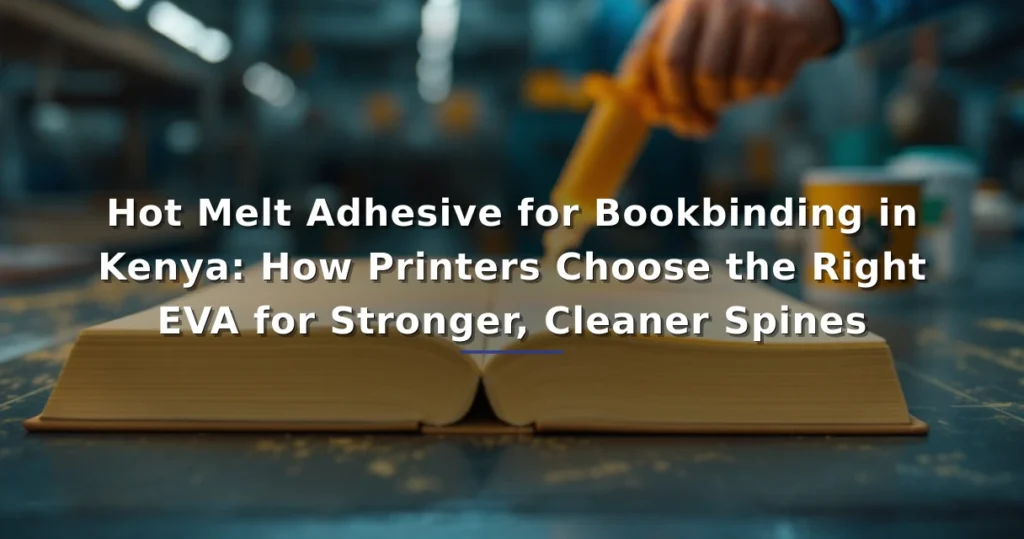
A weak book spine can ruin an entire print run, and that's why choosing the right hot melt adhesive for bookbinding in Kenya matters more than many printers expect. Hot-melt adhesive: a thermoplastic adhesive applied in molten form and set by cooling, commonly used for perfect binding and other fast production jobs, based on the definition summarized by Wikipedia. For Kenyan print shops, schools, publishers, and commercial binders, the real question isn't just price per kilo, it's whether the glue gives clean application, fast grab, and pages that stay put after transport, heat, and repeated handling. For broader background, Thikawaxworks also explains adhesive types in its guide to hot melt adhesives in Kenya.
What is hot melt adhesive for bookbinding in Kenya?
Bookbinding hot melt is a thermoplastic glue used in perfect binding to hold loose pages to a cover, usually with fast setting and flexible spine performance. In Kenya, it is commonly used by print shops producing exercise books, manuals, reports, catalogues, and short-run paperbacks.
Perfect binding works by roughening the spine edge, applying molten adhesive, then attaching the cover while the glue is still open enough to wet the paper fibers. The best result is not just a hard spine. You want a bond that grips well, flexes without cracking, and sets quickly enough to keep production moving.
"Quality means doing it right when no one is looking.", Henry Ford, Quote Investigator
Why printers in Kenya prefer EVA for many jobs
EVA, short for ethylene-vinyl acetate, is the common choice for many commercial binding jobs because it balances cost, speed, and dependable bonding. Research from the SERP shows bookbinding products sold in Kenya often position EVA pellets or granules as fast-setting and suitable for thermal or perfect binding.
For many print businesses, EVA is the practical middle ground:
- Good adhesion on common paper stocks
- Fast machine throughput
- Affordable compared with more specialized systems
- Available in pellet or granule form for pot-fed binders
If you handle cartons, labels, or paper converting too, this deeper guide to paper and board adhesives helps connect bookbinding needs to wider paper production choices.
How do you choose the right EVA grade for perfect binding?
The right EVA grade depends on page pull strength, setting speed, paper type, and the speed of your binding line. Buying on price alone often leads to loose pages, stringing, or a brittle spine.
EVA selection factors that matter most
A binder in Nairobi producing school books has different needs from a copy shop doing short-run reports. Start with these checks:
- Page pull strength: The bond should resist pages pulling out during normal use.
- Open time: Longer open time helps thicker books or slower manual processes.
- Setting speed: Faster set supports higher production speed.
- Viscosity: Lower viscosity can improve flow into the milled spine, but must suit your machine.
- Flexibility after cooling: A spine that is too rigid may crack on repeated opening.
- Paper compatibility: Coated stock, recycled paper, and dusty paper can behave differently.
Quick comparison table for Kenyan printers
| Factor | Lower-speed manual binding | Medium-speed commercial binding | High-volume repetitive jobs |
|---|---|---|---|
| Best EVA trait | Longer open time | Balanced open time and fast set | Fast set and stable flow |
| Spine type | Reports, theses, short runs | Books, manuals, catalogues | Exercise books, standard runs |
| Key risk if wrong glue is used | Cover shift | Uneven bond line | High reject rates |
| Paper concern | Mixed office paper | Mixed stocks | Consistent stock needed |
| Priority | Ease of handling | Reliable performance | Output efficiency |
For businesses comparing glue technologies across applications, the article on adhesive application methods for packaging lines is useful because many of the same ideas, heat control, viscosity, and line speed, still apply.
Why page pull strength and setting speed decide binding quality
Strong page pull and correct setting speed are the two performance markers that most directly affect whether a bound book survives real use. A neat-looking spine means little if inner pages detach after opening and closing a few times.
Page pull strength depends on several linked factors: proper spine milling, enough adhesive laydown, correct glue temperature, and good fiber penetration. If any one of these is off, the book may pass visual inspection but fail in the customer's hands.
Common causes of weak spines
Most reject problems come from process control, not glue alone:
- Dust left on the spine after milling
- Adhesive temperature set too high or too low
- Very glossy or heavily coated papers
- Insufficient adhesive film thickness
- Rushed clamping or misaligned covers
Practical ways to reduce rejects
Reducing rejects means controlling the full binding process, not only changing adhesive. In many Kenyan shops, simple operating discipline improves results fast.
- Clean the pot and applicator on schedule.
- Verify temperature against the adhesive supplier's recommendation.
- Mill the spine properly so fibers open up.
- Match glue open time to book thickness and machine speed.
- Run page-pull checks during production, not only at the end.
- Store adhesive in a dry area to avoid contamination.
"There is no such thing as quality control. There is only quality production.", W. Edwards Deming, AZ Quotes
For printers who want a wider technical overview, see this related resource on hot melt adhesive for bookbinding.
How Thikawaxworks helps Kenyan printers choose better binding adhesive
Thikawaxworks helps buyers narrow the choice by focusing on the job, the machine, and the paper, rather than treating all hot melts as interchangeable. That matters in bookbinding, where small differences in application can change output quality and waste levels.

The company serves industrial users across Kenya and East Africa, so the conversation is usually practical: what are you binding, what machine are you running, how fast is the line, and what paper are you using? That is a better buying method than choosing pellets only by generic description.
Where supplier support makes a difference
A useful adhesive partner should help you review:
- Binding method, manual or machine-based
- Book thickness range
- Cover stock and text paper type
- Required setting speed
- Production volume and repeatability
Thikawaxworks is especially relevant if your print business also buys other industrial bonding products. You can explore related adhesive knowledge on thikawaxworks.com, especially if your operation spans packaging, paper converting, and print finishing.
Video: see a thermal binding workflow
That video is consumer-focused, but it still shows why heat control, timing, and consistent pressure matter. The same basics apply in commercial settings, only with tighter output demands and less room for rejects.
What should Kenyan printers expect next in 2026 and beyond?
Bookbinding adhesive buying in 2026 is becoming more process-focused, with printers paying closer attention to consistency, waste control, and substrate fit. That shift is already visible in SERP results, where many product pages stress fast setting, machine compatibility, and standard compliance rather than glue alone.
For Kenyan printers, three changes are worth watching:
- More demand for shorter runs with professional finish
- Greater pressure to reduce waste and rework costs
- Closer matching of adhesive grade to exact paper and machine setup
Why this matters for local print businesses
Short-run digital printing keeps growing because schools, churches, offices, and training institutions often need faster turnaround in smaller batches. That makes adhesive selection more important, not less, because shorter jobs still have to look professional.
If your business handles adjacent paper applications, you may also want to read about paper packaging adhesive choices in Kenya. It helps frame how substrate behavior changes bonding performance.
Video: low-cost book production basics
One final point: good adhesive cannot fully rescue poor setup. But the right grade, applied at the right temperature and thickness, can sharply reduce page loss and improve finish quality. If you're sourcing hot melt adhesive for bookbinding in Kenya, start with your binding process, not only the bag price.
FAQ
What is the best adhesive type for perfect binding?
EVA hot melt is often the practical choice for perfect binding because it offers a good balance of cost, setting speed, and bond strength. The best grade still depends on paper type, book thickness, and machine speed, so testing under your actual conditions is important.
Can one EVA hot melt work for every paper stock?
No, one grade rarely performs equally well on every stock. Coated paper, recycled sheets, and dusty uncoated papers can all change bond performance. Matching the adhesive to the substrate helps improve fiber grip and reduce page pull failures.
Why are pages falling out even when the spine looks neat?
A neat spine can still hide weak internal bonding. Common causes include poor spine milling, wrong glue temperature, too little adhesive, or paper dust blocking penetration. Visual checks should be combined with page-pull testing during production.
Is fast-setting glue always better for Kenyan print shops?
Not always, because very fast set can hurt slower manual or semi-manual workflows. If the adhesive skins over before the cover is properly applied, bond quality drops. The correct open time should match your working speed and book size.
Where can I get help choosing bookbinding adhesive in Kenya?
A supplier that understands printing applications can help you match adhesive, machine, and paper. If you want guidance tailored to your production setup, visit thikawaxworks.com for more product information or speak with the team directly.
Conclusion
A good bookbinding glue does three jobs at once: it wets the spine well, sets at the right speed for your process, and keeps pages secure after handling and transport. For most Kenyan printers, EVA remains the sensible starting point, but the exact grade should match your machine, paper, and output target. Looking for hot melt adhesive for bookbinding in Kenya? Thika Wax Works has you covered, you can review solutions on Thikawaxworks or get in touch here: https://www.thikawaxworks.com/contact-us/.