
A shiny floor can hide years of polish buildup, until it starts yellowing, scuffing, or peeling in busy corridors. A heavy duty floor stripper for old polish removal helps remove failed polish so schools, hospitals, hotels, offices, malls, and warehouses can recoat floors properly instead of layering new finish over old problems. For Kenyan facility teams that need dependable floor care products, Thika Wax Works supplies cleaning, maintenance, construction, and industrial chemical solutions across Nairobi, Kenya, and East Africa.
Floor stripper: A floor stripper is a chemical cleaning product designed to break down old polish, wax, sealers, or floor finish so the residue can be scrubbed away before rinsing and recoating.
What is a heavy duty floor stripper for old polish removal?
A heavy duty floor stripper for old polish removal is a concentrated floor-care chemical that softens and dissolves built-up polish, wax, or acrylic finish so it can be removed with a mop, scrubber, pad, or wet vacuum. It is used before recoating floors that look dull, uneven, yellowed, sticky, or heavily scuffed.
Most commercial floor finishes are designed to resist daily cleaning. That is good for durability, but it means normal detergent cannot remove multiple layers of old polish. A stronger stripper is needed when the finish has become a dirt-trapping film instead of a protective surface.
For related maintenance planning, facility buyers can compare stripping with ongoing cleaning in this guide to industrial floor cleaner for factories and warehouses in Kenya.
Floor stripping terms Kenyan facility teams should know
| Term | Simple meaning | Why it matters |
|---|---|---|
| Floor polish | A protective shine layer applied after cleaning | Gives gloss and helps protect the floor |
| Polish buildup | Too many old layers sitting on the surface | Causes yellowing, patchiness, and poor adhesion |
| Dwell time | The time stripper stays wet on the floor | Too short means weak removal; too long can dry out |
| Neutralising rinse | Clean water rinse after stripping | Helps prepare the floor for new polish |
| Recoating | Applying new polish after stripping | Restores appearance and protection |
Key insight: If the floor has too much old polish, adding another coat often makes the surface look worse, not better.
When should you strip old floor polish instead of cleaning it?
You should strip old floor polish when regular cleaning no longer restores shine, when the floor looks yellow or grey, when polish flakes at edges, or when new polish fails to bond evenly. In high-traffic Kenyan facilities, stripping is usually needed before a planned recoating cycle, not after the floor has fully failed.
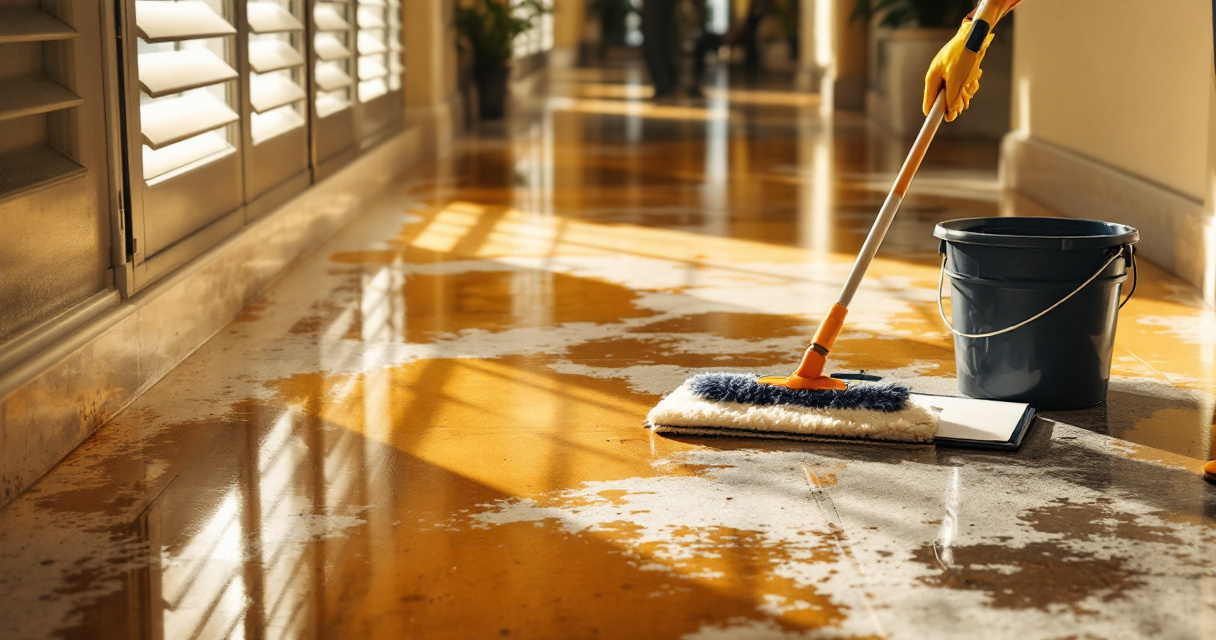
Busy sites in Nairobi, Mombasa, Kisumu, Nakuru, and industrial towns often deal with dust, foot traffic, trolley marks, kitchen grease, and rainy-season mud. These soils can become trapped between polish layers when floors are repeatedly recoated without full removal.
Not every dull floor needs stripping. Sometimes the issue is poor daily cleaning, wrong dilution, or using a cleaner that leaves residue. A small test patch is the safest way to confirm whether old polish is the real problem.
Visible signs that old polish has failed
- Yellow or brown tint: Common where many coats have aged over time.
- Patchy shine: Gloss appears in islands rather than one even finish.
- Black heel marks that stay after cleaning: Soil may be trapped inside old finish.
- Sticky or draggy floor feel: Residue may be holding dirt.
- Peeling near doorways or corners: New polish may not be bonding to old layers.
- Cloudy appearance after recoating: Moisture or residue may be sealed under the finish.
Rule of thumb: If cleaning improves the floor for only a few hours, the problem is likely below the surface shine.
Where stripping is most useful in commercial buildings
Floor stripping is common in hospital corridors, school halls, office receptions, hotel lobbies, supermarkets, factory walkways, and washroom entrance areas. These zones carry heavy traffic and are often recoated several times before anyone checks the base layer.
If your facility also maintains terrazzo, the recoating decision should match the polishing method. Read more in Terrazzo Polish in Kenya: How to Get a Durable Shine That Lasts.
How does a floor stripper remove built-up polish?
A floor stripper removes built-up polish by penetrating the old finish, breaking its bond to the floor, and turning the polish film into a slurry that can be scrubbed and lifted away. The process depends on correct dilution, wet contact time, mechanical agitation, and complete rinsing.
Think of stripping as controlled removal, not harsh washing. The chemical does the softening, while the pad or brush does the physical lifting. If either part is weak, residue remains and the new polish may fail.
Commercial product pages in the search results often focus on specifications, reviews, and pack sizes. Those are helpful, but they rarely explain the full workflow that facility teams need before recoating.
Specifications to check before buying
| Specification | What to check | Practical buying note |
|---|---|---|
| Floor compatibility | Terrazzo, vinyl, ceramic, sealed concrete, or other hard floors | Always test first, especially on coloured or sealed surfaces |
| Dilution range | Light, medium, or heavy buildup concentration | Heavy buildup needs stronger dilution and more control |
| Ammonia content | Ammoniated or ammonia-free formula | Ventilation and odour control matter in hospitals and hotels |
| Dwell time | Recommended wet contact period | Product must stay wet long enough to work |
| Machine fit | Mop-only, scrubber, or rotary machine use | Large sites benefit from machine stripping |
| Rinse requirement | Water rinse or neutralising step | Poor rinsing affects new polish adhesion |
Customer reviews can reveal odour, speed, and ease of rinsing, but they are not a substitute for a test patch in your own building.
Helpful visual reference for residue removal
Although this video is about adhesive residue rather than floor polish, it shows why the right chemistry and dwell time matter when removing stubborn films.
How do you apply floor stripper safely and correctly?
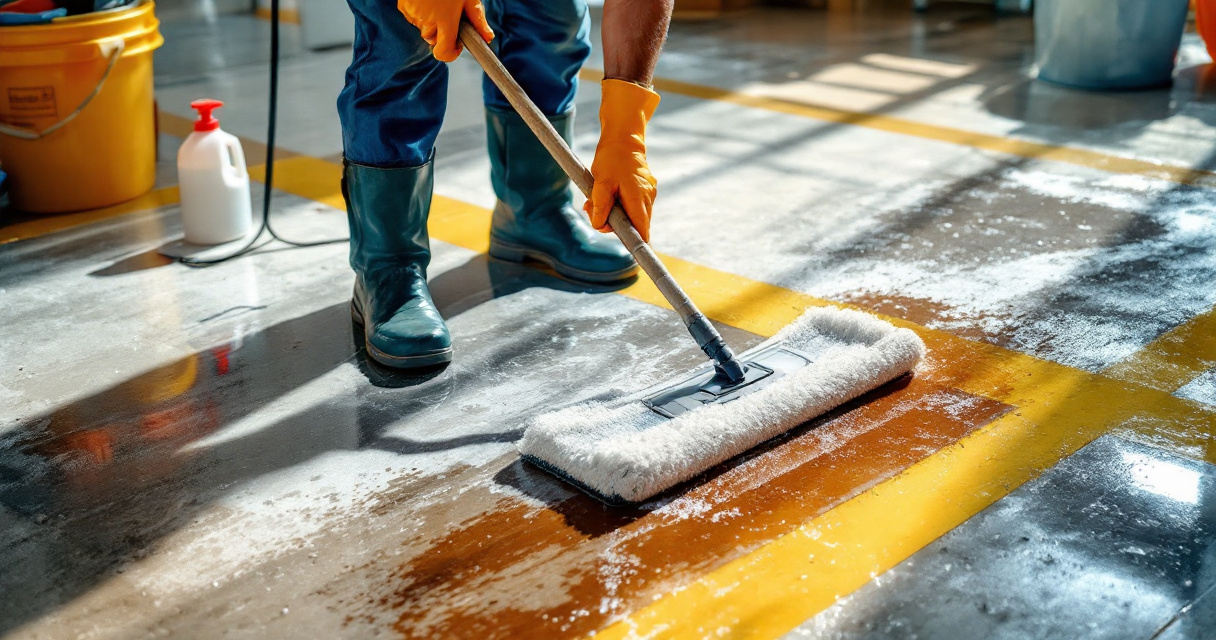
Apply floor stripper by preparing the area, diluting the product as directed, spreading it evenly, allowing proper dwell time, scrubbing the softened polish, removing the slurry, rinsing thoroughly, and letting the floor dry before recoating. Safety controls should be in place before the first bucket is mixed.
Step-by-step stripping method for institutions
- Close the area: Use signs, tape, or barriers to keep staff, patients, guests, and students away.
- Dust mop first: Remove loose soil so the stripper can reach the polish film.
- Test a small area: Check for colour change, surface damage, or poor reaction.
- Mix correctly: Follow the product label; stronger is not always better.
- Apply evenly: Keep the floor wet during dwell time.
- Scrub the surface: Use a suitable pad, brush, or floor machine.
- Pick up slurry: Use a wet vacuum, mop, or squeegee system.
- Rinse well: Remove chemical residue before the floor dries.
For schools, hospitals, and offices choosing a new finish after stripping, this related guide on protective floor polish for schools, hospitals and offices in Kenya is a useful next read.
Safety precautions before, during, and after stripping
- Wear gloves, closed shoes, eye protection, and suitable work clothing.
- Open windows or improve airflow, especially in enclosed corridors.
- Never mix stripper with bleach, acids, or other cleaners.
- Keep product containers labelled and closed when not in use.
- Place wet-floor signs at every entry point.
- Train cleaning teams on dilution, dwell time, and first-aid steps.
- Store chemicals away from food areas, laundry linen, and guest spaces.
Key insight: The safest stripping job is planned like a small maintenance project, with access control, ventilation, tools, and drying time agreed before work starts.
How should you prepare a stripped floor for recoating?
Prepare a stripped floor for recoating by removing all slurry, rinsing until residue is gone, checking pH or surface feel where practical, allowing full drying, and applying polish only to a clean, dry, compatible surface. Recoating too soon can trap moisture and weaken the new finish.
After rinsing, run a clean hand or white cloth over the dry floor. If it feels slippery, chalky, sticky, or soapy, rinse again. A floor that looks clean but still holds stripper residue can reject polish, causing streaks or dull patches.
In 2026, more Kenyan institutions are also looking at locally available supply, training support, and product consistency. That matters because floor stripping is not a one-time purchase; it connects to your whole maintenance system, including degreasers, washroom cleaners, disinfectants, laundry chemicals, and floor finishes. You can also review locally manufactured cleaning chemicals in Kenya for institutions when planning supplier options.
Recoating checklist before applying new polish
- The floor is fully dry, including corners and edges.
- No old polish remains along skirting, doorways, or under furniture lines.
- The surface has no oily, sticky, or powdery feel.
- Airflow is enough for curing, but not so strong that dust blows onto wet polish.
- The chosen polish matches the floor type and expected traffic.
- Cleaning staff know the curing time before reopening the area.
For coloured concrete surfaces, recoating should also respect the original finish system. See this guide on how to use concrete oxides for beautiful coloured floors in 2026 if your project involves decorative concrete.
Thika Wax Works supports facility teams, contractors, distributors, and maintenance buyers with practical chemical solutions across floor care, cleaning, construction, waxes, and industrial products. For direct product guidance, head to thikawaxworks.com and match the stripping plan to your floor type, traffic level, and recoating schedule.
FAQs about floor stripping and old polish removal
These common questions help facility managers decide when a heavy stripper is the right choice, and when a lighter maintenance clean may be enough.
Can a floor stripper damage tiles or concrete?
Yes, a stripper can damage sensitive surfaces if it is too strong, left too long, or used on the wrong floor type. Always test a small hidden area first. Sealed concrete, coloured floors, some vinyl tiles, and older terrazzo may need careful dilution and controlled dwell time.
How long should floor stripper sit before scrubbing?
Follow the product label because dwell time varies by formula and buildup level. The key is keeping the surface wet while the polish softens. If the stripper dries before scrubbing, removal becomes harder and residue may stick back onto the floor.
Do I need a machine to remove old floor polish?
Small rooms can often be stripped with a mop and hand pad, but large commercial spaces are faster and more consistent with a rotary scrubber or auto-scrubber. Machines improve agitation, which helps lift thick polish buildup and reduces manual effort.
When can I apply new polish after stripping?
Apply new polish only after the stripped floor has been fully rinsed and dried. The surface should feel clean, not slippery or soapy. If your team is unsure, wait longer, improve airflow, and inspect edges before opening the polish container.
Conclusion
Old polish removal is not just about making a floor shiny again. Done properly, it resets the surface so the next polish coat can bond, protect, and look consistent under real Kenyan foot traffic. The best results come from correct product choice, safe preparation, patient dwell time, strong rinsing, and disciplined recoating.
Looking for a heavy duty floor stripper for old polish removal in Kenya, or advice on matching floor stripper with polish, cleaner, and maintenance routines? Thika Wax Works has you covered. Visit thikawaxworks.com to review the range, or speak with the team about the right solution for your facility.