

Dirty grout can make a clean ward, school washroom, hotel corridor, or office lobby look neglected within days. A tile grout cleaner for hospitals and institutions must remove embedded soil without damaging tiles, sealers, staff safety, or infection-control routines. Grout: according to Wikipedia, grout is a dense substance that flows like a liquid and hardens after application, commonly filling gaps between tiles. For busy Kenyan facilities, especially in Nairobi, Mombasa, Kisumu, and high-footfall county institutions, the right cleaner saves labour and protects the floor finish. Thika Wax Works supports institutional buyers with practical cleaning, maintenance, construction, and hospitality chemical solutions for demanding local conditions.
What makes hospital and institutional grout so hard to keep clean?
Hospital and institutional grout becomes difficult to clean because cement-based grout is textured, absorbent, and exposed to constant wet soil, body fluids, detergents, dust, and traffic.
In a public facility, grout lines act like narrow channels. Mopping pushes dirty solution into those channels, especially when the water is not changed often. In washrooms, shower areas, kitchens, and corridors, moisture then helps stains and odours settle deeper.
Sealed grout resists staining better, but sealers wear down under scrubbing, disinfectants, shoe traffic, and alkaline cleaners. That is why grout may darken even when tiles still look clean.
Key insight: Clean tile does not always mean clean grout. Grout lines need their own cleaning chemistry, dwell time, agitation, and rinse step.
Hospitals and care facilities also face a higher standard than ordinary commercial buildings. Cleaning supports infection prevention, but it should not be confused with disinfection. The U.S. CDC explains the sequence clearly:
"Cleaning is the necessary first step of any disinfection process.", Centers for Disease Control and Prevention, CDC cleaning guidance
For Kenyan institutions, the challenge is practical. Dusty dry seasons add grit, rainy months increase mud, and coastal humidity can make washroom grout stain faster. A good programme separates daily soil removal from periodic deep cleaning.
How is specialized grout cleaner different from general detergent?
Specialized grout cleaner is different from general detergent because it is designed to penetrate porous grout, loosen embedded soil, and work with brushing or machine agitation before rinsing.
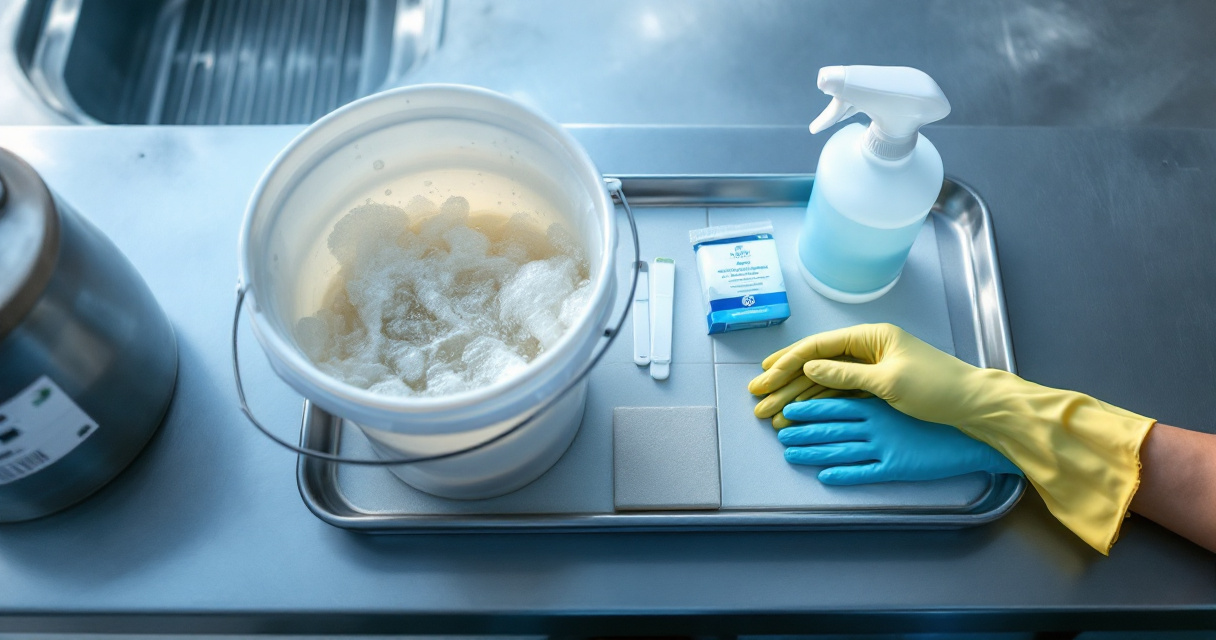
A normal floor detergent is useful for daily mopping, but it often spreads soil across grout lines instead of lifting it out. A grout cleaner usually has a more targeted pH, stronger wetting action, and instructions for dwell time. Dwell time simply means letting the product sit long enough to work before scrubbing.
Before buying, ask for the product data sheet, dilution rate, safety instructions, and surface compatibility. For broader hygiene product selection, see this guide on locally manufactured cleaning chemicals in Kenya for institutions.
Cleaner types and where they fit
| Cleaner type | Best use | Watch-outs |
|---|---|---|
| Neutral cleaner | Daily mopping on sealed tile and grout | Too mild for deep staining |
| Alkaline grout cleaner | Body oils, food grease, blackened traffic lanes | Must be rinsed well |
| Oxygen-based cleaner | Organic stains and brightening | Needs dwell time to work |
| Acidic cleaner | Mineral scale and cement haze on suitable tiles | Can damage natural stone and some grout |
| Disinfectant after cleaning | Hygiene control after soil removal | Soil can reduce performance if cleaning is skipped |
Bleach is not a universal answer. It can lighten stains, but it may not remove oily soil, and frequent misuse can affect surfaces, grout colour, and indoor air comfort. In patient areas, choose chemistry based on soil type, tile type, and facility policy.
The safest buying rule is simple: match the cleaner to the soil, then test in a hidden area before full use.
How often should hospitals, schools, hotels, and offices clean grout?
Hospitals, schools, hotels, and offices should clean grout on a risk-based schedule that combines daily cleaning, weekly detail work, and periodic restorative cleaning.
High-risk areas need more attention than quiet offices. A casualty washroom, theatre-adjacent corridor, kitchen, or laundry floor carries more wet soil than a boardroom. Cleaning frequency should follow foot traffic, moisture, visible staining, odour, and hygiene risk.
Practical 2026 cleaning schedule
- Daily: Sweep or vacuum grit, mop with correct dilution, and remove spills quickly.
- Weekly: Brush grout lines in washrooms, kitchens, lift lobbies, and reception entrances.
- Monthly: Use a targeted grout cleaner in high-traffic areas, then rinse and dry.
- Quarterly: Deep clean with machine agitation where practical, especially in hospitals, schools, and hotels.
- Annually: Inspect grout, sealer, cracked joints, and water-damaged sections.
For polished public floors, grout care should work alongside finish protection, not against it. This is why facility teams often pair grout maintenance with protective floor polish for schools, hospitals and offices in Kenya.
A squeegee, defined by Wikipedia as a flat rubber-bladed tool used to remove or control liquid on a surface, is especially useful in showers and kitchens. Removing standing water slows staining and reduces slippery residue.
Key insight: More chemical is not better. Correct dilution, agitation, and rinsing usually beat stronger mixing.
What is the safest method to restore stained grout without damaging surfaces?
The safest method is to identify the tile and grout type, pre-test the cleaner, apply the correct dilution, scrub the grout line, rinse fully, and dry the area before reopening it.
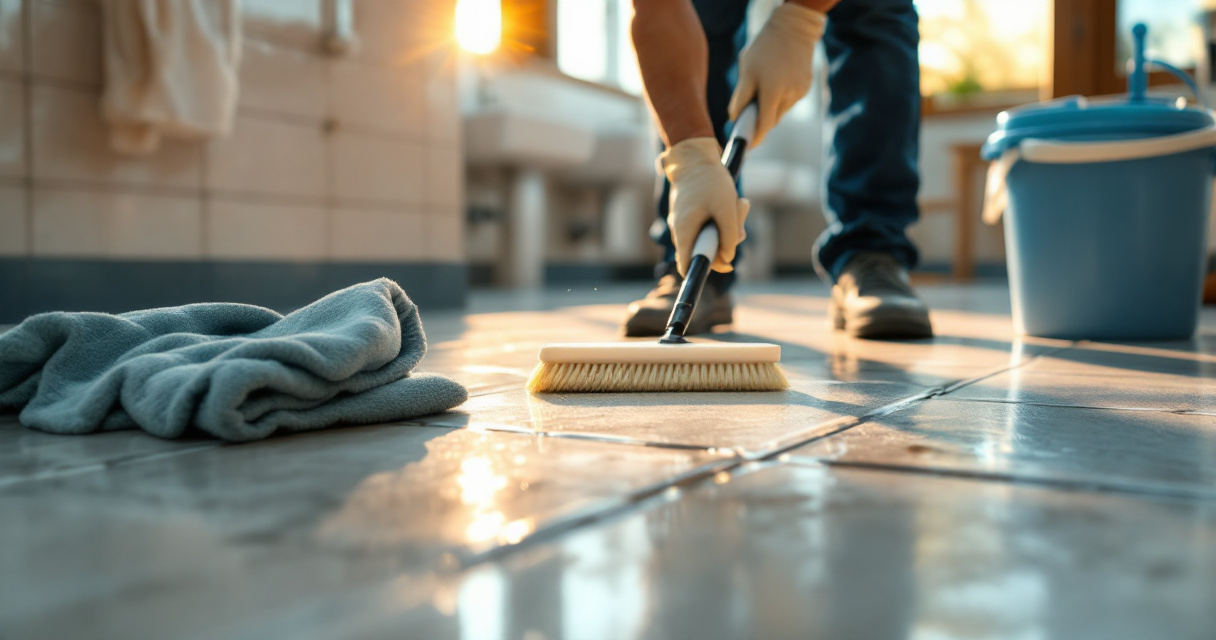
Restoration should be planned, not rushed. Start with the least aggressive option that can remove the soil. Avoid mixing chemicals, especially bleach with acidic products, because the reaction can release harmful gases.
Step-by-step restoration method
- Inspect the surface: Note ceramic, porcelain, terrazzo, natural stone, epoxy grout, or cement grout.
- Dry clean first: Remove sand and grit so brushes do not scratch the floor.
- Pre-test: Try the diluted cleaner in a hidden corner.
- Apply and wait: Respect the product label dwell time.
- Agitate: Use a grout brush, deck brush, or suitable scrubber.
- Rinse twice: Remove loosened soil and chemical residue.
- Dry and review: Use airflow, wet vacuuming, or a squeegee where suitable.
Avoid aggressive wire brushes on tiled healthcare floors. They can scratch tiles, damage grout, and leave metal marks. Also avoid leaving strong cleaner to dry on the surface, because residue can attract new soil.
Helpful grout cleaning video
Where grout keeps staining after proper cleaning, the issue may be worn sealer, cracked joints, water ingress, or poor drainage. For wet rooms, waterproofing and cleaning work together. Kenyan maintenance teams can compare surface protection ideas in this guide to construction chemicals for waterproofing bathrooms and balconies in Kenya.
What should procurement teams check before buying a tile grout cleaner for hospitals and institutions?
Procurement teams should check surface compatibility, dilution cost, safety data, packaging size, staff training needs, supplier reliability, and whether the cleaner fits the facility's infection-control workflow.
A cheap container may cost more if it needs heavy dosing, repeated scrubbing, or causes surface damage. Ask vendors for clear instructions in plain language. For larger facilities, request a small trial in a real washroom or corridor before issuing a bulk purchase order.
Buyer checklist for Kenyan institutions
- Surface fit: Safe for ceramic, porcelain, terrazzo, or stone as applicable.
- Soil fit: Handles grease, scale, soap scum, body oils, or traffic dirt.
- Dilution clarity: Easy ratios for cleaners and supervisors to follow.
- Safety: SDS available, PPE guidance clear, odour acceptable indoors.
- Availability: Reliable supply in Kenya, not long import delays.
- System fit: Works with mops, brushes, wet vacs, or scrubber dryers.
- Aftercare: Compatible with sealers, polish, and disinfectant routines.
For facilities already reviewing infection-control products, the industrial disinfectant checklist for 2026 is a useful companion because grout cleaning and disinfection should be planned as separate but connected steps.
Thika Wax Works can help buyers think through floor, washroom, laundry, and housekeeping needs as one maintenance system. For quick product discussions, many Kenyan facility managers simply visit thikawaxworks.com and speak to the team about the type of surface, traffic level, and cleaning routine they use.
FAQ: Tile grout cleaning in healthcare and institutional facilities
These quick answers cover the most common grout-cleaning questions facility managers ask before choosing a product or routine.
Can one cleaner handle tiles, grout, and disinfection?
Usually, no. A cleaner removes soil from tile and grout, while a disinfectant works after cleaning on a prepared surface. Some products combine claims, but hospitals should still follow label instructions carefully. Heavy soil, soap scum, and grease should be removed first so hygiene products can perform properly.
Is acidic grout cleaner safe for every floor?
No. Acidic cleaners can help with mineral deposits and cement haze, but they may damage marble, limestone, terrazzo, coloured grout, and some sealers. Always confirm tile type and test first. If the floor is mixed material, choose a safer alternative or ask for technical guidance before use.
Why does grout turn black again after cleaning?
Grout often darkens again when dirty mop water, moisture, worn sealer, poor drainage, or residue remains in the joints. The fix is not always stronger chemical. Improve rinsing, change mop water often, dry wet areas, inspect ventilation, and schedule periodic deep brushing.
Should hospitals seal grout after deep cleaning?
Sealing is often helpful for cement-based grout because it reduces absorption and staining. It is not a substitute for cleaning, and it must be maintained. After deep cleaning, allow grout to dry fully, confirm compatibility, and follow the sealer manufacturer's instructions for healthcare or institutional floors.
Conclusion
A good grout programme is simple: remove loose dirt daily, deep clean grout lines on schedule, rinse properly, control moisture, and reserve disinfection for already-clean surfaces. For Kenyan hospitals, schools, hotels, offices, and public institutions, the right product protects appearance, hygiene routines, labour time, and floor life.
Looking for a practical tile grout cleaner for hospitals and institutions in Kenya? Thika Wax Works has you covered. Visit thikawaxworks.com or get in touch with the team to discuss the right cleaning and maintenance solution for your facility.