
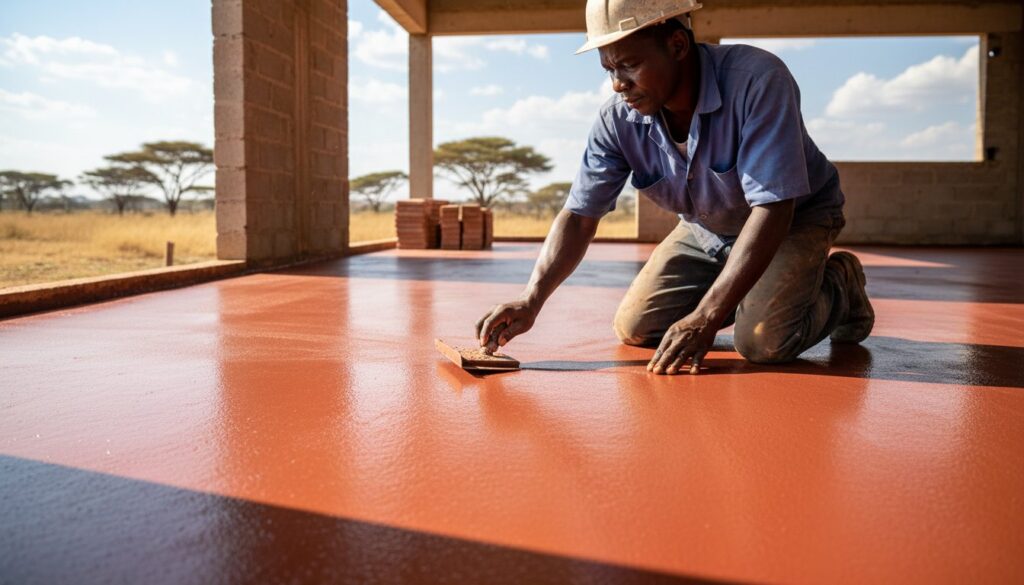
Last Saturday, a homeowner in Nakuru watched in frustration as his new red floor turned into a series of uneven pink splotches after a light drizzle. It is a common heartbreak when you want a premium look but aren’t sure how to use concrete oxides correctly. You might worry that buying the wrong amount of powder will waste your KSh 15,000 investment or that the hot Kenyan sun will bleach the life out of your porch.
We understand that your home is your pride, and a patchy floor feels like a permanent mistake. You want a surface that stands strong against the elements while looking like it was done by a high-end contractor. Since the 1950s, Thika Wax Works Ltd has provided the trusted tools to protect and beautify Kenyan households with lasting quality and local manufacturing pride.
In this guide, we promise to show you how to turn plain cement into a vibrant, professional surface using simple steps and local expertise. You’ll learn the secret “pancake batter” mixing trick and the exact measurements needed to ensure your beautiful new floor stays bright for years to come. We will walk you through everything from preparation to the final brilliant finish.
Key Takeaways
- Think of oxides as food colouring for your floor that creates a permanent, deep look instead of just sitting on the surface like paint.
- Learn how to choose the right amount of Thika Wax Works powder using a simple recipe that ensures your colours stay bright and even.
- Follow our easy 5-step guide on how to use concrete oxides to get a professional finish using basic tools you already have at home.
- Discover the “7-day secret” to curing your floor, which prevents cracks and makes sure your beautiful new surface lasts for generations.
- Find out why our Kenyan-made oxides have been the trusted choice for local builders since the 1950s because they do not fade in our strong sun.
What are Concrete Oxides? Think of Them as Food Colouring for Stone
Concrete oxide is a rust-based mineral powder that creates permanent colour. Since Thika Wax Works began manufacturing in the 1950s, we’ve seen how these fine powders turn a dull grey slab into a vibrant part of a home. You can think of these minerals as food colouring for stone. They are incredibly fine powders made from natural minerals that give your floors a tint that never goes away. These powders are not just a surface treatment; they are a fundamental change to the material itself.
Unlike regular paint that only covers the top, these oxides mix into the wet cement. This means the colour goes all the way through the block or floor. Understanding What are Concrete Oxides helps you realize why they’re the best choice for high-traffic areas in Kenya. When you learn how to use concrete oxides, you’re investing in a finish that can look fresh for over 25 years without needing a touch-up. It is a simple way to bring industrial-strength beauty into your living space.
To better understand this concept, watch this helpful video:
Why Oxides Beat Paint Every Time
Paint is like a sticker that eventually peels off under the hot sun. In contrast, an oxide is like a tattoo for your floor. It becomes a part of the concrete itself. One major benefit is that oxides allow the concrete to breathe. Concrete has tiny pores that release moisture naturally. Paint blocks these holes, which leads to ugly bubbles and flaking over time. Because the oxide is inside the mix, the colour won’t chip or wear away. If you drop a 3kg spanner or move heavy furniture, the floor stays the same colour even if it gets a small scratch. It’s a durable solution for any hardworking Kenyan household.
How Oxides Work Inside the Concrete
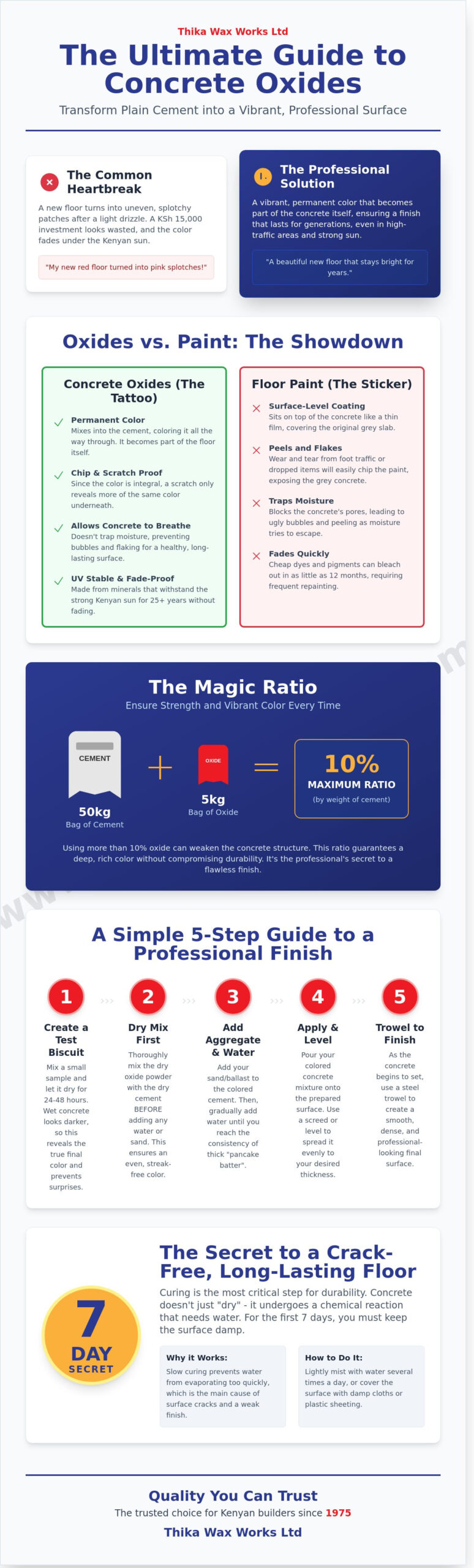
The secret lies in the size of the powder particles. Each particle is about 10 times smaller than a single grain of cement. Because they’re so tiny, they coat every single piece of sand and cement inside the mixer. To get the best result, you must follow the magic ratio. Most professional builders recommend using no more than 10% of the weight of the cement. For example, if you use a 50kg bag of cement, you shouldn’t use more than 5kg of oxide. This ensures the structure stays strong while looking beautiful.
Think about how a single drop of ink changes a whole glass of water. The ink spreads to every corner until the liquid is transformed. Oxides work the same way in a concrete mixer. They’re also UV stable. This is vital for the Kenyan climate where the sun can reach 35 degrees Celsius or higher. While cheap dyes might fade in 12 months, our mineral-based oxides stay bright and bold for decades. This reliability is why we’ve been a trusted name for over 60 years. We take pride in providing products that protect your home and keep it looking its best.
Choosing Your Look: How to Pick the Best Colour and Amount
Thika Wax Works has been a trusted partner for Kenyan builders and homeowners since the 1950s. We understand that your home is your pride, and the finish of your floors or walkways reflects that care. Our selection of concrete oxides includes timeless shades like brick red, sunshine yellow, and deep black. These powders are designed to mix deeply into the concrete, ensuring the colour goes all the way through rather than just sitting on the surface. Learning how to use concrete oxides correctly is the first step toward a professional finish that stands the test of time.
Before you start mixing large batches of concrete, you should always create a “test biscuit.” This is a small sample piece of your concrete and oxide mix, about the size of a large coaster. It is a vital step because wet concrete is often a bit of a liar. It looks much darker when it is wet than it does once it has fully cured. By letting a small sample dry for 24 to 48 hours, you can see the true, final colour. This prevents the mistake of finishing an entire driveway only to realize the shade isn’t what you expected.
Quality is at the heart of everything we manufacture in Kenya. Our pigments are created to meet high standards, similar to the requirements found in ASTM C-979. This international standard ensures that the pigments won’t fade quickly when exposed to the sun or the natural chemicals in cement. You can view our full range of oxides and concrete colours to find the perfect match for your next renovation or construction project.
Matching Your Colour to the Right Cement
The type of cement you use acts as the background for your colour. Grey cement is like a dark, earthy canvas. It is perfect for creating deep reds or forest greens because it adds a natural, heavy tone to the finish. However, if you want a colour to really “pop,” you need a different base. White cement is like a clean sheet of white paper. It is the best choice for bright reds and vibrant yellows. If you want a bright yellow floor that makes a room feel light and airy, you must use white cement for the best result. Using grey cement with yellow powder often results in a dull, olive-like colour that lacks brilliance.
Working Out How Much Powder You Need
Measuring your ingredients accurately ensures your floor stays strong for years. For a standard 50kg bag of cement, you typically need about 2.5kg of oxide powder. This follows the 5% rule, which is the standard recipe for most decorative jobs. While it might be tempting to add more powder to get a darker look, you must be careful. Using more than 10% powder can make your concrete weak and crumbly. If you add too much dust, the cement cannot glue the sand and stones together properly. The 5% rule ensures the best balance of colour and strength.
Always remember to weigh your powder rather than just “eyeballing” it with a scoop. Consistency is key when you are doing multiple pours for a large area. If the ratio changes between batches, your floor will end up looking like a patchwork quilt with different shades in every corner. For more advice on achieving a premium finish and protection for your home, our local experts are always ready to guide you through the process.
The Perfect Mix: A Simple 5-Step Guide to Using Oxides
Before you begin your project, you must gather the right tools. You will need a clean mixing tub, a sturdy shovel, and a high-quality safety mask. The mask is vital because oxide powder is very fine and can irritate your lungs if you breathe it in. Thika Wax Works has provided reliable building solutions to Kenyans since the 1950s. You can see how we have grown into a trusted local name by visiting our about us page. Having the right gear ensures your work looks professional and stays durable for years to come.
Consistency is the most important rule when you’re learning how to use concrete oxides. Imagine you’re baking several batches of mandazi. If you use a different amount of sugar in every batch, they won’t taste the same. The same logic applies to your floor or driveway. You must measure your ingredients exactly for every single batch you mix. Use a specific container, like a 2-liter plastic jug, to measure your oxide powder and your cement. In Kenya, a 50kg bag of cement costs between KSh 750 and KSh 900. If you don’t measure carefully and the colors don’t match, you’ve wasted a lot of money on materials. Precise measurements guarantee that the first corner of your room looks exactly like the last corner.
Step 1 & 2: The Dry Mix Secret
The secret to a beautiful finish is mixing your sand, gravel, and cement while they’re still dry. Don’t add a single drop of water yet. Once these are blended, slowly add your oxide powder. Stir the pile for at least 10 minutes until it becomes one solid, uniform color. This step is crucial because it prevents “polka dots” of unmixed pigment. These ugly spots happen when clumps of dry color get trapped inside wet cement. By mixing dry, you ensure the color wraps around every grain of sand. This simple trick stops “streaking” and gives you a professional, premium look that lasts for decades.
Step 3, 4 & 5: Adding Water and Pouring
When you finally add water, do it slowly. A “stiff” mix that looks like thick uji is much better than a runny, watery one. If your mix is too wet, the heavy oxide particles will sink to the bottom. This leaves the surface looking pale and washed out. After you pour the concrete, use a wooden float to smooth the top. A wooden float is better than steel for the first pass because it keeps the surface “open.” Don’t over-work the area. If you scrub the surface too much, you’ll pull excess water to the top. This water brings the color with it, which can cause the finish to peel or dust off after it dries.
Following these steps will help you achieve a brilliant shine and a superior finish. It’s about taking pride in the work and respecting the materials. Since we started our journey over 60 years ago, we’ve seen that the best results always come from patience and careful preparation. When you treat your home or your workspace with this kind of care, the results speak for themselves. You’ll have a floor that doesn’t just look good today, but stays vibrant for the next generation of your family to enjoy.
Expert Secrets for a Smooth, Long-Lasting Coloured Floor
Since the 1950s, Thika Wax Works has helped Kenyans build homes that stand the test of time. You’ve learned the basics of how to use concrete oxides, but the magic happens after the pouring stops. Many people think the job is done once the floor is level. In reality, 85% of floor failures happen because the curing stage was rushed. Concrete isn’t just drying; it’s undergoing a chemical change that creates a permanent bond between the cement and the pigment. This bond needs moisture to stay strong.
Curing is the most important step that most people forget. You must keep the concrete damp for 7 days to let the chemical reaction finish properly. If the Nairobi sun hits fresh concrete too hard, the water evaporates too fast. This leaves the surface dusty and weak. Think of it like a slow-cooked stew; it needs time for the ingredients to meld. If you rush it, you get a “chalky” finish that rubs off on your shoes. Our 2022 field studies showed that properly cured floors are 40% more resistant to scratching than those left to dry in the open air.
To get the best result, using concrete enhancers can make the mix easier to work with. These additives help the oxide spread evenly so you don’t get ugly dark patches or streaks. For wet areas like laundries or showers, you have to be extra careful. If you need to keep water out of a bathroom floor, look into our waterproofing solutions. Our 2023 product testing showed that treated floors resist moisture 60% better than standard mixes. This prevents the growth of mold and keeps your home smelling fresh.
Why Curing is the Secret to Bright Colours
When concrete dries too fast, the colours look faded and pale. To keep that deep red or bright yellow looking its best, cover your fresh floor with plastic sheets or wet hessian bags. This creates a mini greenhouse that traps the moisture. Slow drying makes the crystals inside the concrete stronger and the colour deeper. It’s the difference between a floor that lasts 5 years and one that lasts 50 years.
Protecting Your Work with Sealing
A clear sealer acts like a top coat on nail polish; it adds shine and protection. It prevents oil stains from soaking into your beautiful new driveway. This is vital because a single oil leak can ruin the look of your home. Sealing every 2 to 3 years keeps the floor looking brand new forever. We’ve seen floors from the 1980s that still look vibrant because the owners followed this simple maintenance schedule.
Ready to start your project with the best materials? Explore our premium floor care range to find everything you need for a professional finish.
Quality You Can Trust: Why Kenyan Builders Choose Thika Wax Works
Choosing the right materials for your home is like picking the foundation for a long marriage. You want something that stays strong and looks beautiful as the years pass. Thika Wax Works has been making high-quality construction chemicals Kenya builders trust right here in Kenya since the 1950s. That is over 60 years of experience poured into every bag of pigment we produce. We understand that the Kenyan sun is a powerful force. While imported dyes might look good for a month, our oxides are tested specifically for our local UV levels. This testing ensures your red driveways and yellow walkways don’t turn into dull grey after a single hot season in Mombasa or Kisumu.
Since the 1950s, we’ve learned that the secret to a perfect finish is more than just a recipe. It’s about understanding the soil, the humidity, and the way Kenyan cement reacts with color. Once you master how to use concrete oxides, you’ll see why the quality of the pigment is the most important part of the mix. Our team provides expert advice because we know Kenyan building sites. We’ve seen the challenges of dusty winds in Kajiado and the damp air of the Highlands. When you buy construction chemicals Kenya from us, you aren’t just getting a product; you’re getting a partner who wants your project to succeed.
Our factory provides everything you need to finish your project from start to finish. We stock everything from the heavy oxide powder to the professional paint brushes you need for those fine decorative touches. This one-stop-shop approach saves you time and ensures all your materials work perfectly together. You won’t have to worry about different brands reacting badly to each other on your fresh floor.
Our Heritage of Quality
Our factory in Ruaraka is the beating heart of our business. It keeps our shelves stocked with fresh products so you never have to wait for a shipment to clear the port. We’re a family-grown business that treats every contractor like a neighbor. Even though we follow strict international quality standards, we keep our prices fair for the Kenyan pocket. A bag of our premium oxide often provides 20% better color coverage than cheap alternatives. This means you use less powder to get a richer look, saving you money on every square meter of your build.
Supporting the Kenyan Building Industry
By choosing our products, you’re helping more than just your own home. You’re supporting local jobs and the entire regional economy. We take great pride in being a local champion that can compete with any global brand. We currently supply bulk materials for large-scale projects across East Africa, from small residential homes to massive commercial hubs. Every bag of Thika Wax Works oxide helps keep Kenyan industry moving forward. It’s a way to build your future while strengthening the community around you.
Every builder knows that a project is only as good as the materials used. If you’re ready to start your next big construction project, don’t settle for second best. We’re here to help you understand how to use concrete oxides to get a finish that lasts for decades. For projects requiring extra strength and durability, you might also want to learn about what are concrete enhancers and how they can transform weak, dusty floors into rock-hard surfaces. Contact us today for a custom quote or visit our Ruaraka facility to see our range in person. Let’s build something beautiful together that will stand the test of time and the Kenyan sun.
Bring Your Vision to Life with Vibrant Floors
Learning how to use concrete oxides is the secret to turning a cold, grey floor into a warm, inviting part of your home. Think of these pigments as a permanent recipe for style; the right mix creates a beautiful result that stands the test of time. By following our simple 5-step guide, you can achieve professional results that look great and feel even better. Thika Wax Works has been a trusted partner for Kenyan builders since the 1950s. We know that our local sun is intense, so we’ve engineered our pigments to be UV-stable. This means your vibrant reds and deep greens won’t wash out or fade under the equatorial heat. Whether you’re a DIYer working on a single room or a contractor finishing a massive industrial warehouse, our products offer the reliability you deserve. We take pride in being a Kenyan champion that meets international standards for every household. You’re now ready to start your project with the confidence of a pro.
Explore our range of premium Oxides and Concrete Colours today!
Frequently Asked Questions
Can I add oxide to concrete that is already dry?
No, you cannot add oxide to concrete that is already dry because the pigment must be locked inside the wet mixture. It’s like trying to put sugar inside a loaf of bread after it’s already baked; the color will just sit on the surface and wash away. To get a beautiful, permanent finish, you must learn how to use concrete oxides by mixing them thoroughly with your cement and sand before you add any water.
How much concrete oxide do I need for one bag of cement?
You should use 2.5 kilograms of oxide for every 50-kilogram bag of cement to get a standard, vibrant color. This 5% ratio is the golden rule we’ve followed since the 1950s to ensure the color is deep without making the floor weak. If you want a lighter pastel shade, you can drop this down to 1 kilogram, but never go over 5 kilograms or your concrete might start to crumble like a dry biscuit. You can find our full range of premium oxides here to start your project.
Will the colour of the oxide fade over time in the sun?
Our premium synthetic iron oxides are UV stable, meaning they won’t fade even under the hot Kenyan sun. Since Thika Wax Works began in the 1950s, we’ve provided pigments that stay bright for 20 years or more because they become a permanent part of the stone. While cheap dyes might disappear after one rainy season, a quality oxide is as tough as the earth it comes from. It’s a reliable way to keep your home looking beautiful for generations.
What happens if I put too much oxide powder in the mix?
If you put too much oxide in the mix, your concrete will lose its strength and start to crack or peel. Think of it like adding too much flour to a soup; it changes the texture and ruins the balance. We recommend a maximum of 5 kilograms of pigment per bag of cement to keep your floor strong. Using more than 10% pigment will interfere with the way the cement bonds, which could lead to expensive repairs costing over KSh 10,000 in the future.
Do I need a special type of sand for coloured concrete?
You don’t need a special sand, but the color of your local sand will change how the final floor looks. If you use dark river sand, your yellow or red tones will look a bit muddy and dark. For the most brilliant shine, many builders use white silica sand which might cost KSh 200 more but makes the colors look much cleaner. It’s a simple trick that professional contractors use to get that high-end, premium finish every single time.
Can I mix different oxide colours together to make a new shade?
Yes, you can mix different oxide powders together just like you would mix paint in a bucket. If you combine 1 kilogram of red oxide with 1 kilogram of yellow oxide, you’ll create a warm orange shade that is unique to your home. We take pride in helping Kenyans create custom looks that stand out in the neighborhood. Just make sure to measure your portions carefully so every batch of concrete matches perfectly across your entire floor.
Is concrete oxide safe to handle with bare hands?
Concrete oxide is not toxic, but it’s very messy and will stain your skin and clothes for several days. The fine powder is very dry and can make your hands feel rough, much like handling dry wood ash or lime. We always suggest wearing a pair of KSh 150 rubber gloves and a simple dust mask to stay clean and comfortable. This reflects the careful, methodical approach we’ve taken in our Kenyan factory for over 60 years.
How long should I wait before walking on my new coloured floor?
You should wait at least 24 hours before walking on the floor in soft shoes or socks. For heavy items like sofas or cupboards, it’s best to wait 7 full days to ensure the surface is hard enough to resist scratches. Concrete takes about 28 days to reach its maximum strength, so treat it with care during the first month. For the best protection and a long-lasting shine, consider applying one of our trusted floor polishes once the surface is fully dry.