A dirty warehouse floor costs more than appearance, it slows picking, raises slip risk, and shortens floor life. In Kenya, that problem gets worse when dust, oil, cement residue, pallet traffic, and rainy-season mud hit the same site in one shift. If you're comparing detergents, degreasers, and scrubber-compatible chemicals, the goal is not the strongest product, it's the right chemistry for your soil, your floor, and your workflow. That's where Thika Wax Works becomes useful, especially for buyers who need practical industrial cleaning supplies from a local supplier that understands East African operating conditions. This guide focuses on what works in factories and warehouses in 2026, how to avoid floor damage, and how to buy cleaner that keeps production moving.
Why generic floor detergents fail in industrial buildings
Most ranking pages focus on machines and prices, but they skip the chemistry problem. A factory floor can carry grease, carbon dust, forklift tire marks, food residue, cement slurry, metal fines, and rain-borne soil at the same time. One generic cleaner rarely handles all of that well.
Wikipedia describes a cleaner broadly as a worker tasked with cleaning a space, which is useful because it reminds us that cleaning success is not just about the product, but also the process, worker safety, dilution, dwell time, and equipment fit. In industrial settings, the product must match both the contamination and the operator method.
Key insight: The best industrial floor cleaner is not the most aggressive formula. It's the one that removes your actual soil without harming concrete, epoxy, sealers, machinery, or staff.
Kenyan sites also deal with outdoor-to-indoor contamination more heavily than many competitor articles admit. Open loading bays, unpaved yards, and mixed wet-dry seasons mean your floor cleaner must control both oily films and tracked-in particulate soil.
The four soil categories you need to identify first
Before you buy, sort your dirt into these groups:
- Dry particulate soil: dust, sand, cement powder, packaging debris
- Oily and greasy soil: lubricants, diesel film, food fats, machine oils
- Protein and food soil: meat processing residue, dairy spills, beverage sugars
- Mineral deposits: hard-water marks, cement haze, rust stains
That matters because alkaline degreasers work differently from neutral maintenance cleaners, and acid-based products used for mineral scale can damage sensitive finishes if misused.
How to match cleaner chemistry to Kenyan factory floor types
Your floor material sets the safe cleaning range. Warehouses in Kenya commonly use power-floated concrete, densified concrete, painted concrete, epoxy-coated floors, tiled utility zones, and rough external aprons. Each reacts differently to high-pH or solvent-heavy chemicals.
Safe cleaner selection by surface type
Use this as a starting point, then confirm with the floor installer or chemical supplier.
Floor type and cleaner fit
| Floor type | Best cleaner type | Avoid or limit | Typical Kenya use case |
|---|---|---|---|
| Sealed concrete | Neutral or mild alkaline cleaner | Strong acids, repeated solvent use | Warehouses, distribution centers |
| Unsealed concrete | Mild to medium alkaline cleaner | Harsh acids that etch paste | Workshops, older factories |
| Epoxy-coated floor | Neutral, low-foam scrubber detergent | Abrasive powders, strong solvents | Pharma, food, electronics |
| Ceramic or quarry tile | Neutral or targeted degreaser | Waxy residues that leave slip film | Kitchens, washdown zones |
| External loading apron | Heavy-duty degreaser for traffic film | Products that create foamy runoff | Loading bays, truck zones |
A practical rule: if your floor has a coating, start neutral. If your floor is bare and oily, step up carefully to an alkaline degreaser. If cement residues or mineral stains are the issue, use a specialty treatment only on affected areas, not across the full production floor.
For sites that also maintain concrete finishes outdoors, this separate guide on choosing concrete oxide colors for paving blocks in Kenya is useful because pigment consistency and surface care often overlap in yards, precast areas, and paved compounds.
Manual mopping vs auto-scrubber cleaning in 2026
Search results for this topic are crowded with scrubber machine listings, and that makes sense. Mechanized cleaning is now central to industrial floor care because it controls labor time and produces a more consistent finish than mop-and-bucket cleaning. Competitor pages mention 17-inch machines and commercial scrubbers, but they rarely explain when the machine changes the detergent choice.
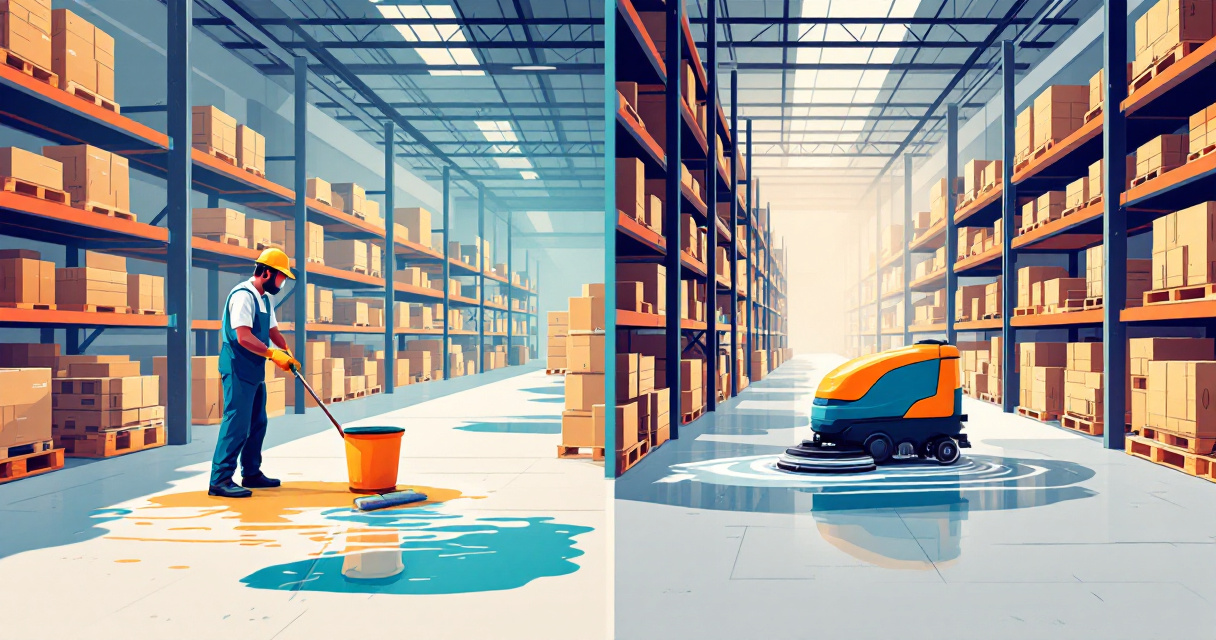
Machine cleaning usually needs low-foam detergents that won't overload recovery tanks or leave residue. Manual cleaning can tolerate more foam, but it often spreads dirty water instead of removing it.
When each method makes sense
- Manual cleaning works for spot spills, corners, stairs, and small stores.
- Single-disc scrubbing suits periodic deep cleaning and agitation on stubborn soil.
- Walk-behind auto-scrubbers fit medium warehouses and production aisles.
- Ride-on scrubbers make sense where square meter coverage is large and labor hours are tight.
If you package finished goods on site, chemical selection also affects adjacent operations. A floor cleaner that leaves residue can transfer to cartons or pallets. That connects closely with line hygiene and packaging reliability covered in this 2026 comparison of hot melt vs cold glue for carton packaging in East Africa.
The hidden cost of wrong foam levels
Too much foam reduces vacuum pickup, leaves dirty streaks, and slows down operators who must stop and dump tanks more often. In food plants and busy warehouses, that turns a cheap detergent into an expensive one fast.
"What gets measured gets managed.", Peter Drucker, The Drucker Institute
Floor cleaning should be measured by square meters cleaned per hour, rework rate, slip complaints, and chemical cost per tank, not by drum price alone.
A practical buying checklist for industrial floor cleaner in Kenya
Kenyan buyers often ask one question first: How much per litre? That's fair, but incomplete. Your true buying decision should focus on use rate, rinse behavior, worker handling, and local support.
What to ask suppliers before you buy
- What dilution range is recommended for light, medium, and heavy soil?
- Is the cleaner low-foam and auto-scrubber safe?
- Will it leave residue on sealed concrete or epoxy?
- Does it cut oil, food soil, or just dust and light dirt?
- Can staff use it safely with standard PPE and training?
- Is a technical data sheet or usage guide available?
- Can you supply consistently in Kenya, not just once?
This is where Thika Wax Works can add value, because local availability matters as much as product performance. If a cleaner runs out and your team replaces it with a random household detergent, your floor-care program breaks immediately.
Red flags that should slow down a purchase
- No clear dilution instructions
- No distinction between manual and machine use
- Strong perfume used to signal "cleanliness" instead of real soil removal
- Claims that one product handles every surface and every contaminant
- No after-sales guidance on training or application
Why chemical cost per use beats cost per container
A higher-priced concentrate can still be cheaper if it dilutes correctly and reduces rework. Compare products by:
- Cost per 10-litre solution tank
- Number of fills per drum
- Average area cleaned per fill
- Time saved from fewer repeat passes
- Damage avoided on coatings and seals
That framework works well for warehouses, but it also helps hospitality and facility teams. If your company cleans mixed-use sites, this housekeeping chemicals checklist for hotels in Kenya gives a useful contrast between industrial and hospitality-grade products.
Sector-specific recommendations for Kenyan factories and warehouses
Not every industrial site should use the same cleaner. The right product for a flour mill is different from the right product for a steel fabricator or cold-room warehouse.
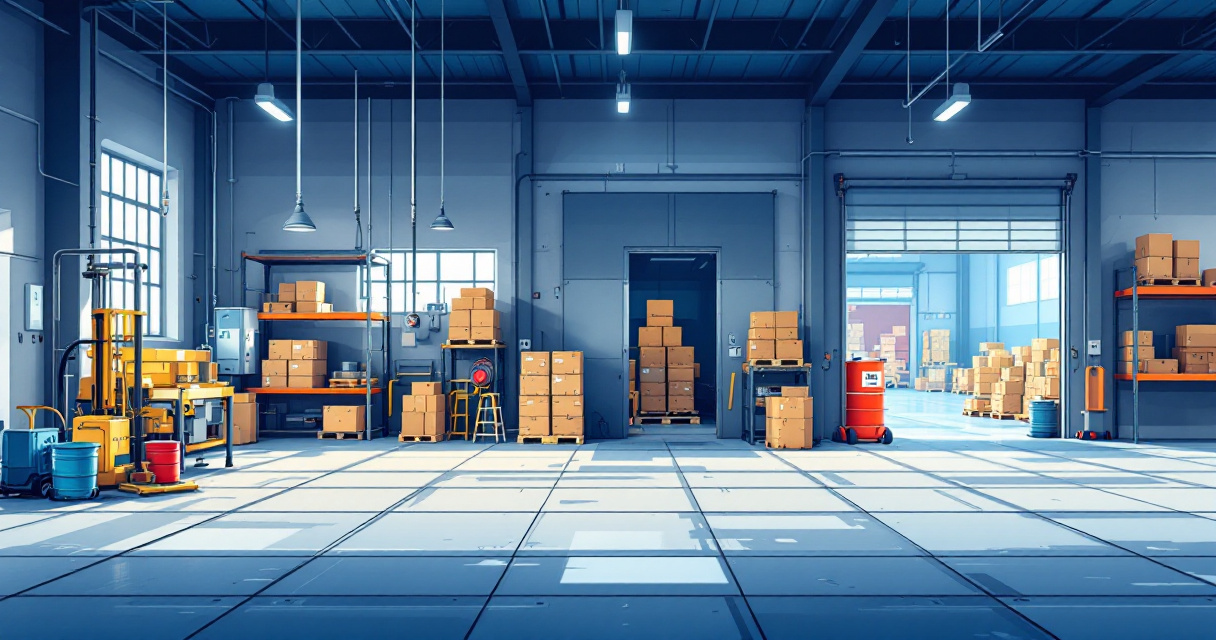
Best fit by industry and contamination pattern
Use these examples to narrow your shortlist.
- Food processing plants: low-residue cleaner, often neutral to mild alkaline, with strong removal of fats, sugars, and protein spills
- Plastic and packaging factories: anti-residue maintenance cleaner for dust, pellet scatter, light grease, and forklift traffic marks
- Engineering workshops: stronger alkaline degreaser for cutting oils, hydraulic leaks, and carbon deposits
- Cement and construction yards: dust-control cleaner for fine particulate load, with periodic specialty treatment for cement buildup
- Pharma and electronics: neutral, low-foam, coating-safe cleaner with minimal scent and residue
- General warehousing: neutral or mild alkaline scrubber detergent for tire marks, tracked-in mud, and pallet dust
For facilities that also manage roofs, concrete service areas, and maintenance buildings, floor care should sit inside a wider maintenance plan. This is why many buyers also look at the best waterproofing products for concrete roofs in Kenya, because moisture intrusion and floor contamination often show up together in loading and storage areas.
Safety, compliance, and worker training matter more than many buyers expect
Industrial cleaning is partly a chemical purchase and partly a management system. The 2022 paper on public health measures in supply chains highlights how hygiene and process control affect operational reliability across facilities and supply chains, especially where contamination control matters in production and handling environments (Processes).
A second operational issue is the workforce itself. Research on precarious work and workplace conditions in East Africa underlines why worker protection, clear supervision, and respectful operating conditions matter in real facilities, not just on paper (IDS Research Report 88).
Minimum training points for cleaning teams
- Read dilution and contact-time instructions.
- Pre-sweep heavy dry soil before wet cleaning.
- Test unfamiliar chemicals on a small area.
- Use the right PPE for concentrate handling.
- Mark wet floors and isolate traffic where possible.
- Rinse recovery tanks and pads after use.
- Record spill types and repeat problem zones.
Key insight: Most floor damage blamed on "bad chemicals" comes from wrong dilution, wrong pad choice, or leaving product on the surface too long.
Using Thika Wax Works as a supply partner can help standardize this process if you need repeatable procurement and product guidance across multiple sites.
A simple Kenyan SOP for daily warehouse cleaning
For a normal warehouse with concrete or coated floors:
- Dry sweep or vacuum dust first
- Spot-degrease localized oil patches
- Scrub main aisles with low-foam cleaner
- Use clean water in recovery and rinse systems as required
- Inspect loading bay edges and drains
- Log any recurring stain source, such as leaking forklifts or wet pallets
That sounds basic, but it prevents the common mistake of turning dust into muddy slurry and smearing it across a larger area.
What smart buyers should expect in 2027
Industrial cleaning in Kenya is moving toward mechanized application, lower-residue chemistry, and tighter process tracking. That trend lines up with broader building operations research that treats maintenance and occupant outcomes as part of the building system rather than isolated tasks (Cambridge, Buildings).
Three shifts are worth watching:
- More machine-compatible concentrates for scrubbers and maintenance teams
- More demand for documented SOPs from auditors, buyers, and multinational tenants
- Stronger preference for local supply reliability over one-off imported bargains
Relevant factory cleaning video example
The video is not Kenya-specific, but it shows why heavy industrial and processing environments need cleaning systems built around contamination type, workflow, and equipment, not just aesthetics.
"Quality is never an accident; it is always the result of intelligent effort.", John Ruskin, Quote Investigator reference page
That applies directly to floor care. Better floors come from the right chemistry, correct equipment, trained operators, and consistent supply.
Photos that fit this article best
If you're adding visuals, use photos with Kenyan people in real industrial settings:
- Warehouse staff using a walk-behind scrubber
- Maintenance crew mixing concentrate with PPE
- Forklift aisle before-and-after cleaning
- Food plant operator cleaning a spill zone correctly
- Store supervisor checking floor finish and slip signs
Those images will feel more credible than stock photos of spotless foreign factories.
Conclusion
Choosing an industrial floor cleaner for factories and warehouses in Kenya is really a three-part decision: identify the soil, confirm the floor type, then match the chemical to your cleaning method. Skip any supplier who can't explain dilution, residue behavior, machine compatibility, and safety in plain terms. If you want a practical starting point, shortlist one neutral low-foam maintenance cleaner and one heavier degreaser, test both on your actual floor, and track results by coverage, rework, and staff feedback.
For companies that need dependable industrial cleaning support, Thika Wax Works is a sensible place to start. Review your current floor-care routine, compare it against the checklist above, then contact Thika Wax Works for product guidance that fits your factory, warehouse, or mixed-use facility in Kenya. A cleaner floor is good, but a repeatable cleaning system is what saves money month after month.
Generated by EarlySEO.com