
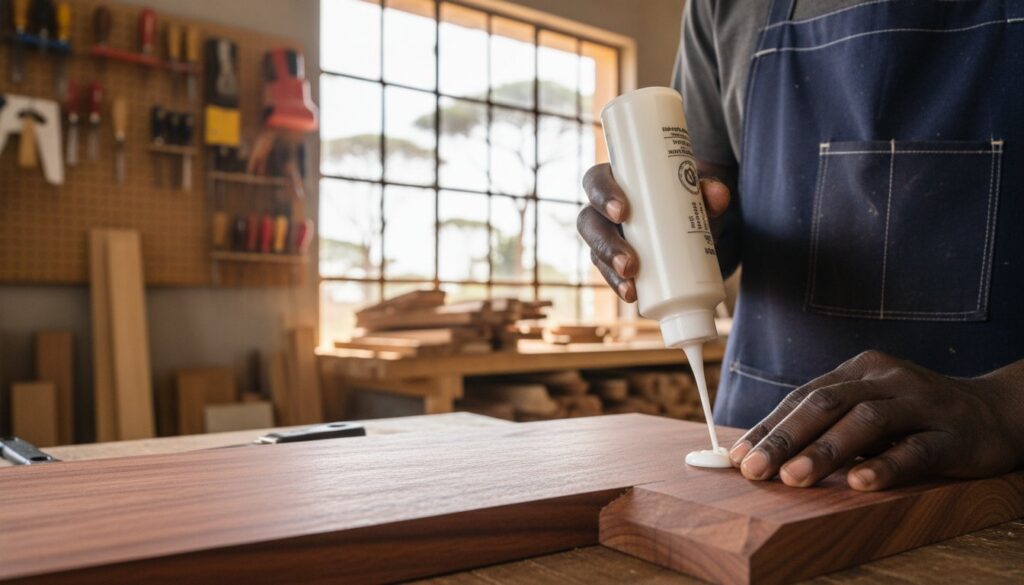
Imagine spending 40 hours crafting a beautiful mahogany chair, only to have the joint fail during a family dinner just 180 days later. It’s a common heartbreak for many makers who realize too late that their adhesive wasn’t up to the task. Choosing the right cold glue for woodworking is the difference between a piece that ends up in a trash heap and one that stays in your family for 50 years. At Thika Wax Works, we’ve been perfecting industrial-grade solutions since the 1950s to ensure your hard work stands the test of time. Think of your adhesive like the hidden skeleton of your furniture; if the bones are weak, the whole piece will eventually wobble.
You likely agree that a glue joint should be stronger than the wood itself, and it certainly shouldn’t leave behind messy yellow stains on light pine or oak. Our expert guide will show you exactly how to pick a liquid bond that dries clear and holds tight. We’ll explain the simple differences between adhesives for hard and soft woods so you never have to guess again. By the end, you’ll know how to protect your projects with the same premium quality we’ve provided to Kenyan homes for decades. Let’s look at how these trusted local products can help you build furniture that lasts for generations.
Key Takeaways
- Learn how the right liquid adhesive acts like a “strong handshake” between pieces of wood to keep your furniture sturdy for generations.
- Discover how to pick the best cold glue for woodworking by looking for high strength and a clear finish that keeps your projects looking professional.
- Find out why the secret to a perfect bond starts with a clean surface and a thin, even layer of glue instead of using too much.
- Understand the difference between simple craft glues and the professional-grade liquids needed to hold heavy timber together.
- See why Kenyan woodworkers have trusted our locally made formulas since the 1950s to handle our unique climate and types of wood.
What is Cold Glue and Why is it the Best Friend of Wood?
Cold glue is a liquid adhesive that joins wood together without using heat or complex machines. At Thika Wax Works, we’ve provided these reliable solutions since the 1950s, helping craftsmen find the best cold glue for woodworking to build furniture that lasts for generations. You can think of this adhesive like a firm handshake between two boards. Once the bond forms, the pieces stay together permanently. It’s the most popular tool for building home furniture because it’s safe and easy to handle. Unlike hot adhesives that harden in seconds, this glue stays wet for several minutes. This gives you plenty of time to align your joints perfectly.
How Cold Glue Works Its Magic
Wood surfaces are covered in millions of tiny holes that you can’t see with the naked eye. When you use cold glue for woodworking, the liquid flows into these openings just like juice soaking into a sponge. As the glue dries, it transforms into a solid plastic bridge that hooks into the wood fibers. This physical link is incredibly powerful. Scientific tests show that a high quality bond can hold over 3,000 pounds of pressure per square inch. Often, the natural wood will break apart before the glue line even cracks.
Why ‘Cold’ Glue is Better for Your Workshop
Using this type of adhesive means you don’t have to spend money on expensive electric heating pots. It’s a simple, “pour and use” product that saves on your monthly power bills. The glue remains stable in the bottle for up to 24 months, so you won’t waste money by having it dry out too quickly. Cleaning up is also very easy. If you spill a drop, you can just wipe it away with a wet rag while it is wet. This keeps your workspace clean and ensures a beautiful finish on your timber. You can find our professional grade options on our liquid cold glues page to get started on your next build with a trusted Kenyan partner.
4 Things to Look for Before Buying Wood Glue
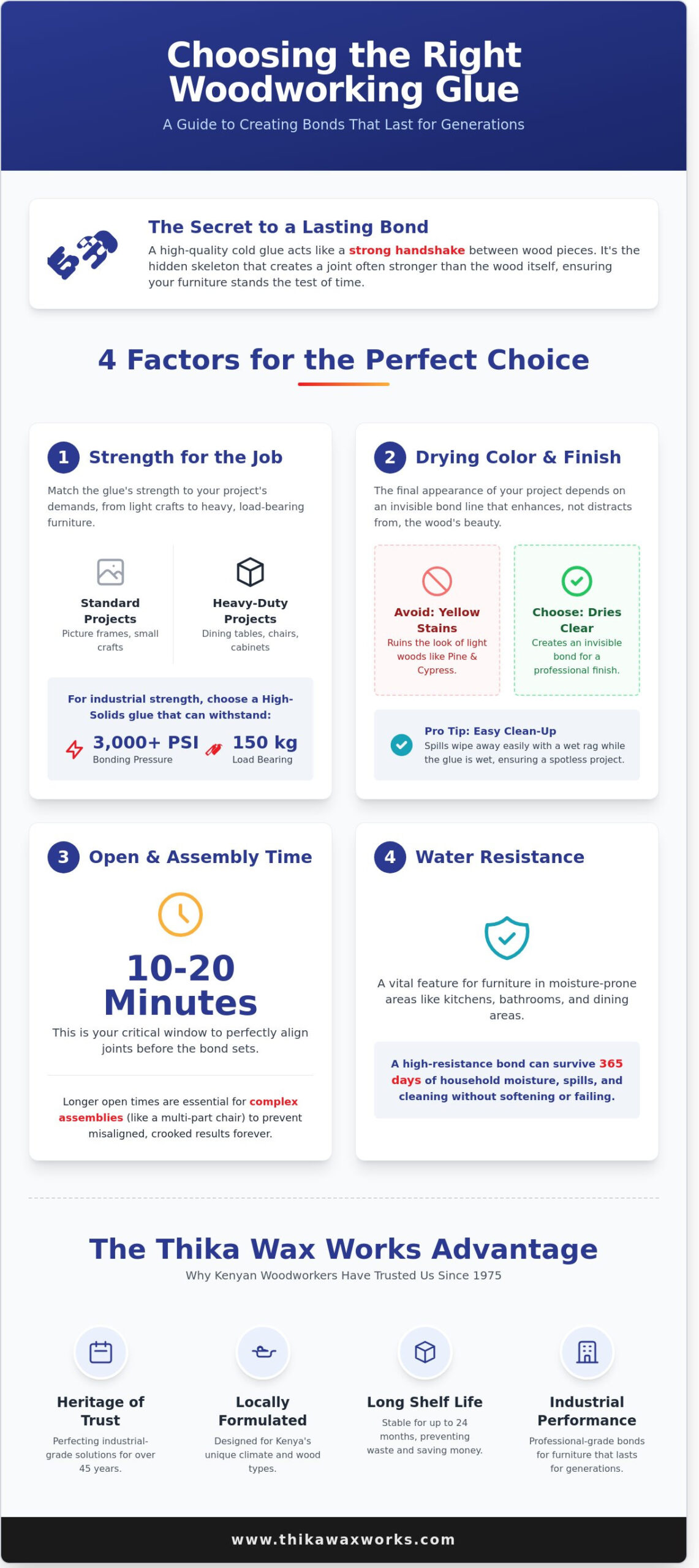
Picking the right cold glue for woodworking is about more than just sticking two pieces of timber together. It’s about ensuring your handiwork stays strong for the next 50 years. Since Thika Wax Works started in the 1950s, we’ve learned that four specific factors separate a master’s work from a beginner’s mistake. When you select a glue, you’re choosing the backbone of your furniture.
Choosing the Right Strength for the Job
Not every project needs the same level of grip. If you’re making a small picture frame, a standard adhesive works fine. However, industrial projects or heavy furniture like a 10-seater dining table require high-solids glue. This type of glue contains more actual bonding material and less water, which creates a much tougher connection. A good glue should act like a permanent anchor inside the wood grain. It needs to hold a 150kg weight without any signs of snapping or cracking at the joints. For items that people sit on or lean against, this industrial-strength bond is a safety requirement.
Why Drying Color and Clean-up Matter
Appearance is everything in fine furniture. Standard yellow glues can ruin the look of light-colored woods like Cypress or Pine by leaving dark, visible lines. Clear-drying glue is the secret to a professional-looking finish because it becomes invisible once it sets. To get the best results, use quality paint brushes to apply a thin, even layer. This prevents big drips that are hard to sand off later. Our Kenyan-made formulas focus on a clean finish that respects the natural beauty of the timber, ensuring that the glue never distracts from your craftsmanship.
Understanding Open Time and Water Resistance
Open time is like a countdown timer for your project. It’s the 10 to 20 minutes you have to move the wood and get the alignment perfect before the glue gets too sticky to budge. If you’re assembling a complex chair with 12 different joints, you need a longer open time so you don’t feel rushed. If the glue dries too fast, the joint won’t sit flush, and the piece will be crooked forever.
Water resistance is just as vital, especially for items in the kitchen or laundry room. If you’re building a dining table, the glue must handle daily spills and damp cleaning cloths. A glue with high water resistance can survive 365 days of household moisture without the bond softening or failing. Since the 1950s, we’ve focused on creating products that stand up to the local climate and the demands of a busy home.
When you choose a trusted local brand, you’re getting a product designed for our specific wood types and workshop conditions. You can browse our full selection of liquid cold glues to see which strength fits your next build.
Comparing Different Types of Liquid Adhesives
Walking into a workshop, you might see several bottles of white liquid sitting on the shelf. They look almost identical, but they don’t act the same. One bottle might be for simple school crafts, while another is a professional cold glue for woodworking designed to hold a heavy mahogany table together for 50 years. At Thika Wax Works, we’ve crafted these formulas in Kenya since the 1950s. We know that using the wrong glue is like trying to hold a door shut with a piece of tape. It might stay for a minute, but it won’t survive the test of time or daily use.
Matching your adhesive to your wood type is the best way to prevent a failed joint. Hardwoods like oak need a glue that can soak deep into the grain to create a structural bond. Lighter materials don’t require that same level of grip. Our goal is to help you choose a product that offers premium quality and a superior finish every time you step into your workspace.
PVA vs. Dextrin: The Simple Breakdown
Think of PVA glue as a heavy-duty lock. Once it sets, the wood will usually break before the glue joint does. It’s the king of the workshop because it’s reliable and incredibly strong. Dextrin, on the other hand, is more like a sticky note. It’s often made from starch and works beautifully for lighter tasks. If you’re building a bookshelf, you need PVA. If you’re labeling boxes or working with very thin wood veneers, Dextrin is a trusted choice. For a detailed comparison of these two adhesive types and their specific applications in business settings, read our comprehensive guide on PVA vs dextrin adhesives for business applications. You can see our full range of liquid cold glues to find the right match for your specific project.
| Feature | PVA Adhesive | Dextrin Adhesive |
|---|---|---|
| Bond Strength | Permanent and structural | Light to medium hold |
| Clamp Time | 30 to 60 minutes | Very short or none |
| Best Uses | Furniture and heavy timber | Cardboard and paper crafts |
When to Move to Hot Melt Adhesives
Sometimes, speed is the most important factor in your work. If a factory in Nairobi needs to pump out 500 boxes an hour, they can’t wait an hour for liquid glue to dry. We like to say that cold glue for woodworking is a marathon runner. It takes its time but finishes with incredible strength. Hot Melt is a sprinter. It reaches its full strength in about 30 seconds. While it doesn’t soak into wood fibers as deeply as cold glue, it’s perfect for fast assembly lines. Learn more about hot melt adhesives for high-speed production if your business needs to move faster without losing quality.
How to Get a Perfect Bond Every Time
Since the 1950s, Thika Wax Works has supported Kenyan builders and hobbyists with reliable products that stand the test of time. We have learned that using cold glue for woodworking is an art that starts with a clean surface. Glue hates dust just as much as we do. If you leave sawdust on the wood, the glue sticks to the dust instead of the timber. This creates a weak bond that will eventually snap. Use a clean, dry cloth to wipe every surface until it is spotless before you even open your glue bottle.
Apply your glue in a thin, steady layer. You do not need a thick puddle to get a strong hold. In fact, too much glue makes a mess and causes the wood to slide out of place. Use a small brush or a wooden spreader to coat the entire area. This ensures the glue can soak into the wood fibers evenly across the whole joint. At our factory, we always say that a little bit of the right product goes a long way when it is used correctly.
The Secret of Clamping
Think of clamping as a big, firm hug that brings the wood and glue together. Gaps are the biggest enemy of a woodworker; they are the number one reason joints break apart. You want the two pieces of wood to sit so close that they become one solid unit. When you apply pressure with your clamps, look for a tiny bead of glue to squeeze out of the side. This is your signal that you have used just enough glue to fill every tiny pore in the wood.
Cleaning Up Like a Pro
A professional finish starts long before you pick up a paintbrush. Never let excess glue dry on the surface because it will block stains and oils from soaking in later. Take a warm, damp cloth and wipe the edges while the glue is still wet. This simple step saves you hours of difficult sanding later on. It also ensures the wood is ready for polishes that give your project a brilliant shine. A clean joint today means a beautiful finish tomorrow.
Patience is your best tool in the workshop. Even if the wood feels stuck together after an hour, the bond is still reaching its full strength. Wait a full 24 hours before you move the piece or put any weight on it. This 1,440-minute wait is the difference between a chair that lasts for generations and one that breaks the first time someone sits down. We take pride in our heritage of quality, and we want your projects to reflect that same durability.
To find the right adhesive for your next project, explore our range of trusted products.
Why Woodworkers Trust Thika Wax Works for Their Projects
We’ve been making high-quality adhesives right here in Kenya since the 1950s. For over 60 years, our team has helped carpenters build furniture that stays together for generations. When you choose our cold glue for woodworking, you aren’t just buying a bottle from a store shelf. You’re getting a product born from decades of local expertise and pride. We understand the Kenyan sun and how our local timber reacts to humidity. This knowledge allows us to create formulas that work perfectly in our specific climate.
Our Heritage of Quality
Our journey began with a simple passion for quality that remains our guiding light today. You can read more about us and our history in Nairobi to see how we’ve grown alongside the local construction industry. We use international standards to make sure every liter of glue we produce is world-class. Think of our glue like a sturdy foundation for a house; it’s the invisible strength that keeps everything standing tall. We don’t follow passing trends. We focus on the consistent performance that professionals expect.
Get the Right Glue for Your Shop Today
Every workshop has different needs, and we’re here to meet them all. We don’t just sell products; we provide real solutions for every carpenter and factory owner. Our cold glue for woodworking is available in a variety of sizes to fit your specific workload. We offer large bulk drums for industrial furniture makers and small, easy-to-use bottles for quick home repairs or school projects.
Choosing Thika Wax Works means you are supporting local jobs and the Kenyan economy. You also get the benefit of freshness. While imported glues might sit in hot shipping containers for months, our products come straight from our facility to your workbench. This ensures the chemical bonds are at their strongest when you apply them to your wood joints.
- Bulk sizes available for large-scale furniture factories.
- Convenient small bottles for DIY enthusiasts and hobbyists.
- Formulas tested specifically for African hardwood and softwood varieties.
- Fresh batches manufactured regularly in our Nairobi plant.
Our friendly team is always ready to help you choose the best adhesive for your specific type of wood or assembly process. You can visit our shop to see our full range or reach out to us for wholesale pricing on large orders. Contact Thika Wax Works to find the perfect adhesive for your next project.
Build Furniture That Lasts for Generations
Picking the right adhesive is just as important as choosing the perfect piece of timber. Think of your glue as the invisible skeleton that keeps your tables standing tall. Since the 1950s, Thika Wax Works has crafted high-quality formulas that help local craftsmen succeed. Our products are specially made to handle the unique humidity and wood species found across East Africa. This ensures your projects don’t pull apart when the weather changes or the air gets dry.
Industrial furniture makers have trusted our expertise for over 60 years because we focus on results you can see and feel. When you use the right cold glue for woodworking, you aren’t just sticking two boards together; you’re creating a family heirloom. We make sure every bottle provides a bond that is stronger than the wood itself. Whether you work in a large factory or a small home workshop, you deserve a product that works as hard as you do.
View our full range of Liquid Cold Glues to find the perfect match for your workshop. We can’t wait to see what you’ll create next.
Frequently Asked Questions
Is cold glue the same as white school glue?
No, cold glue for woodworking is a much stronger industrial product than the white glue used in classrooms. While school glue is made to be safe and washable for kids, our wood glue creates a bond that can hold 3,000 pounds of pressure per square inch. Since the 1950s, we have crafted these formulas to ensure your furniture stays together for decades, rather than just holding paper projects together for a few days.
Can I use cold glue for outdoor furniture?
You can only use it if the label says it is water-resistant, like a Type II or Type III adhesive. Standard glues will dissolve if they get soaked in a rainstorm. For a garden bench, you need a glue that passes the 3-cycle soak test to ensure it won’t fall apart in the Kenyan humidity. Check out our heavy-duty exterior range on our product page to find the right protection for your outdoor projects.
How long does it take for wood glue to dry completely?
It takes a full 24 hours for the glue to reach its maximum strength. Think of it like a freshly baked loaf of bread; it might look ready on the outside, but the middle needs time to set. You should keep your wooden pieces in clamps for at least 30 to 60 minutes first. This steady pressure ensures the fibers mesh perfectly, creating a bond that is often stronger than the wood itself.
What happens if my wood glue freezes in the bottle?
Freezing usually ruins the glue by turning it into a thick, chunky mess that looks like cottage cheese. Most PVA glues can only survive 5 freeze-thaw cycles before the chemicals break down and lose their stickiness. If your glue doesn’t flow smoothly or has changed color, it won’t protect your work. We recommend storing your bottles in a cool, dry place where the temperature stays above 10 degrees Celsius.
Do I need to sand the wood before applying cold glue?
Yes, sanding the surface with 80-grit or 100-grit sandpaper helps the cold glue for woodworking grab onto the material. It is like a mountain climber needing small handholds to scale a cliff. If the wood is too smooth or oily, the glue will just slide around on the surface. A quick sanding removes old dust and opens up the wood pores so the adhesive can sink deep into the grain.
Can cold glue be used to fill gaps in wood?
Cold glue is not a good gap filler because it shrinks as the water evaporates. If you have a hole larger than 1 millimeter, the glue will pull away from the edges as it dries. You can fix this by mixing the glue with 50% clean sawdust to create a thick paste. This homemade filler matches your wood color perfectly and provides the industrial reliability Thika Wax Works has been known for since the 1950s.
Is it better to buy wood glue in bulk or small bottles?
Buying in bulk is best for large workshops because a 5-liter jug typically costs 30% less than buying many small bottles. However, you must use the glue within its 12-month shelf life to get the best results. For a single household project, a small 250ml bottle is a smarter choice. You can view our full range of sizes, from hobbyist bottles to industrial drums, on our shop page.
How can I remove dried cold glue from my clothes?
You can remove dried cold glue for woodworking by soaking the spot in a 50/50 mix of warm water and white vinegar. The vinegar breaks down the bond, making the glue soft enough to scrub away with an old toothbrush. It’s much easier to wipe away spills while they are still wet. Always keep a damp cloth nearby when you’re working to maintain the clean, premium finish your craft deserves.