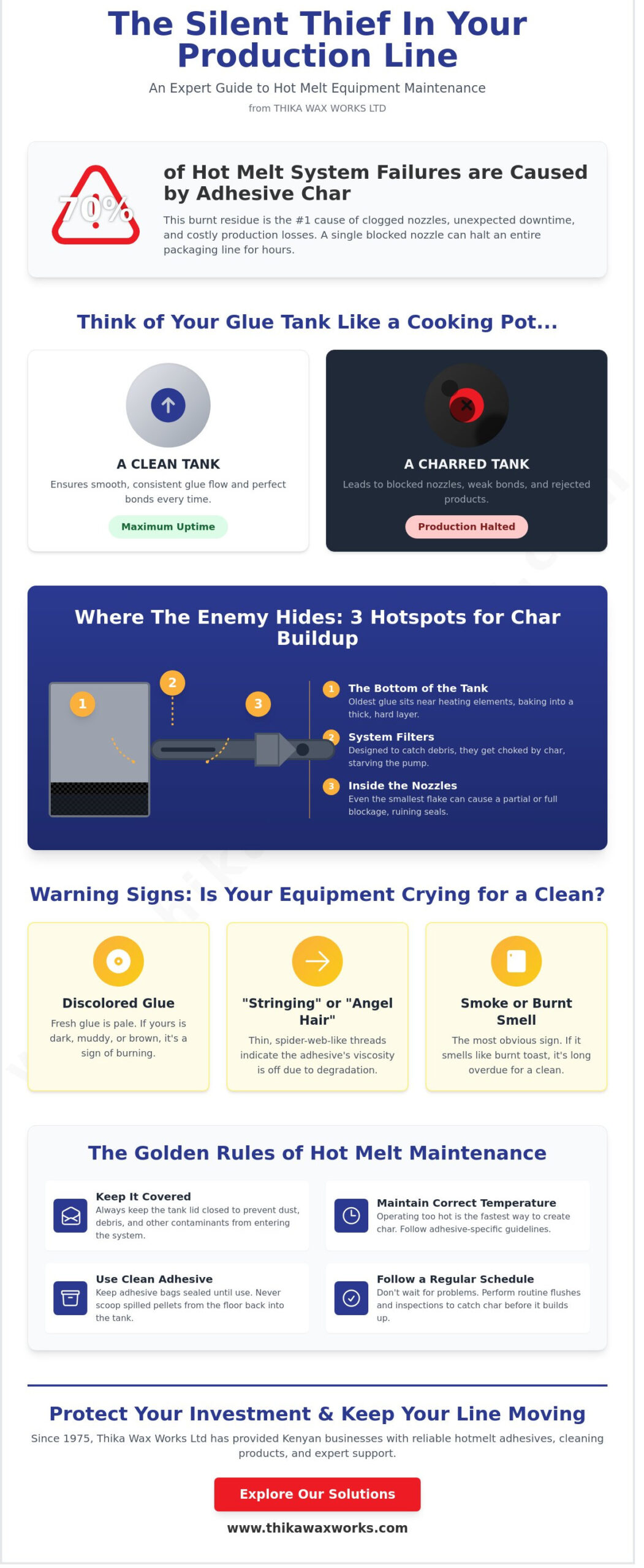
In early 2024, a busy packaging plant across the country lost five hours of production because a single glue nozzle was blocked by burnt residue. Industry data shows that 70% of hot melt system failures come from simple adhesive charring. This is a common story that costs Kenyan businesses thousands of KSh in downtime every year. If you want to keep your line moving, you must master how to clean hot melt equipment before these clogs take over. Think of your glue machine like a favorite cooking pot. If you don’t scrub it regularly, the burnt bits will eventually ruin everything you make inside it.
We understand how frustrating it is when machines stop or when dirty glue marks ruin your professional packaging. Since the 1950s, Thika Wax Works Ltd has helped partners maintain high standards with reliable products and expert care. You will learn the easiest ways to keep your glue machines running like new with our simple step-by-step cleaning guide. We will walk you through how to flush the system, clear out debris, and ensure your expensive equipment lasts for many years to come.
Key Takeaways
- Understand why treating your glue tank like a kitchen pot-keeping it washed and free of burnt bits-is the secret to a long machine life.
- Identify the hidden spots where burnt glue likes to hide so you can stop blockages before they slow down your production line.
- Learn exactly how to clean hot melt equipment using a simple, step-by-step guide that focuses on safety and using the right tools.
- Compare three different cleaning methods to find the one that best fits your machine’s current condition and your team’s schedule.
- Discover easy daily habits, like sealing your glue bags, that keep dust out and ensure your equipment stays as reliable as the day it was made.
Why Cleaning Your Hot Melt Equipment is Like Servicing Your Car
Since the 1950s, Thika Wax Works Ltd has helped Kenyan businesses keep their production lines moving with reliable solutions. Just like a car needs an oil change to keep the engine from seizing, your industrial machines need regular care. Learning how to clean hot melt equipment isn’t just a chore. It’s a way to protect your investment. Think of your glue tank like a cooking pot in a busy kitchen. If you never wash it, the old food burns and sticks to the bottom. In the world of Hot-melt adhesive (HMA), this burnt residue is called char.
To better understand this concept, watch this helpful video:
Char consists of hard black bits that act like sand in a car engine. These bits travel through your hoses and eventually reach the nozzles. When a nozzle gets partially blocked, it might “sneeze,” which means it spits out glue unevenly. This ruins the look of your packaging and makes the bond weak. Regular cleaning removes this old, burned glue from the tank and hoses before it can cause a breakdown.
The Cost of a Dirty Machine
A dirty machine is a thief that steals your profit. When a nozzle clogs, the entire factory line stops. In a large Kenyan packaging plant, just 30 minutes of downtime can cost thousands of KSh in lost labor and missed targets. If the glue doesn’t apply correctly, you end up with rejected boxes that cannot be sold. A clean nozzle should flow as smoothly as a water tap in a well-kept home. You can find high-quality hot melt adhesives that are designed for stability, but even the best products need a clean environment to work their best.
Signs Your Equipment Needs a Wash
You don’t need a degree to know when it’s time for a scrub. First, check the color of your glue. Fresh glue is usually clear or pale, but old glue turns a dark, muddy brown. You might also see “stringing,” where the glue leaves behind thin threads that look like spider webs. This happens when the glue is too thick from being cooked too long in the tank. If your machine is smoking or smelling like burnt toast, it’s time to clean. Using the right cleaning products ensures your machinery stays in top shape. Taking care of your tools shows the pride you take in your work, a value we’ve shared in Kenya for over 60 years.
Understanding the Enemy: What is Adhesive Char?
Char is a silent thief in your production line. It’s essentially glue that has been “cooked” for too long. Imagine leaving a pot of food on a hot jiko for two days. The food turns into a black, hard crust that’s nearly impossible to scrub off. This is exactly what happens inside your machinery. When glue stays at high temperatures without moving, it chemically changes. It turns into hard, black flakes that don’t melt again. Even the most premium hot melt adhesives will eventually burn if they are left sitting in a hot tank over a long weekend.
Once char forms, it acts like sand in an engine. It doesn’t provide any stickiness; it just blocks the flow and causes trouble. Learning how to clean hot melt equipment is mostly about dealing with this stubborn material before it ruins your parts. Since we began manufacturing in the 1950s, we’ve helped many partners realize that char is responsible for roughly 70% of all nozzle clogs. If you are struggling with a system that has been neglected, you’ll need to know how to clean hot melt equipment effectively to restore its performance.
Where Char Hides
Char doesn’t just sit in plain sight. It’s clever and hides in the parts of your machine that are hardest to reach. You will typically find it in three main spots:
- The bottom of the tank: This is where the heating elements are strongest. If the tank isn’t emptied and cleaned, the oldest glue sits at the bottom and slowly bakes into a thick layer.
- The system filters: These are designed to catch dirt, but they quickly become choked with char. When this happens, your pump has to work twice as hard to push glue through.
- Inside the nozzles: These tiny openings are easily blocked by even a small flake of char. Following preventative maintenance tips can help you spot these clogs before they stop your work.
How to Prevent Burning
Prevention is always better than a difficult cleanup. One of the simplest ways to stop char is to turn the heat down during lunch breaks or shift changes. Most modern machines have a “standby” mode that drops the temperature by 30 or 40 degrees. This keeps the glue ready but prevents it from burning. You should also keep the tank lid tightly closed. Oxygen is the fuel that helps char grow; keeping the lid shut is like putting a lid on a storage jar to keep food fresh.
Choosing quality industrial adhesives also makes a big difference. Higher-grade glues are designed to be more stable under heat, which means they can resist turning into char for longer periods. If you’re worried about buildup in your system, you can reach out to our expert team for advice on the best products for your specific Kenyan factory setup.
Three Ways to Clean Your Machine: Which is Best for You?
Every factory floor in Kenya has its own unique rhythm. Because of this, there is no single way to handle your machinery. The path you take depends entirely on how much glue has built up over your shifts. Knowing how to clean hot melt equipment is about choosing the right tool for the job at the right time. Before you begin any task, remember that safety is the most vital part of the process. These industrial machines often run at temperatures near 175 degrees Celsius. That is significantly hotter than the kitchen oven you use to bake bread at home. You must always wear thick, heat-resistant gloves to protect your hands from severe burns.
Method 1: The Quick Purge
If you change your glue daily or switch between two very similar types, the quick purge is your best friend. It’s like rinsing a glass with water before you pour yourself a fresh drink. You simply pump out the old glue and add the new batch immediately. This keeps the production line moving without a full shutdown. Following a Preventive maintenance guide helps you decide if this simple step is enough for your specific setup. It is a fast way to keep your hot melt adhesives fresh and functional.
Method 2: The Wax Flush
When the system needs a better scrub, many Kenyan manufacturers turn to a secret tool: paraffin wax. Wax is excellent because it becomes very thin when it melts. It reaches into tiny corners and narrow hoses where thick glue cannot go. Since we began our work in the 1950s, we have seen how a good wax flush lifts away old residue and protects the metal surfaces. It acts like a gentle brush for the inside of your machine. This method is a trusted tradition for local businesses that value durability and excellence in their daily operations.
Method 3: Chemical Cleaning
Sometimes, machines get very dirty with what we call “char.” This is burnt, crusty glue that turns black and hard. It usually happens if a machine stays on for too long without being used. For these tough jobs, you need special liquids designed to melt away that hard crust. This is the “deep soak” method for old tanks that haven’t seen a cloth in months. While you clean the inside, you can also use hospitality-grade cleaning products to wipe down the exterior. This removes the dust and grease that builds up in a busy warehouse. Learning how to clean hot melt equipment using these three steps ensures your gear stays as hardworking as the people who run it.
Choosing the right method keeps your workshop safe and your products looking professional. Whether you need a quick rinse or a deep chemical soak, taking care of your equipment shows a commitment to quality that has defined Kenyan manufacturing for decades.
Your Step-by-Step Guide to a Sparkling Hot Melt System
Since the 1950s, we’ve helped many Kenyan businesses keep their production lines moving with ease. A clean machine is a reliable partner in your daily work. When you know how to clean hot melt equipment properly, you extend the life of your machinery and ensure your products look their best. Follow these simple steps to safely clean your tank and hoses without causing damage.
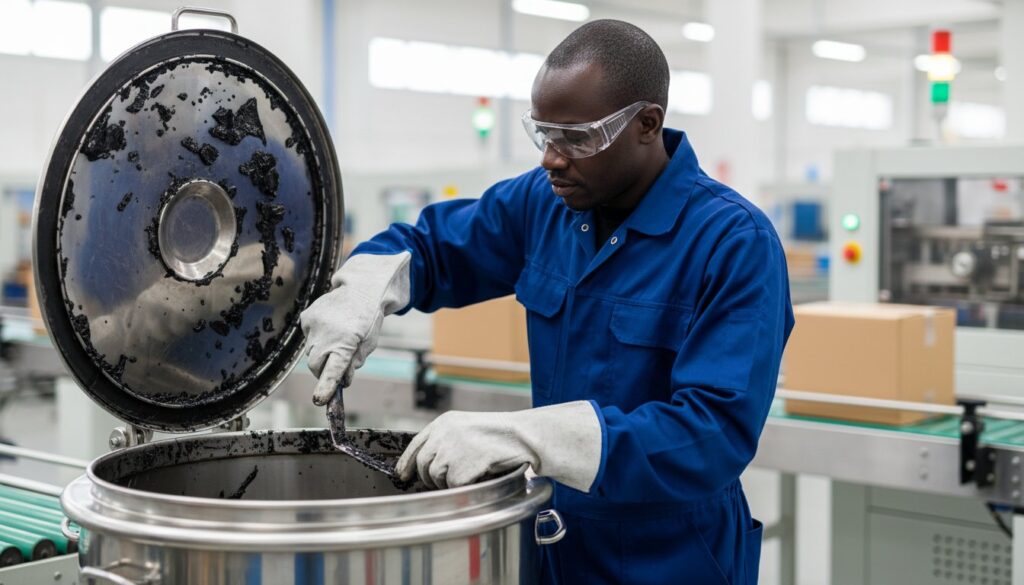
Before you start, gather your supplies. You’ll need heavy, heat-resistant gloves to protect your hands from burns. You also need wooden or plastic scrapers and a fresh supply of glue or cleaning wax. Safety is our first priority in every workshop. We want you to feel confident and secure while you maintain your tools.
Never use a screwdriver or any sharp metal tool to scrape the inside of your tank. Metal leaves deep scratches on the smooth inner surface. These scratches are like cracks in a dinner plate. Just as food gets stuck in a cracked plate, glue sticks to these scratches even more than before. This makes your next cleaning job much harder and can lead to burnt glue buildup that ruins your finish.
Step 1: Drain and Scrape
Start by emptying the tank while the glue is still warm and soft. It flows much easier when it hasn’t fully hardened. Use a plastic or wooden scraper to remove the big chunks of leftover material from the sides. Draining the tank is the most important step to ensure no old glue remains. This simple act prevents old, degraded material from mixing with your fresh batch.
Step 2: Flush the System
Fill your tank with a dedicated cleaning liquid or a high-quality wax. Let it circulate through the system for about 20 to 30 minutes. Run the pump to push the cleaner through the hoses and out of the nozzles. Watch the liquid as it comes out. It usually starts as a dark, muddy brown color. As it cleans the system, it will slowly turn clear. When the liquid runs clear, you’ve successfully removed the hidden dirt.
Step 3: Replace Filters and Nozzles
Sometimes, a fresh start is the best choice for your machine. It’s often cheaper to buy a new nozzle for a few hundred KSh than to spend hours trying to scrub an old, clogged one. A small investment in new parts saves you from expensive downtime later. While you’re at it, check the “O-rings” to make sure there are no leaks. These small rubber seals keep the pressure steady. For a final check, ensure the glue flows in a straight, clean line. A steady flow means your equipment is ready for another day of hard work.
If you’re looking for high-quality supplies to keep your production line running smoothly, explore our range of hot melt adhesives designed for Kenyan industries.
The Golden Rules of Hot Melt Maintenance
Cleaning your machine is a lot like taking care of a family car. You don’t wait for the engine to smoke before you check the oil. Consistency is always better than intensity. It’s much better to clean a little bit every single day than to spend an entire weekend scrubbing away months of burnt glue. When you make small habits a part of your routine, your equipment stays young and reliable. Understanding how to clean hot melt equipment starts with these tiny, daily wins. A clean machine runs faster, uses less power, and keeps your workers happy.
Think of dust as the secret partner in crime for glue char. When dust settles into an open tank, it acts like a blanket that traps heat. This causes the glue to cook and turn into hard, black flakes. You must keep your glue bags sealed tightly at all times. Even a small amount of warehouse dust can turn a fresh batch of premium adhesive into a clogged mess. This simple step saves you from the headache of deep cleaning your tank every month. It’s a small act of care that protects your investment for years to come.
Daily Maintenance Checklist
- Wipe the outside of the machine with proper cleaning supplies to remove grease and grime.
- Check the temperature settings on the control panel to make sure they match the glue’s recommended heat.
- Clear any small drips from the nozzle tips using a soft wooden scraper so they don’t harden and block the flow.
Partnering for Success
Thika Wax Works has been helping Kenyan factories stay clean and productive since the 1950s. We don’t just sell you a bag of glue; we provide the wisdom and heritage to use it well. Our team takes great pride in our locally manufactured Kenyan products. We understand the specific dust and heat conditions in our region, and we build our products to stand up to those challenges. We’re more than a supplier; we’re a trusted partner that’s been part of the community since the 1950s.
Every factory has different needs. Whether you’re running a high-speed packaging line or a small craft workshop, we want to help you succeed. We invite you to reach out to our experts for a custom maintenance plan that keeps your tools in top shape. By following these golden rules for how to clean hot melt equipment, you ensure that your business continues to grow with the same steady reliability that we’ve offered for decades. Let’s keep your production line moving together.
Keep Your Production Line Running Smoothly
A clean machine is a happy machine. Just like you wouldn’t drive a lorry across Kenya for years without changing the oil, you can’t expect your adhesive system to work perfectly without regular care. By removing adhesive char and following a steady maintenance schedule, you prevent costly breakdowns that slow down your business. Learning how to clean hot melt equipment properly ensures that your tools stay in top shape for years to come. It’s a simple habit that saves you from big headaches and expensive repairs later on.
At Thika Wax Works, we’ve been a trusted Kenyan manufacturer since the 1950s. We understand the unique challenges of our regional climate and provide expert technical support for all industrial adhesives. Our team has spent over 60 years perfecting high-performance products that work as hard as you do. When you choose our locally made solutions, you’re choosing a heritage of excellence and reliability that supports our regional economy. We’re here to help your business grow with products that offer a superior finish every time.
Explore our range of high-quality Hot Melt Adhesives today
Take pride in your equipment and it’ll take care of you. We’re excited to see your production reach new heights with a sparkling clean system.
Frequently Asked Questions
How often should I clean my hot melt tank?
You should clean your hot melt tank every 6 months or after 2,000 hours of operation. Think of this task like servicing a matatu to keep it on the road. Regular cleaning prevents burnt glue from building up and causing blocks. Since the 1950s, we’ve helped Kenyan manufacturers maintain their machines to ensure they stay reliable and industrious every single day.
Can I use water to clean my hot melt machine?
You must never use water to clean your hot melt machine. Water and hot adhesive react violently, which can lead to dangerous steam burns for your operators. It’s like dropping water into a pan of hot frying oil. Instead, use a professional flushing fluid. This protects your equipment and ensures you continue to produce work with a superior finish.
Why is my hot melt glue turning black?
Your glue turns black because it has charred from high heat or sitting idle for too long. This usually happens when temperatures exceed 190 degrees Celsius. It’s like leaving a mandazi in the fryer for an hour. Learning how to clean hot melt equipment is the best way to remove these burnt bits so your glue stays clear and strong.
Is it safe to use a metal scraper inside the tank?
It’s not safe to use metal scrapers because they damage the protective coating inside the tank. These scratches make it easier for glue to stick and burn in the future. Use a soft wooden tool instead. We value the durability of your tools, and taking care of the tank’s surface ensures your equipment serves your family business for many years.
What is the best temperature for hot melt equipment?
The best temperature for most equipment is between 160 and 180 degrees Celsius. Operating at these levels ensures the adhesive flows perfectly without burning. If you go higher, you risk damaging the glue’s chemistry. This steady heat helps you achieve a brilliant shine and a trusted bond that meets international standards right here in our Kenyan factories.
How do I know if my nozzle is clogged or just cold?
Wait at least 30 minutes for your machine to reach full heat before testing the flow. If the nozzle is still stuck, it’s likely a clog rather than just being cold. A clog is like a small stone stuck in a garden hose. Knowing how to clean hot melt equipment correctly allows you to clear these blockages and get your production line moving again.
Can I reuse the glue I drained out of the tank during cleaning?
You shouldn’t reuse glue that’s been drained during a cleaning cycle. This old glue often carries char, dust, and tiny bits of debris that will ruin your next batch. It’s like trying to cook a fresh meal using burnt crumbs from yesterday. Always use fresh, premium quality glue to ensure your products remain a symbol of excellence in the market.