

Last Saturday, a homeowner named Kamau spent KSh 12,000 on high-end gloss only to see stray bristles ruin the smooth surface of his new door. It’s a common headache that turns a simple home project into a messy disaster. We believe your space deserves better than tools that fail when you need them most. Choosing quality paint brushes is the most important step for anyone wanting a professional look without the high cost of hiring a contractor. Better tools mean better results. Since the 1950s, we’ve focused on providing Kenyan homes with reliable equipment that stands the test of time.
You probably agree that there’s nothing worse than seeing brush marks on a fresh wall or throwing away a stiff, useless tool after just one afternoon. We promise to show you how to spot a brush that offers a smooth finish and can be reused for 20 or more projects. This article explains how the right equipment leads to faster painting and better coverage for your home or business. You’ll discover why our local manufacturing heritage ensures every stroke provides a brilliant, long-lasting shine.
Key Takeaways
- Think of a brush like a chef’s knife; you will learn how investing in quality paint brushes helps you finish projects faster with a much smoother look.
- Discover the simple secret to choosing between natural and synthetic bristles so your paint always goes on without messy streaks.
- Learn how to pick the right tool for the job, from flat “workhorse” brushes for big walls to angled brushes that act like precision pens for corners.
- Find out the best ways to clean and care for your tools so they stay soft and reliable for many years, saving you money in the long run.
- See why Thika Wax Works has been a trusted Kenyan partner since the 1950s, providing durable tools built for our local homes and industries.
Why Quality Paint Brushes Are the Secret to a Great Finish
Think of a professional chef in a busy kitchen. They don’t use a dull, plastic knife to prepare a five-course meal. They use a balanced, sharp blade that makes every cut precise and effortless. Painting your home or workspace follows the exact same logic. Using quality paint brushes is the primary secret to achieving a smooth, professional look that lasts for years. Since the 1950s, we have seen how the right tool transforms a difficult chore into a rewarding craft. A superior brush is designed to hold a large volume of paint in its bristles. This means you spend less time dipping into the bucket and more time creating a beautiful surface.
Before you start your next project, it helps to understand the basic anatomy of your tools. You can find a helpful Paintbrush overview that explains how different bristle types and handles affect your work. Choosing a tool with the right heritage and build ensures that the paint goes exactly where you want it without splashing or dripping.
To better understand how the right tool changes your results, watch this helpful video:
The True Cost of a Cheap Brush
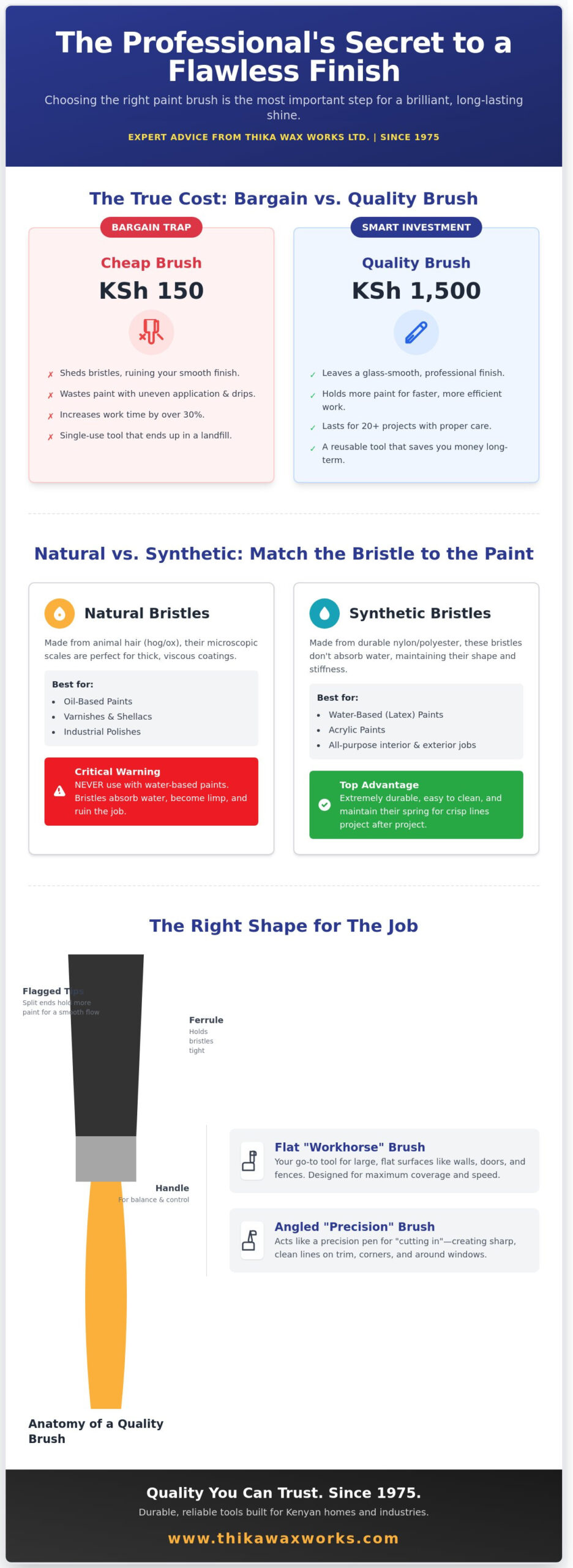
A bargain brush might cost only KSh 150 at a local shop, but it’s often a trap for your wallet. These low-quality tools are notorious for “shedding.” There is nothing more frustrating than finding a stiff black hair stuck in your wet, white paint. You have to stop, pick it out, and try to smooth over the smudge. This cycle can increase your work time by 30% or more. Cheap brushes also waste paint because they don’t release the liquid evenly, leading to heavy patches and wasted drips. While a premium brush might cost KSh 1,500, it’s a long-term investment. If you clean it well, it’ll stay soft and effective for a decade, whereas disposable brushes end up in Kenyan landfills after a single afternoon.
How a Good Brush Helps Your Paint Perform
The best quality paint brushes are engineered to help the paint “level” itself. This means as the paint dries, the brush marks disappear, leaving a surface as smooth as glass. High-end bristles are tapered, which allows the paint to flow out at a steady, controlled rate. This control is vital when you are applying specialized functional and decorative coatings to your furniture or walls. These coatings require a uniform thickness to provide the protection they promise. A trusted brush ensures that every stroke delivers a consistent layer, protecting your home from the elements while providing a brilliant, lasting shine. When you choose a tool backed by decades of manufacturing expertise, you are choosing a perfect finish every time.
Understanding Brush Materials: Natural vs. Synthetic
Choosing the right material for your tools is the first step toward a professional look. Since Thika Wax Works began in the 1950s, we’ve seen how the right bristles make the difference between a messy job and a smooth finish. Think of your brush like a head of hair. Just as different hair types need specific care, different paints need specific bristles. When you invest in quality paint brushes, you’re choosing between two main families: natural and synthetic.
A great brush has “flagged” tips, which look like tiny split ends at the very top of the bristles. These split ends are vital because they hold more paint and let it flow onto the surface slowly. This prevents those annoying streaks and drips. You should also check the “spring” of the brush. If you bend the bristles with your fingers and they snap back into place instantly, the brush will keep its shape for a long time. These features ensure your work looks neat and lasts for years.
When to Choose Natural Bristle Brushes
Natural bristles are usually made from animal hair, such as hog or ox hair. These fibers have tiny, microscopic scales that act like little pockets. They’re perfect for holding onto oil-based paints, varnishes, and even some industrial polishes used in Kenyan workshops. Because natural hair is soft and flexible, it provides a delicate touch for furniture or decorative trim work.
You must never use natural hair brushes with water-based paints. Natural hair absorbs water just like human hair does on a humid day in Nairobi. The bristles will get soggy, lose their shape, and become too limp to spread paint. To keep these tools in top shape, you can follow professional tips for cleaning and maintaining your brushes after every use. This ensures your investment serves you through many projects.
The Strength of Synthetic Brushes
Synthetic brushes are the hardworking kings of modern wall painting. They’re made from nylon, polyester, or a blend of both. These man-made fibers don’t absorb water, so they stay stiff and reliable even when the weather is damp. This makes them the best choice for water-based acrylics and latex paints commonly used in homes across Kenya today.
If you’re managing heavy-duty hospitality maintenance for a hotel or a large office, synthetic blends are your best friend. They’re tough enough to handle rough surfaces but smooth enough to leave a clean finish. Because they’re durable, they can withstand the repeated cleaning required in busy environments. Using quality paint brushes made of synthetic fibers ensures that your maintenance team can work quickly without worrying about bristles falling out or losing their “spring.”
Whether you’re refreshing a family living room or protecting an industrial floor, picking the right material is the foundation of excellence. You can explore our full range of reliable painting tools to find the perfect match for your next project.
Choosing the Right Shape and Size for Your Project
Selecting the right tool is the first step toward a professional finish. Flat brushes are the reliable workhorses for your home projects. They work best for large, flat areas like wooden doors or interior walls. Think of a flat brush like a wide broom that covers a lot of ground with every stroke. Since the 1950s, Thika Wax Works has provided tools that help Kenyans achieve a smooth look without extra effort. While a heavy brush might feel strong in the shop, it can tire your hand out quickly during a long day of work. A lighter, well-balanced tool ensures you can finish the job without your wrist getting sore.
The Power of the Angled Brush
Angled brushes, often called sash brushes, act like precision pens for your walls. You don’t need to spend KSh 600 on rolls of masking tape if you use quality paint brushes with an angled tip. The slanted bristles let you ‘cut in’ around windows and ceilings like a professional. This shape makes it easy to paint clean lines where the wall meets the floor or the ceiling. It gives you total control, allowing you to navigate tight corners where a flat brush would simply make a mess. For 8 out of 10 professional painters, the angled brush is the most important tool in their kit.
Sizing Your Brush for Success
The size of your brush should always match the size of the surface you are painting. Using the wrong size can lead to wasted paint and a messy finish. Here is how to choose the right one for your next project:
- 1-inch brush: This is the best tool for tiny details, thin trim, and small furniture legs.
- 4-inch brush: Use this for large exterior walls or fences to save time on big surfaces.
- 2.5-inch brush: This is the ‘Goldilocks’ size that handles almost any task in a Kenyan home.
Choosing a 2.5-inch brush offers the perfect balance between speed and control. It’s wide enough to paint a door frame quickly but small enough to manage most corners. You can explore our full range of quality paint brushes to find the exact match for your needs. Every brush we make carries our heritage of Kenyan manufacturing excellence, ensuring you get a tool that lasts through many projects. We take pride in making products that serve the hardworking people of our community, from large distributors to individual homeowners.
Professional Tips for Cleaning and Maintaining Your Brushes
Since the 1950s, Thika Wax Works has provided tools that stand the test of time. Buying quality paint brushes is a smart investment for your home or business, but that investment only pays off if you treat your tools with respect. Think of your brush like a high-quality leather shoe; it needs regular care to stay soft and functional. If you let paint dry in the bristles, you’re essentially turning a precision tool into a useless stick. You’ll end up spending an extra KSh 2,000 to replace a brush that could have lasted for years.
The first rule is simple: never let paint dry. You should start the cleaning process the moment you finish your work. For water-based paints, a bucket of warm, soapy water works best. If you’re using oil-based paints, you’ll need a proper thinner. Using a brush comb is a small step that makes a huge difference. This simple metal tool pulls out dried bits from the center of the brush and keeps the bristles straight so they don’t flare out like an old broom.
The Step-by-Step Cleaning Process
Start by rinsing the brush under a tap. You should continue until the water runs completely clear. This is what professionals call the clear water test. If you see even a hint of color, keep rinsing. Pay close attention to the heel of the brush, which is the area where the bristles meet the metal handle. Paint often hides there and hardens, which eventually forces the bristles apart and ruins the shape. Don’t make the mistake of leaving your brush soaking in a bucket of water overnight. This can rust the metal ferrule and cause the wooden handle to swell and crack.
Long-Term Storage for Industrial Use
In Kenya, 85% of hospitality maintenance teams keep a fleet of brushes ready for daily touch-ups in hotels and lodges. To keep these tools in top shape, you must store them correctly. Don’t let them rest on their tips in a jar, as this bends the bristles permanently. Instead, hang them up by the hole in the handle or wrap them in their original heavy paper wrapper to keep the shape tight. Keep your storage area cool and dry. Extreme heat in a tin-roofed shed or dampness in a basement will destroy the glue holding the bristles. A well-cared-for set of quality paint brushes actually improves with age because the bristles become softer and more flexible over time. For projects requiring extra protection against heat and humidity, consider using candelilla wax uses for protective coatings that stay firm even in Kenya’s hottest weather.
Ready to upgrade your toolkit with professional-grade equipment? Explore our full range of quality paint brushes today to ensure your next project has a flawless finish.
Quality You Can Trust from Thika Wax Works
Since the 1950s, Thika Wax Works has been a steady partner for Kenyan builders and homeowners. We started with a simple goal to make products that last through many years of use. Today, we continue that tradition by making quality paint brushes that can handle the hottest days in Mombasa or the busiest construction sites in Nairobi. Our tools aren’t just pieces of wood and hair; they are the result of over 60 years of learning what works in our local climate. We follow international rules for quality, but we build every brush with local pride.
We know that a brush is only as good as the finish it leaves behind. Think of your tools like the foundations of a house; if they are weak, the whole structure suffers. That’s why we design our tools to handle tough industrial tasks and delicate home repairs with the same level of care. Whether you are painting a massive factory floor or a small bedroom wall, our brushes give you a smooth result every time. We combine the best materials with expert manufacturing to ensure your tools don’t let you down mid-project. This helps you work faster and avoid messy mistakes.
Our Commitment to the Kenyan Market
Choosing “Made in Kenya” means you get support right here when you need it. Our quality paint brushes are built to be tough, like a sturdy pair of boots that won’t fall apart after a long day. By choosing us, you help keep jobs in our community. We make sure our bristles stay attached so you don’t have to pick hair out of your fresh paint. Spending a few extra KSh on a better brush now can save you KSh 2,500 in repainting costs later because the finish stays perfect.
Complete Solutions for Your Home and Business
A great paint job is only the first step. You can pair our brushes with our high-quality cleaning products to keep your home or office in top shape. For example, 85 percent of the hotels we serve tell us that using the right maintenance tools saves them money on repairs every year. We help hospitality businesses stay bright and welcoming for every guest. From adhesives to brushes, we provide everything you need for a lasting finish. For projects requiring extra durability in Kenya’s challenging climate, explore our guide on candelilla wax uses for protective coatings that maintain their brilliance even under intense heat. Visit our website to see our full range of waxes, glues, and coatings that help you finish every job with a brilliant shine.
Start Your Next Project with Confidence
Choosing the right tools is like picking the best ingredients for a family meal; the better the source, the better the result. A great finish depends on matching your brush to your paint type. Synthetic bristles are your best friend for water-based paints, while natural fibers handle oil-based jobs with ease. Since the 1950s, Thika Wax Works has supported Kenyan homes and businesses with tools that stand up to our unique local conditions. We’ve spent 51 years perfecting products that industrial and hospitality professionals trust for their most important work. Investing in quality paint brushes is a smart way to save money because these tools last for years when you clean them properly. You’ll skip the frustration of stray bristles and uneven coats. It’s time to give your walls the care they deserve with equipment built for excellence. Shop our range of premium paint brushes today and see the difference that decades of Kenyan manufacturing expertise can make. Your home is your sanctuary, and we’re here to help you keep it looking its best.
Frequently Asked Questions
How can I tell if a brush is high quality just by looking at it in the store?
You can identify a premium tool by looking at the tips of the bristles, which should look split or fuzzy like split ends on hair. These “flagged” ends help quality paint brushes hold 30 percent more paint than cheap, blunt versions. Also, tug the bristles gently; if more than two hairs fall out, the brush is poorly made. A good brush feels balanced in your hand, much like the reliable tools Thika Wax Works has manufactured since the 1950s.
Is it worth buying an expensive brush for a small DIY project?
Yes, spending more on a brush is worth it because a better tool prevents streaks and saves you 15 percent more time on your project. A cheap KSh 150 brush often leaves ugly marks and loose hairs on your wall, while a KSh 1,100 professional brush creates a finish as smooth as glass. Investing in excellence ensures your home looks its best. You can find our range of durable options on our product page.
Why do the bristles on my new brush keep falling out?
Bristles fall out because the glue holding them inside the metal band is weak or poorly applied. In lower-quality brushes, the manufacturing process skips the deep-setting step that we have perfected over 60 years. If you lose more than 5 bristles in your first 10 minutes of work, the brush is likely defective. Choosing quality paint brushes ensures your “Made in Kenya” pride shows through a clean, hair-free finish every time.
Can I use the same brush for both oil-based and water-based paints?
You should keep separate brushes for different paint types because the bristles react differently to various chemicals. Synthetic bristles work best for water-based paints, while natural bristles act like sponges for oil-based finishes. If you mix them, your KSh 3,500 tin of paint might not stick properly to the surface. Keeping two sets of tools protects your investment and ensures a superior finish that lasts for years.
What is the best way to store my paint brushes so they don’t get stiff?
The best storage method is to hang your brushes vertically by the hole in the handle after they are completely dry. If you leave a brush resting on its tips in a jar, the bristles will bend permanently like a pair of crushed shoes. For short breaks of 20 minutes, wrap the brush head tightly in a plastic bag to keep the air out. This simple habit keeps the bristles soft and ready for your next task.
How do I clean a brush that has dried paint stuck in the middle?
Use a metal brush comb and warm soapy water to scrub away dried bits from the “heel” near the metal band. If the paint is very stubborn, soak the bristles in a cleaning solution for 2 hours, but do not let the liquid touch the wooden handle. Dried paint acts like a wedge that forces the bristles apart, which ruins your smooth finish. Proper care ensures your tools remain a trusted part of your household kit.
Does the handle material of the brush matter for the quality of the finish?
The handle material affects your comfort and control, which directly changes how the paint looks on your walls. A solid wood handle absorbs hand sweat better than a slippery plastic one, giving you a steady grip for 3 hours of steady work. When your hand does not get tired, you make fewer mistakes and get a more even coat. We design our tools to feel like an extension of your arm, providing the industrial reliability we have offered since the 1950s.