There is no single price for waterproofing in Kenya. The price depends on the product, the surface, how many square metres you cover, how many coats you need and how it is delivered. This guide explains each of those, so you can ask for a quote that gets a straight answer and compare two quotes fairly.
The short answer
Search for waterproofing prices in Kenya and you will find small tins priced for a single bathroom or balcony. A contractor, developer or facilities manager buys by the drum and needs a quote built around the area to cover.
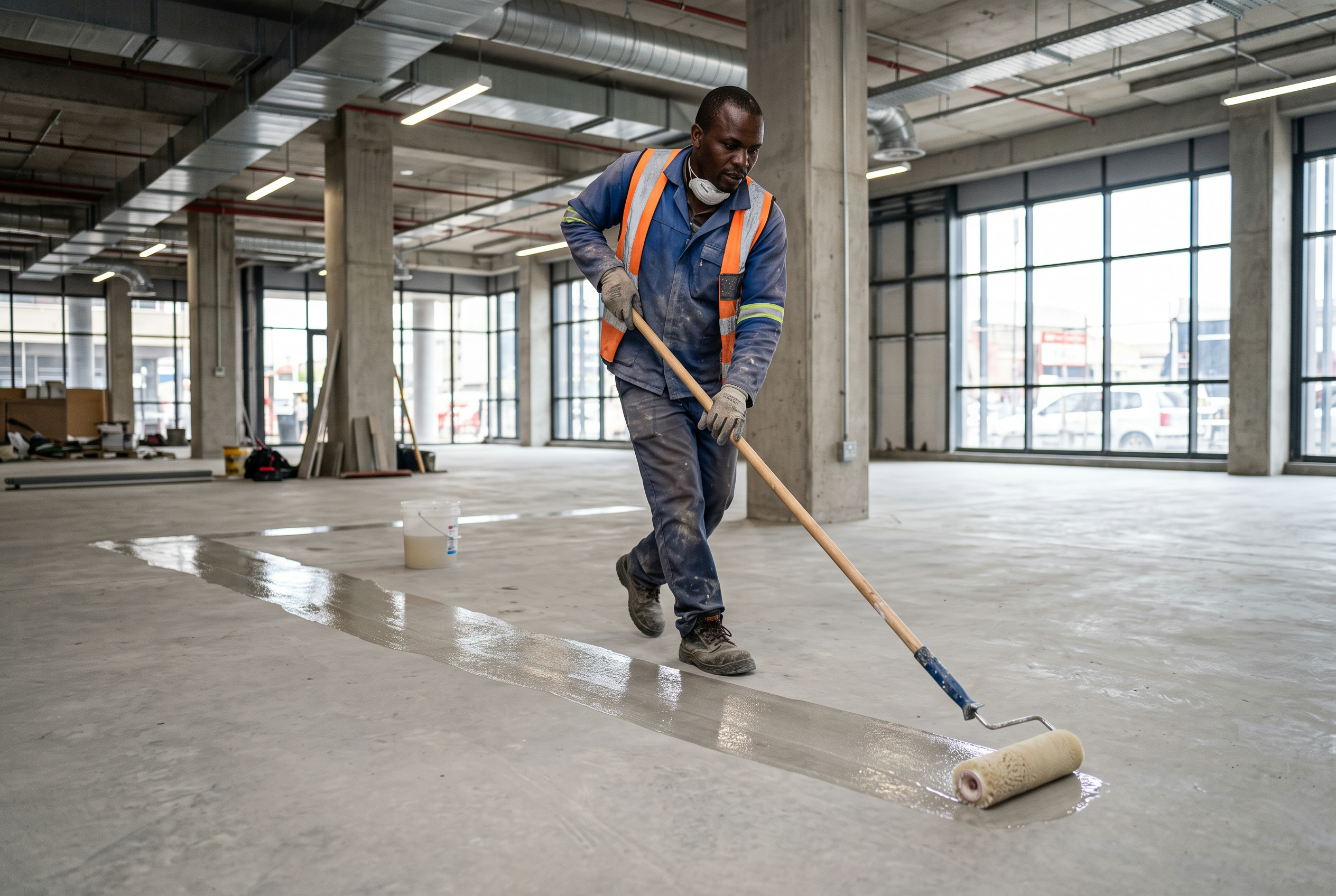
Thika Wax Works supplies floor sealers and a heavy-duty clear acrylic epoxy sealant for concrete, screeds, terrazzo and natural stone, in 20 litre and 20 kg containers. One litre covers about 5 to 6 square metres. The price depends on the seven things below.
Price factors
Why one waterproofing product costs more than another
Two drums can look the same and protect a surface very differently. These are the things that change the price, and what to tell your supplier about each.
| What changes the price | What it means for you |
|---|---|
| Type of product | A clear floor sealer and a heavy-duty acrylic epoxy sealant are made for different jobs. The tougher the protection against wear, moisture and chemicals, the higher the price. |
| Surface and condition (the scope of the job) | Concrete, screeds, terrazzo and stone absorb differently, and a rough or porous floor drinks more product than a smooth one. |
| Area to cover | The surface area decides how many litres you need. One litre of our sealers covers about 5 to 6 square metres per coat. |
| Number of coats | A second coat gives more durability but doubles the product you use on that area. Say how many coats your job needs. |
| Traffic and conditions | A warehouse floor with forklifts needs more protection than an office floor. Tell us about foot traffic, vehicles, water and chemicals. |
| Volume and how often you order | A one-off container costs more per litre than a standing monthly order. Say how much you expect to use each month. |
| Delivery | Thika, Nairobi, upcountry and export orders have different delivery costs. Always compare prices with delivery included. |
Cost per m²
Price per litre is not what you actually pay
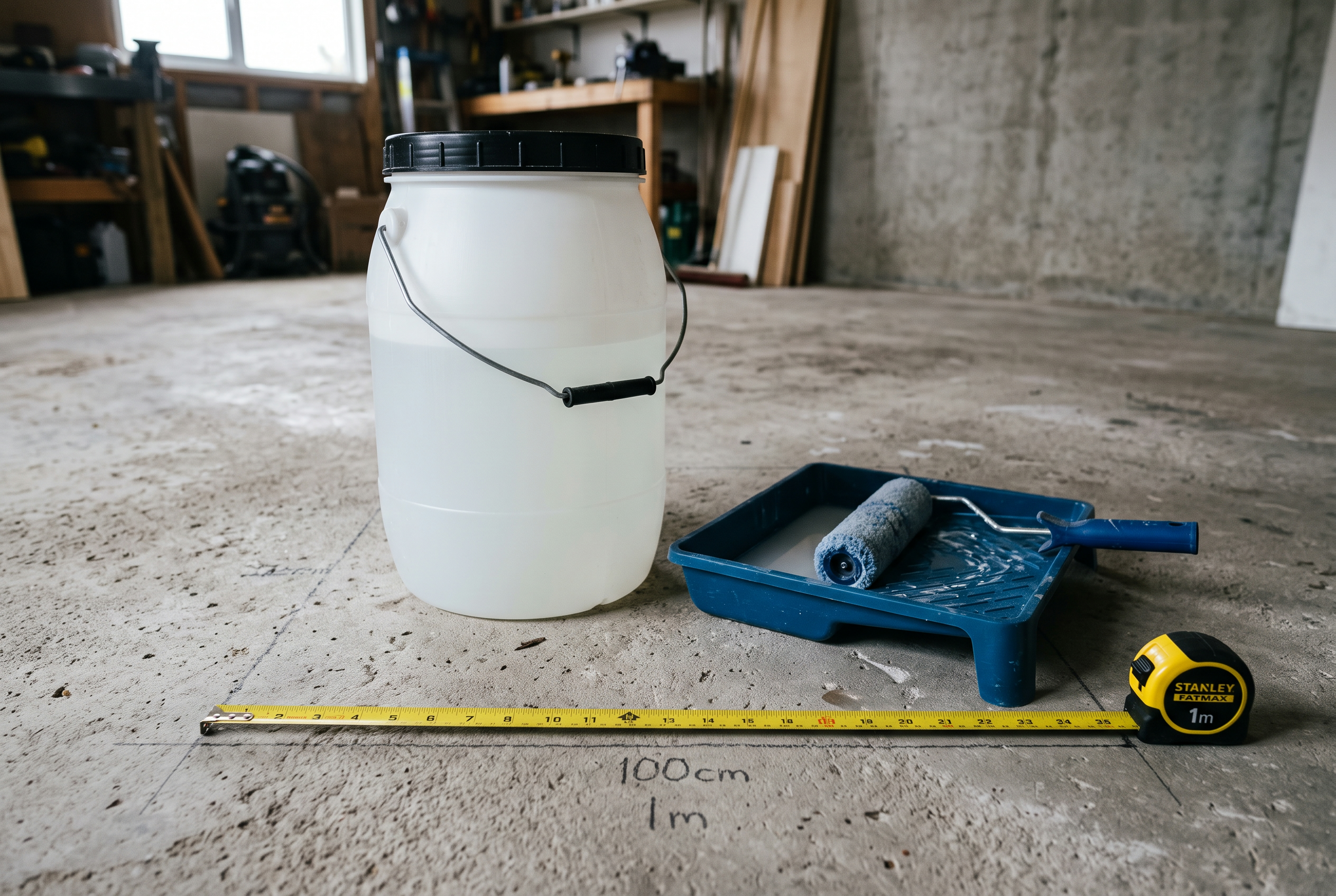
The cost that matters is the cost on each square metre you finish. That depends on how far the product spreads and how many coats you apply, not only on the price of the drum.
Use this simple sum:
Cost per m² = price per litre ÷ square metres covered by one litre × number of coats
Here is an example with round numbers, to show the arithmetic. These are not our prices. Sealer A costs 110 a litre and covers 6 square metres. Sealer B costs 100 a litre and covers 5 square metres. For one coat, A costs about 18.3 a square metre and B costs 20. Sealer A is the cheaper sealer to use, even though its drum costs more.
A cheap sealer can cost you in other ways. If it wears through in a year, or lets water and stains in, you pay for the floor to be stripped and done again. A durable sealer pays for itself by lasting longer.
Comparing quotes
How to compare two quotes fairly
- Ask for the price per litre and per drum, and check the container size is the same. Some are sold by the litre and some by the kilogram.
- Ask how many square metres one litre covers, and for how many coats.
- Check that delivery is included in both quotes.
- Ask which surfaces the product is made for. A cheaper quote may be for a product that does not suit your floor.
- Ask for a sample or a small test area before you commit to a bulk order, and ask how long the price holds.
Get a quote
What to tell us to get a fast, accurate quote
You do not need to know the product. Send us these details and we will recommend one:
- What surface you are sealing, for example concrete, a screed, terrazzo or stone.
- The area in square metres, and whether it is indoors or outdoors.
- How much traffic, water or chemical contact the surface gets.
- How many coats you plan to apply.
- Where we should deliver, and when you want to start.
- Whether this is a single job or a regular order.
See our waterproofing and sealer range for what we supply, or ask for a quote.
Applications
Where our sealers are used
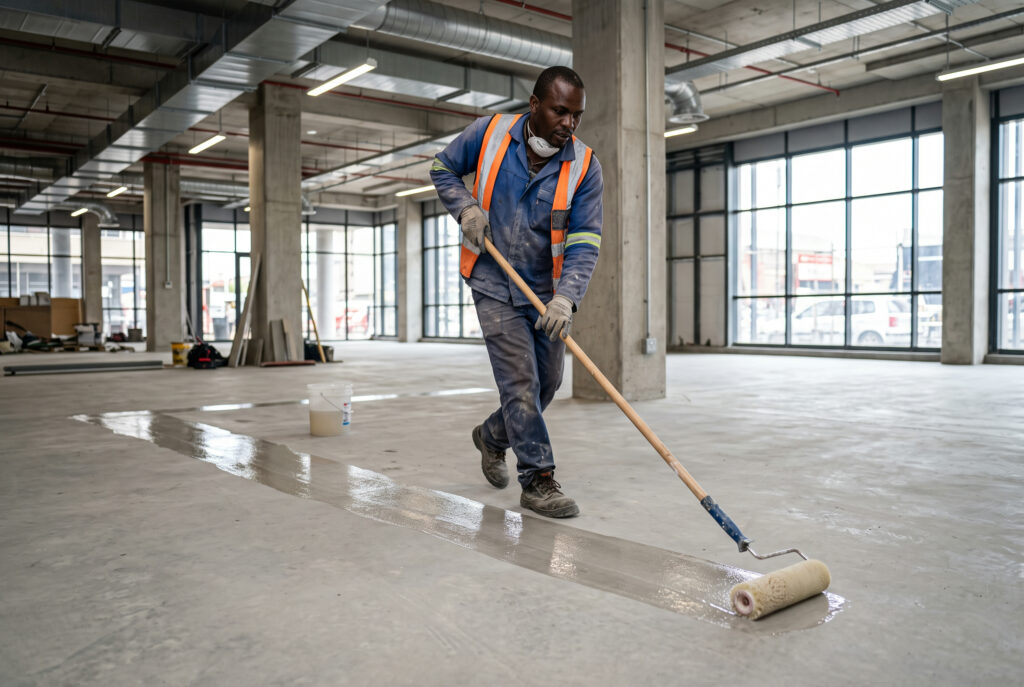
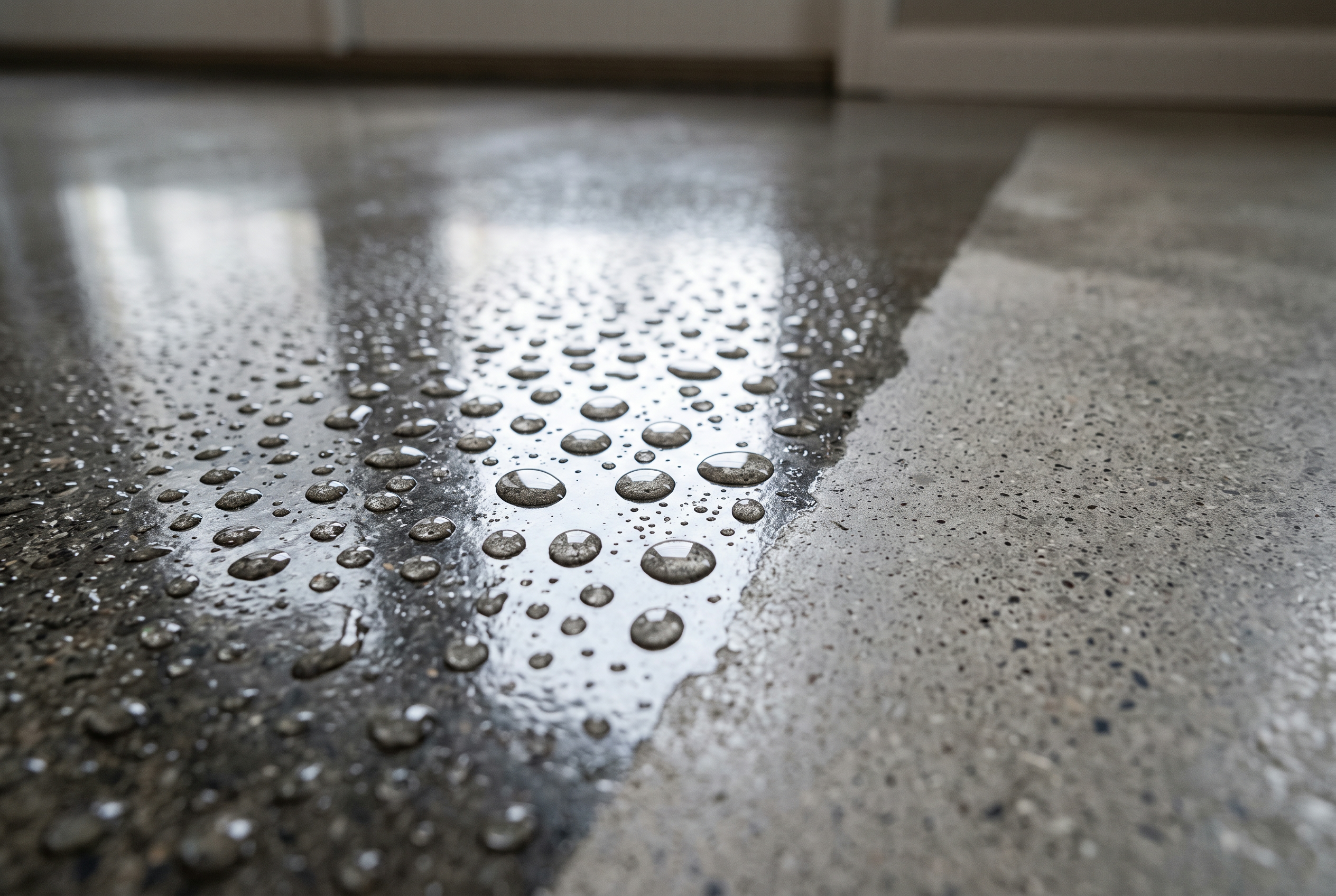
Our sealers protect concrete, screeds, terrazzo and natural stone floors in commercial, industrial and residential spaces. They give a clear, glossy finish, resist wear, stains and moisture, and are applied with a roller, brush or mop. Allow 1 to 2 hours to dry and keep traffic off for at least 24 hours.
To go deeper, read our guides on waterproofing for concrete roofs, waterproofing compounds for concrete, bathroom waterproofing, waterproofing balconies and sealers for driveways.
FAQ
Your questions answered
How much does waterproofing cost in Kenya?
It depends on the product, the surface, the area and the number of coats. The best way to get a real figure is to send us the area in square metres and what you are sealing.
How many square metres does one litre cover?
One litre of our floor sealer and our acrylic epoxy sealant covers about 5 to 6 square metres per coat. Coverage varies with how absorbent the surface is.
How do I work out how much sealer I need?
Divide the area in square metres by the coverage of one litre, then multiply by the number of coats. Add a little extra for rough, porous surfaces.
How long does a sealer take to dry?
It usually dries in 1 to 2 hours depending on conditions. Keep heavy traffic and moisture off the floor for at least 24 hours after applying it.
Do I need a second coat?
A second coat is optional but gives more durability, especially in high-traffic areas. Apply it once the first coat has dried.
What surfaces can I use it on?
Our sealers are made for concrete, screeds, terrazzo and natural stone, indoors and outdoors.
How do I apply the sealer?
Clean the floor to remove dirt, grease and loose particles. Then spread an even coat with a roller, brush or mop. Buffing is recommended for the heavy-duty clear sealant to bring out the shine.
How do I look after a sealed floor?
Clean it regularly with a mild detergent to keep the finish in good condition.
Get a price for your floor
Send us the surface, the area in square metres and the traffic it gets. We will recommend a product and quote for it.

Akshay Chandaria is the Sales Director at Thika Wax Works Limited, a manufacturer of industrial waxes, hot melt and cold glue adhesives, floor polishes, cleaning products and construction chemicals for businesses across Kenya.