

During a recent rainy season, a homeowner, much like many across Kenya, discovered a dark patch of mold growing behind their sofa. This wasn’t just a small stain. It was a clear sign that their walls were acting like a giant sponge, soaking up water from the ground. Many Kenyan families face this same worry when damp walls and cracks start to appear. Since the 1950s, we’ve seen how a little moisture can lead to big repairs that cost over 50,000 KSh. You shouldn’t have to guess which chemicals will work for your home. Using the right waterproofing compounds for concrete is like giving your building a high quality raincoat that never wears out.
We agree that your home should be a place of comfort and pride, not a source of stress. You’ll learn exactly how to choose and use these protective layers to keep your structure dry and safe for decades. We’ll walk you through simple steps to fix leaks and prevent mold so your concrete lasts a lifetime. From understanding different options to final application, this guide gives you the expert knowledge Thika Wax Works Ltd has built over 60 years of manufacturing in Kenya. It’s time to protect your heritage with products you can trust.
Key Takeaways
- Discover how waterproofing compounds for concrete act like an invisible shield to keep your walls dry and strong for decades.
- Learn the difference between surface sealers that act like a protective skin and admixtures that guard your home from the inside out.
- Find the best solution for your specific needs, whether you are protecting a small garden wall or a large water tank.
- Follow our simple guide to cleaning and repairing surfaces to ensure your building stays as solid as our heritage since the 1950s.
- See why investing in premium, Made in Kenya quality today prevents expensive KSh repair bills and keeps your home looking beautiful.
What are waterproofing compounds for concrete?
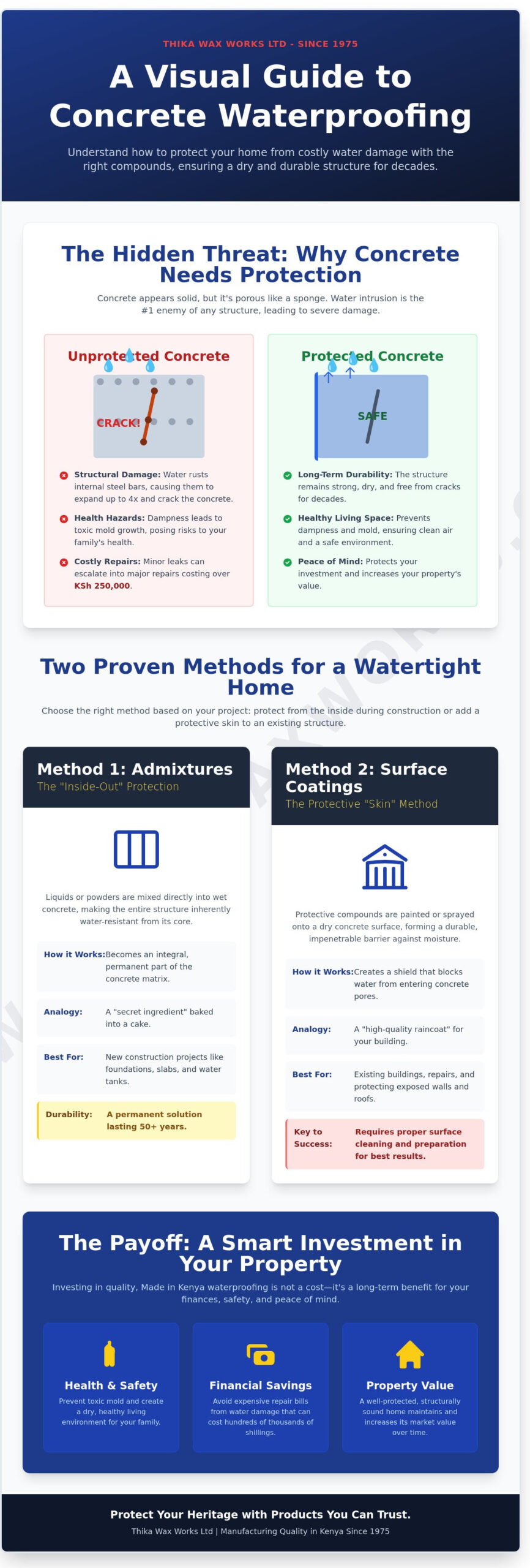
When you look at a concrete wall, it looks solid and unbreakable. However, concrete is actually like a hard, heavy sponge. It’s filled with millions of tiny holes and tunnels that you cannot see with your eyes. Waterproofing compounds for concrete are special chemicals designed to block these paths. They act like an invisible shield that stops moisture from soaking into your walls and floors. At Thika Wax Works Ltd, we’ve provided these protective solutions since the 1950s to help Kenyan homeowners keep their buildings safe and dry.
To better understand this concept, watch this helpful video:
Learning what is waterproofing? is the first step in maintaining any structure. Without this protection, water travels through the concrete pores. This leads to serious problems like wood rot, rusted metal, and toxic mold growth. Using the right waterproofing compounds for concrete ensures that your home remains a healthy environment for your family.
Why your building needs an invisible raincoat
Water is the number one enemy of any stone or concrete structure in Kenya. During our heavy rainy seasons, moisture tries to push its way into your home. If it succeeds, it attacks the steel bars hidden inside your concrete pillars. These bars can rust and expand to 4 times their original size, which causes the concrete to crack and crumble. We believe that quality waterproofing is your first line of defense. It’s a small investment today that prevents repair bills which can easily cost over KSh 250,000 in the future. Our Made in Kenya products are built to handle these local climate challenges with ease.
The simple science of staying dry
Think about the difference between a dry umbrella and a soaked cotton t-shirt. If you stand in the rain with a t-shirt, the fabric sucks up the water until you’re cold and wet. An umbrella has a special coating that makes water bead up and roll off. These compounds do the exact same thing for your house. They fill the tiny pores in the concrete so there’s no room for water to enter. This keeps the inside of your home warm and dry. A dry building is a durable building. By choosing trusted protection, you’re looking after your family’s health and your property’s value for many years to come.
How do these chemicals protect your home?
Protecting your house from water damage is a lot like preparing for a heavy rainy season in Kenya. You wouldn’t walk out into a sudden April downpour without a sturdy umbrella or a good raincoat. Waterproofing compounds for concrete work in a similar way to keep your walls and floors dry and strong. There are two main ways to use these chemicals: you either mix them into the wet concrete at the start, or you apply them to the surface after the building is finished. Both methods are essential for making sure your home can handle the heavy rains that often hit our country.
The “Inside-Out” method: Admixtures
Think of admixtures like a secret ingredient in a cake recipe. These are liquids or powders that builders stir directly into the wet concrete mix on the construction site. When you use concrete enhancers, the wet mix becomes much easier to move and shape. This method turns the entire structure into a solid, water-resistant block from the very center to the outer edge. Because the protection is baked right into the wall, water simply can’t find a way to soak through. It is a permanent solution that helps a home stay strong for 50 years or more without failing.
The “Skin” method: Surface Coatings
The second way to protect your home is by using surface coatings. You paint or spray these onto the concrete once it’s completely dry. It works just like putting a protective layer of wax on a wooden table to keep it shiny and stop water from staining the wood. This “skin” blocks moisture from entering the tiny pores of the concrete. This method is especially helpful for older homes in places like Mombasa or Nairobi where walls might already show signs of dampness. To get the best results, proper concrete surface preparation is a must before you start painting. This ensures the coating bonds tightly to the wall so it won’t peel off when the sun gets hot.
Since the 1950s, Thika Wax Works has focused on creating products that stand the test of time. Using the right waterproofing compounds for concrete means you’re building a legacy for your children and grandchildren. It’s about more than just construction; it’s about keeping your family’s sanctuary safe from the elements. If you’re ready to start your next project, take a look at our specialized waterproofing products designed specifically for the Kenyan climate.
Choosing the right compound for your project
Selecting the best waterproofing compounds for concrete depends entirely on what you’re building. You wouldn’t wear a heavy winter coat to the beach; similarly, a garden wall doesn’t need the same heavy-duty shield as a 10,000-liter underground water tank. Since the 1950s, Thika Wax Works has helped Kenyans understand that different environments demand different levels of protection. If your concrete stays submerged in water, it needs a permanent, pressurized barrier. If it only sees the occasional seasonal rain, a simpler surface sealant might do the job.
For projects where beauty matters as much as strength, you can mix your protection with style. Pairing your waterproofing shield with oxides and concrete colours ensures your driveway or walkway looks vibrant while staying bone-dry. Many professional builders now use integral waterproofing admixtures to stop water from moving through the concrete pores right from the start. This method is becoming a standard in 85 percent of new commercial builds across Nairobi because it protects the structure from the inside out.
Waterproofing for roofs and slabs
Flat roofs are common in modern Kenyan homes, but they’re also the most likely places to leak. When rain hits a flat slab, it often stays there instead of draining away. This is called “ponding.” If water sits for more than 48 hours, it’ll find even the tiniest crack. For these areas, you need flexible coatings. These coatings act like a stretchy skin. As the Kenyan sun heats the building during the day and it cools at night, the concrete moves. A flexible shield stretches with the building so it doesn’t snap or peel over time.
Foundations and underground protection
Even when it isn’t raining in Kiambu or Mombasa, the soil around your house is often damp. This moisture tries to crawl up into your home through the floor. Think of foundation waterproofing like wearing a sturdy pair of rubber boots to walk through a deep puddle. It keeps the “wet feet” feeling out of your living room. Using “damp-proofing” compounds on your foundation prevents that cold, musty smell that ruins carpets and paint. It’s a simple step that protects your family’s health and your property’s value for decades.
How to apply waterproofing compounds correctly
Applying waterproofing compounds for concrete is a lot like painting a house or baking a cake. If you skip a step, the final result won’t hold up. At Thika Wax Works, we’ve helped Kenyan builders protect their homes since the 1950s. We know that a steady hand and a clear plan make all the difference. Follow these five steps to ensure your concrete stays dry for years to come.
- Step 1: Clean the surface. Use a stiff broom or a wire brush to scrub the concrete. You must remove every bit of dust, loose mortar, and old paint.
- Step 2: Fix the cracks. Look for any visible gaps. A tiny 2mm crack can let in a surprising amount of water. Fill these holes with a strong repair mortar and let it set firmly before moving on.
- Step 3: Mix the compound. Treat the instructions on the package like a trusted recipe. Use a clean bucket and a mixing paddle. Don’t eyeball the water; measure it exactly to get a smooth, lump-free paste.
- Step 4: Apply the first coat. Use a wide brush or a roller to spread the mixture evenly. Make sure you cover every square inch. A single 20kg bag usually covers about 10 to 12 square meters for the first layer.
- Step 5: Apply the second coat. Wait about 4 to 6 hours for the first layer to dry. Apply the second coat in the opposite direction. If you brushed the first layer up and down, brush the second layer left to right. This “cross-hatch” method weaves a tight shield against moisture.
Preparation is the secret to success
The most expensive chemical in the world will fail if the wall is greasy or dirty. Think of it like a sticker; it won’t stick to a sandy floor. You can perform a simple “dust test” to be sure. Wipe the wall with a dark cloth or a piece of black kitenge fabric. If the cloth comes away grey or dusty, the wall needs more cleaning. Also, check the weather forecast. You should never apply these chemicals during a heavy Nairobi rainstorm. Rain can wash away your hard work in less than 10 minutes if the compound hasn’t cured.
Common mistakes to avoid
Many people think that a thicker layer is always better, but that isn’t true. If you apply the compound too thick, it might crack as it dries. Stick to the recommended thickness, which is usually around 1mm per coat. Another big mistake is mixing different brands of chemicals together. Each company uses a unique formula, and mixing them can cause a bad reaction. Finally, be patient. It takes about 24 to 48 hours for the concrete to fully dry and become waterproof. Rushing to use the area too soon can ruin the finish.
Since the 1950s, we’ve taken pride in providing high-quality solutions for Kenyan homes. Our products are designed to withstand local conditions while meeting international standards of excellence.
Ready to protect your home from dampness and leaks? Explore our range of premium waterproofing compounds to find the perfect fit for your project.
Why quality waterproofing matters for your building
Think of waterproofing like a sturdy raincoat for your home. You wouldn’t walk into a storm without protection, and your building shouldn’t either. Investing in high-quality waterproofing compounds for concrete today is much cheaper than fixing damage later. A small leak might seem minor now, but it can lead to repair bills over KSh 500,000 within five years. Water is patient and persistent. It finds every tiny crack and slowly eats away at the strength of your structure. By using the right chemicals during construction, you stop these problems before they even start.
A dry building stays beautiful and keeps its value for a long time. When moisture stays out, your walls remain solid and your foundation stays firm. It’s a simple choice between paying a little more now or paying a lot more for heavy repairs in the future. We believe in doing things right the first time because quality is the best way to save money.
The long-term value of a dry home
Moisture is like a silent enemy that ruins everything it touches. It makes your expensive paint peel off in ugly flakes and can even rot your wooden furniture from the bottom up. Even worse, dampness can reach your electrical wiring, which creates a dangerous fire hazard for your family. There is a special kind of peace of mind that comes when you hear heavy rain hitting the roof and you know not a single drop will get inside. A well-built, dry home is more than just a house; it’s a legacy you leave for your children that will stand strong for 50 years or more.
Supporting local manufacturing excellence
Using products “Made in Kenya” is a point of pride for many builders. Our local sun is very hot and our rain can be incredibly heavy, so imported products don’t always hold up. We design our formulas specifically for these Kenyan weather patterns. Thika Wax Works has been a trusted provider since the 1950s, helping thousands of people build homes that last. We combine global standards with over 60 years of local experience to give you the best results.
- Our products are tested for the intense UV rays found in East Africa.
- We provide direct support to local contractors and homeowners.
- Every purchase supports Kenyan jobs and our local economy.
We want to help you succeed in your next building project. If you are unsure which waterproofing compounds for concrete are right for your foundation or roof, we are here to help. Please contact our team for expert advice and let us help you protect your investment for generations to come.
Build a Stronger Future for Your Home
Think of your building like a sturdy pair of leather boots. Without the right polish, water eventually seeps in and ruins the material. Using high-quality waterproofing compounds for concrete acts like a protective raincoat that keeps your walls and foundations dry for decades. We’ve seen how choosing the right product prevents costly repairs and keeps your family safe from dampness. Since the 1950s, Thika Wax Works has supported Kenyan builders with solutions that meet tough international quality standards. You don’t have to guess which chemical is best for your slab or water tank. Our team provides expert technical support to guide you through every step of your construction journey. We take pride in being a local champion that understands the unique needs of our soil and climate. Protecting your investment is about more than just bricks; it’s about peace of mind. For a complete understanding of all the protective solutions available, explore our comprehensive guide to construction chemicals Kenya builders trust for lasting results. If you’re looking to strengthen your concrete beyond just waterproofing, learn more about what are concrete enhancers and how they create rock-hard surfaces that resist dust and cracking. When you’re ready to buy construction chemicals in Kenya, our 2026 guide helps you choose products that stand strong against our unique climate challenges. We’re here to make sure your project lasts for generations.
Explore our range of trusted waterproofing solutions
Your home deserves the best protection possible, and we’re excited to help you achieve it.
Frequently Asked Questions
Is waterproofing concrete really necessary for every building?
Yes, every building in Kenya needs protection because concrete acts like a hard sponge. In cities like Nairobi where we get 1,000mm of rain each year, water can seep into walls and cause mold or weaken the structure. Think of a waterproofing layer like a sturdy raincoat that keeps your home dry and safe for your family. It protects your investment from the heavy rains we’ve seen since the 1950s.
Can I apply waterproofing compounds to old concrete that is already leaking?
You can definitely apply waterproofing compounds for concrete to older buildings that show signs of dampness. It’s like patching a leaky bucket; you just need to clean the surface and fix any large cracks first. Since we began manufacturing in the 1950s, we’ve seen these treatments save 40 year old homes from water damage. This process stops leaks and helps your walls stay strong for many more years.
How long does a typical waterproofing treatment last before it needs a new coat?
A high quality treatment usually lasts between 10 and 15 years before you need to think about a new coat. The exact time depends on how much direct sun and rain the wall faces every day. It’s a long term shield for your home that offers peace of mind. You won’t have to worry about dampness for over a decade after a proper professional application.
Does waterproofing concrete change the color or look of the wall?
Most modern seals are clear and won’t change the look of your wall by more than 5 percent. Some products might leave a slight, clean shine that makes the concrete look fresh and new. It is similar to putting a clear screen protector on a phone. You get all the protection without losing the natural beauty of your stone or cement finish.
Is it better to mix the chemical into the concrete or paint it on top?
Mixing the chemical into the wet concrete is best for new buildings, while painting it on top works perfectly for finished walls. Think of mixing it in like putting sugar inside a cup of tea; the protection is everywhere. Painting it on the surface is like putting icing on a cake. Both methods work well to keep 100 percent of the moisture out of your living space.
Can I paint over a waterproofing compound once it is dry?
Yes, you can apply regular household paint over the compound once it cures for 48 hours. This allows you to choose any color you like while keeping the wall waterproof underneath. It’s a great way to ensure your home looks beautiful and stays dry at the same time. Just make sure the surface is clean and free of dust before you start your painting project.
What is the best time of year to waterproof my concrete structures?
The dry months of January and February are the best times to apply these treatments in Kenya. You want the concrete to be as dry as possible so the compound can soak in deeply. If the humidity is below 70 percent, the product bonds much better to the surface. Planning your maintenance during these sunny months ensures the best results for your home’s protection.
Are waterproofing chemicals safe to use for a tank that holds drinking water?
You must use specific products that are certified safe for drinking water by the Kenya Bureau of Standards. These special compounds don’t release any harmful chemicals into your water supply. We take great pride in providing solutions that keep your family’s water clean and your tanks leak free. Always check the label for the food grade seal before you start working on a water tank.