A fast packaging line can lose money quickly when labels lift, laminated films bubble or glue sets before the operator can align the job. For Kenyan converters, beverage plants, food packers and light assembly teams, industrial bonding solutions for labeling and lamination Kenya is not just a product search, it is a production decision. Thika Wax Works supports local industrial users with adhesives and allied chemical products suited to real factory conditions in Nairobi, Mombasa and across East Africa.
Industrial bonding solution: an adhesive system matched to a substrate, machine, application method and finished product requirement, such as bottle labeling, carton sealing, paper lamination or flexible packaging conversion.
What are industrial bonding solutions for labeling and lamination in Kenya?
Industrial bonding solutions for labeling and lamination in Kenya are adhesive systems used to attach labels, join paper or film layers, and support packaging conversion on manual, semi-automatic and automated lines. The right choice depends on tack, open time, viscosity, heat resistance, substrate type and whether the product touches food or moisture.
Competitor pages often focus on one product, such as adhesive lamination film, but manufacturers usually need a full line-fit answer. A water-based cold glue may suit glass bottle labeling, while hot melt may suit faster carton or wraparound applications. For a deeper base on hot melt types, see this guide to hot melt adhesives in Kenya for industrial use.
Key terms matter because they affect downtime:
- Tack: how quickly the adhesive grips after contact.
- Open time: how long the adhesive remains workable before setting.
- Set time: how quickly the bond becomes strong enough to handle.
- Viscosity: how thick or flowable the adhesive is during application.
- Substrate: the material being bonded, such as paper, board, glass, PET, foil or film.
Key insight: A good adhesive is not just "strong." It must be strong at the right speed, on the right surface, using the equipment you already run.
Video: manufacturing trends affecting packaging demand
Kenya's packaging and light manufacturing sector keeps shifting toward faster, cleaner and more consistent production. This video is not adhesive-specific, but it helps show why small and mid-sized manufacturers are investing in better production systems.
How do you choose the right adhesive for labeling lines?
Choose the right adhesive for labeling lines by matching the container material, label stock, line speed, application temperature, storage conditions and wash-off needs. A label adhesive that works on dry glass in Nairobi may fail on chilled plastic bottles, curved containers or dusty returnable crates.
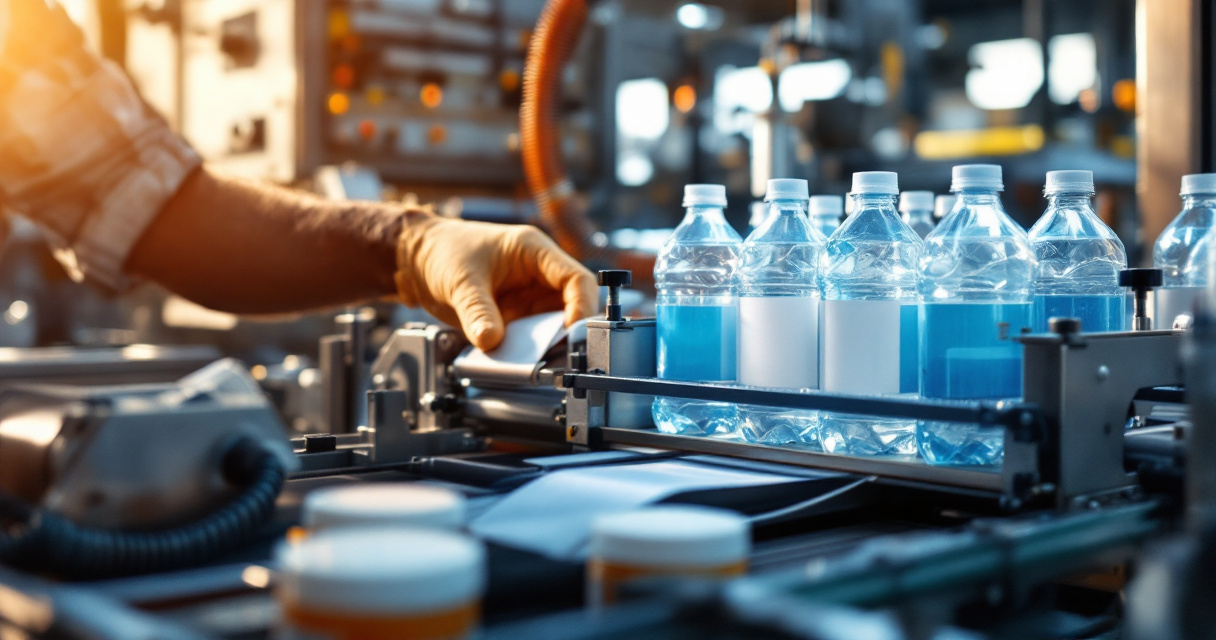
Start with the job, not the glue name. Labels for glass bottles, paper bags, cartons, tins and plastic jars all behave differently. Wikipedia describes a paper bag as a bag made from paper, usually kraft paper, with virgin or recycled fibres; that simple material difference can change glue absorption and drying speed.
Use this short buying process before ordering bulk adhesive:
- Confirm the substrate: glass, PET, HDPE, paper, board or laminated film.
- Check the label material: paper, coated paper, synthetic label or multi-layer label.
- Measure the line speed: manual, semi-auto or continuous production.
- Match the application method: roller, nozzle, wheel, spray or hand application.
- Test storage conditions: hot warehouse, cold chain, humidity or transport vibration.
- Review compliance needs: especially for food, beverage and hygiene products.
For paper-heavy applications, this guide to paper and board adhesives for high-performance bonding is useful related reading.
Label adhesive comparison table for Kenyan factories
| Adhesive type | Best fit | Strengths | Watch point |
|---|---|---|---|
| Water-based cold glue | Glass bottles, paper labels, cartons | Clean application, good wet tack, common for labeling | Needs correct drying time and surface condition |
| Hot Melt adhesive | Fast packaging, wraparound labels, cartons | Quick set, high production speed, strong handling bond | Needs heat control and suitable applicator |
| Pressure-sensitive adhesive | Stickers, pre-gummed labels, retail labels | Easy handling, instant grab | Surface dust and heat can affect performance |
| Laminating adhesive | Film, foil, paper or board layer bonding | Creates uniform multi-layer structures | Requires careful coating weight and curing control |
Which bonding factors matter most for lamination and flexible packaging?
The most important bonding factors for lamination are substrate compatibility, coating weight, drying or curing behaviour, heat resistance, clarity, flexibility and food-contact suitability where relevant. A laminated pack must stay flat, clean and bonded through printing, filling, transport and shelf display.
Flexible packaging often combines paper, plastic film, foil and board. Research continues to move toward lower-impact packaging materials; a 2022 review in the Journal of Chemistry examined both nonbiodegradable and biodegradable composites for food packaging applications (source). That trend matters in Kenya because converters increasingly serve food, agriculture, household care and export-facing brands.
Cellulose-based materials are also gaining attention. A 2022 Journal of Materials Science paper reviewed international research into cellulose as a functional nanomaterial for advanced applications (source). For local buyers, the practical lesson is simple: as packaging materials change, adhesive testing must change too.
"Quality is everyone's responsibility.", W. Edwards Deming, The W. Edwards Deming Institute
In lamination, quality is shared across purchasing, production, machine maintenance and quality control. A strong adhesive cannot rescue a poorly treated film, wrong coating weight or rushed curing window.
Performance factors to request from your supplier
- Bond strength: ask how the adhesive performs on your exact film, foil, paper or board.
- Clarity: important for transparent labels, pouches and display packaging.
- Flexibility: needed where packs fold, squeeze or bend during use.
- Heat resistance: important for hot filling, storage and transport.
- Odour profile: relevant for food, beverage and personal care packaging.
- Machine compatibility: confirm pump, roller, nozzle and cleaning requirements.
If your production line handles food packs, review safe adhesives for food packaging in 2026 before approving a formulation.
How should Kenyan manufacturers test adhesives before full production?
Kenyan manufacturers should test adhesives by running small, documented trials on real substrates, real machines and real storage conditions before scaling to bulk production. Lab samples are helpful, but a factory trial shows whether the glue works with your operators, applicators, climate and delivery timelines.

Use a simple trial sheet. Record the adhesive batch, substrate supplier, machine speed, glue temperature, coating weight, room conditions and inspection results. Keep photos of label lift, bubbles, wrinkling or clean bonds so your team can compare outcomes fairly.
A short trial beats guesswork:
- Run a small batch using normal production settings.
- Check immediate tack after labeling or lamination.
- Inspect after handling to see if labels slide or edges lift.
- Store samples in heat, shade and normal warehouse conditions.
- Test transport stress by stacking, shaking or carton handling.
- Review cleaning needs for the applicator and surrounding equipment.
- Approve only after repeat results across more than one run.
For line setup choices, this practical guide to adhesive application methods for packaging lines explains hot melt, cold glue, tape and equipment fit for Kenyan manufacturers.
Thika Wax Works can help buyers think through adhesive selection, especially where production teams need consistency across labeling, paper bonding, board packaging and light assembly. If you are comparing options, bring your substrate samples and expected line speed so the discussion stays practical.
FAQ: industrial bonding solutions for labeling and lamination Kenya
These common questions help buyers narrow the right adhesive before speaking to a supplier.
What adhesive is best for bottle labeling in Kenya?
The best adhesive for bottle labeling depends on the bottle material, label stock and filling environment. Water-based cold glue often suits paper labels on glass, while hot melt or pressure-sensitive systems may suit faster lines or synthetic labels. Always test on actual bottles, especially if they are chilled, wet or returnable.
Can one adhesive work for both labeling and lamination?
One adhesive can sometimes support related paper or board jobs, but labeling and lamination usually need different performance profiles. Labeling needs tack, positioning and clean application. Lamination needs even coating, long-term layer bond and sometimes clarity or flexibility. Treat them as separate use cases unless your supplier confirms overlap through trials.
What should converters check before buying adhesive in bulk?
Converters should check substrate compatibility, machine fit, open time, set speed, storage stability, odour, safety data and cleaning process. Bulk buying makes sense only after a repeatable production trial. Ask for technical guidance, not just price per kilo, because downtime and rejected packs can cost more than the adhesive.
Are food packaging adhesives different from general packaging glues?
Yes. Food packaging adhesives may require stricter review for odour, migration risk, indirect contact suitability and documentation. The exact need depends on the pack structure and whether the adhesive can contact food directly or indirectly. Food, beverage and pharmaceutical packers should ask for suitability guidance before approving any adhesive.
Conclusion
The right adhesive choice starts with the job: substrate, speed, application method, storage and compliance. For Kenyan manufacturers, the safest route is to test before scaling, document the results and work with a supplier who understands both factory realities and packaging performance.
If you are sourcing industrial bonding solutions for labeling and lamination Kenya, Thika Wax Works is a practical place to start. Visit thikawaxworks.com to review the wider industrial range, or get in touch through the website so your team can discuss hot melt adhesives, cold glues and bonding options for your production line.