A missing bathroom descaler or the wrong floor chemical can slow room turnaround fast. For hotels in Kenya, a smart housekeeping chemicals checklist helps protect guest experience, control costs, and keep cleaning teams consistent. In simple terms, housekeeping is the management and routine support work involved in maintaining an organized institution used by people, according to Wikipedia. For hotels, that means choosing the right chemicals for rooms, washrooms, public areas, laundry, and back-of-house operations. If you want locally supplied options, Thika Wax Works is one of the established Kenyan manufacturers serving hospitality, housekeeping, laundry, and industrial cleaning needs.
The core hotel housekeeping chemicals every Kenyan property should stock
A hotel doesn't need dozens of random products. It needs a tight set of chemicals matched to surfaces, soil types, and cleaning frequency.
Key takeaway: The best checklist is built around use areas, not brand names. That makes training, reordering, and audit checks much easier.
Hotels in Kenya usually divide housekeeping chemicals into five working groups:
- General cleaners for daily wiping and mopping
- Disinfectants and sanitizers for high-touch and hygiene-sensitive areas
- Washroom chemicals for toilets, urinals, tiles, and limescale
- Laundry products for linen, towels, and staff uniforms
- Specialty products for glass, metal, carpets, wood, and floor finishing
Using one chemical for every surface often causes damage or weak cleaning results. Acidic toilet cleaners, for example, shouldn't be used casually on natural stone or some metallic fittings. Glass cleaners can leave residue on floors, and heavy degreasers are usually unnecessary in guest bedrooms.
If your hotel also handles in-house kitchen sanitation, it helps to align housekeeping with kitchen care and hygiene products from the same supplier so dilution, labeling, and procurement stay simpler.
Checklist table: essential chemicals by hotel area
Use this as a practical starting point for stores, supervisors, and opening stock plans.
| Hotel area | Must-have chemical types | Main purpose |
|---|---|---|
| Guest rooms | Neutral floor cleaner, glass cleaner, multi-purpose cleaner, disinfectant wipes or spray | Daily room cleaning, touchpoint hygiene, mirror care |
| Bathrooms | Toilet bowl cleaner, descaler, disinfectant, tile cleaner, drain treatment where needed | Remove stains, soap scum, limescale, odors |
| Public areas | Floor cleaner, polish or maintainer, glass cleaner, spot remover | Lobbies, corridors, lifts, reception areas |
| Laundry | Detergent, bleach where fabric-safe, softener, stain remover | Linen cleaning, whitening, odor control |
| Back-of-house | Degreaser, disinfectant, handwash, heavy-duty floor cleaner | Staff areas, service corridors, utility spaces |
| Waste handling points | Odor control product, disinfectant | Bin room hygiene and smell control |
What Kenyan hotels often forget in first orders
Opening orders usually focus on room cleaners and forget support products. Add these to your checklist early:
- Hand soap for guest and staff washrooms
- Air freshening or odor control for public washrooms and waste points
- Furniture polish for wood or laminate surfaces where relevant
- Carpet spotting chemical for quick stain response
- Dilution bottles and labels so staff don't guess ratios
A more complete hospitality supply plan should also connect with your housekeeping and hospitality cleaning solutions supplier so consumables and chemicals are ordered together.
Room-by-room checklist that keeps cleaning standards consistent
Different hotel zones need different chemistry. A room-by-room checklist reduces overuse, underuse, and waste.
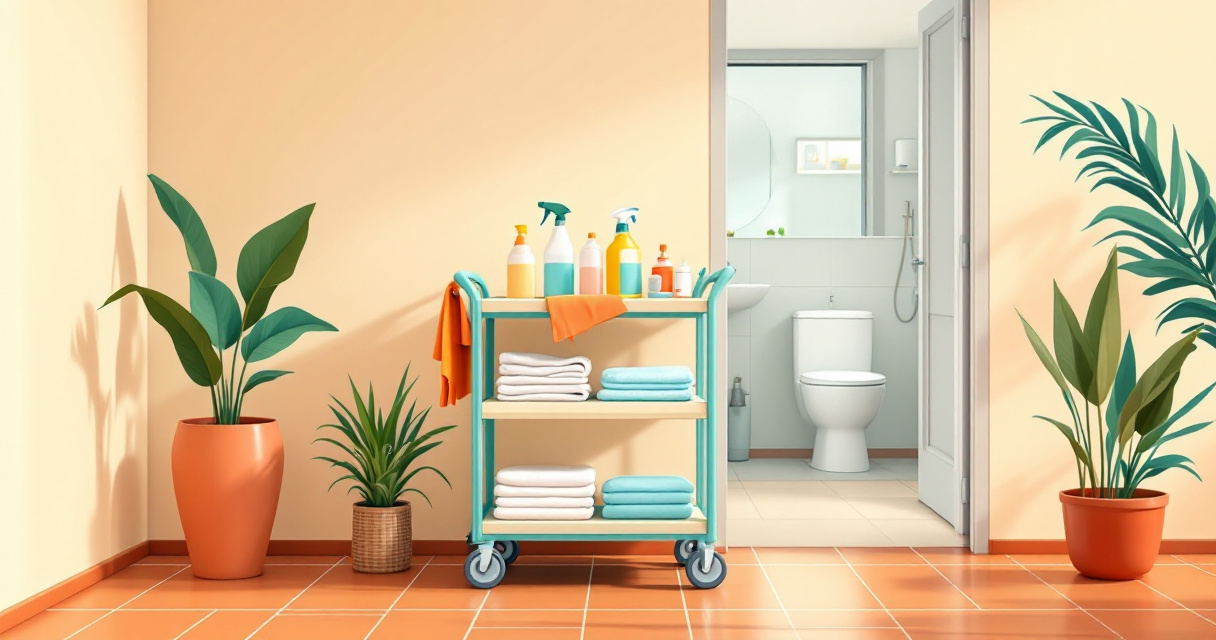
Guest rooms need products that clean well without strong lingering odor. Public areas need faster-drying products because foot traffic never fully stops. Bathrooms need stronger scale and stain control, especially where hard water creates mineral buildup.
A 2022 study on cleaning practices and infection prevention in Tanzanian hospitals, published in the Journal of Environmental Protection, examined how environmental cleaning affects infection prevention and control in institutional settings source. While hospitals and hotels aren't the same, the study supports a basic operational point: cleaning practice and product use matter when hygiene standards are a priority.
Guest room and bathroom chemical checklist
For occupied and checkout rooms, keep the trolley stocked with:
- Multi-purpose cleaner for desks, counters, switches, and hard surfaces
- Glass cleaner for mirrors and interior glass
- Neutral floor cleaner for tiles, vinyl, or sealed surfaces
- Disinfectant for high-touch points such as handles and remotes
- Toilet cleaner for bowls and urinals
- Descaler for taps, shower screens, and tiles with mineral deposits
- Mild deodorizer where needed, not as a substitute for cleaning
Avoid using strong perfume to mask poor cleaning. Guests notice residue and overpowering scent quickly.
If your property has polished floors or decorative finishes, pair routine cleaners with the correct floor care and polish products to avoid dulling the surface.
Public areas, laundry, and back-of-house checklist
Public corridors, reception spaces, meeting rooms, and staff zones need a different mix:
- Heavy-duty floor cleaner for entrances and service areas
- Floor maintainer or polish for shine and protection where applicable
- Metal polish for lifts, rails, and decorative fittings if used
- Laundry detergent for sheets, towels, napkins, and uniforms
- Stain remover for food, makeup, and beverage marks
- Fabric softener for guest comfort and linen finish
- Degreaser for utility rooms and greasy service points
Laundry products should be chosen with fabric type in mind. A strong bleach-based approach may shorten linen life if used carelessly, so supervisors should check compatibility before standardizing products.
How to choose chemicals that save money, time, and surfaces
The cheapest drum on the shelf can be expensive if it damages grout, fades linen, or needs double application. Hotels should choose chemicals based on total use cost, training ease, and surface safety.
Start by asking four buying questions:
- What surface is being cleaned? Tile, stone, stainless steel, fabric, and glass all react differently.
- What soil is common? Dust, body oils, soap scum, grease, rust, and tannin stains need different products.
- How often is the area cleaned? High-frequency areas benefit from simpler, safer daily-use formulas.
- Can staff dilute and use it correctly? Complicated systems often fail on busy shifts.
Locally manufactured supply can also reduce lead times and support faster reordering. That's one reason some hospitality teams prefer working with established Kenyan manufacturers such as Thika Wax Works, especially when they need housekeeping, laundry, and related products from one source.
Simple buying criteria for hotel procurement teams
Use this quick screen before approving a product:
| Buying factor | What to check | Why it matters |
|---|---|---|
| Surface compatibility | Label guidance for tiles, metals, fabrics, glass | Reduces damage claims |
| Dilution needs | Clear mixing instructions | Lowers waste and misuse |
| Packaging size | Fits store space and usage rate | Prevents overstock or stockouts |
| Local availability | Supplier can replenish quickly in Kenya | Helps avoid room turnaround delays |
| Training support | Labels, SOPs, or supplier guidance | Improves consistency |
A good supplier should help you build a shortlist rather than push every product they sell.
Common mistakes that increase housekeeping costs
Many hotels lose money through preventable errors:
- Buying too many overlapping chemicals
- Using bathroom acid cleaners on the wrong surfaces
- Storing unlabelled diluted product in reused bottles
- Skipping stain treatment and rewashing linen later
- Failing to separate guest-room, washroom, and kitchen chemicals
Those mistakes also create training problems. New attendants perform better when each bottle has one clear purpose.
Safety, storage, and SOP rules every hotel should set in 2026
A checklist isn't complete unless it covers safe handling. Chemicals that clean well can still create risk if they are mixed, decanted poorly, or stored beside food items or linen.
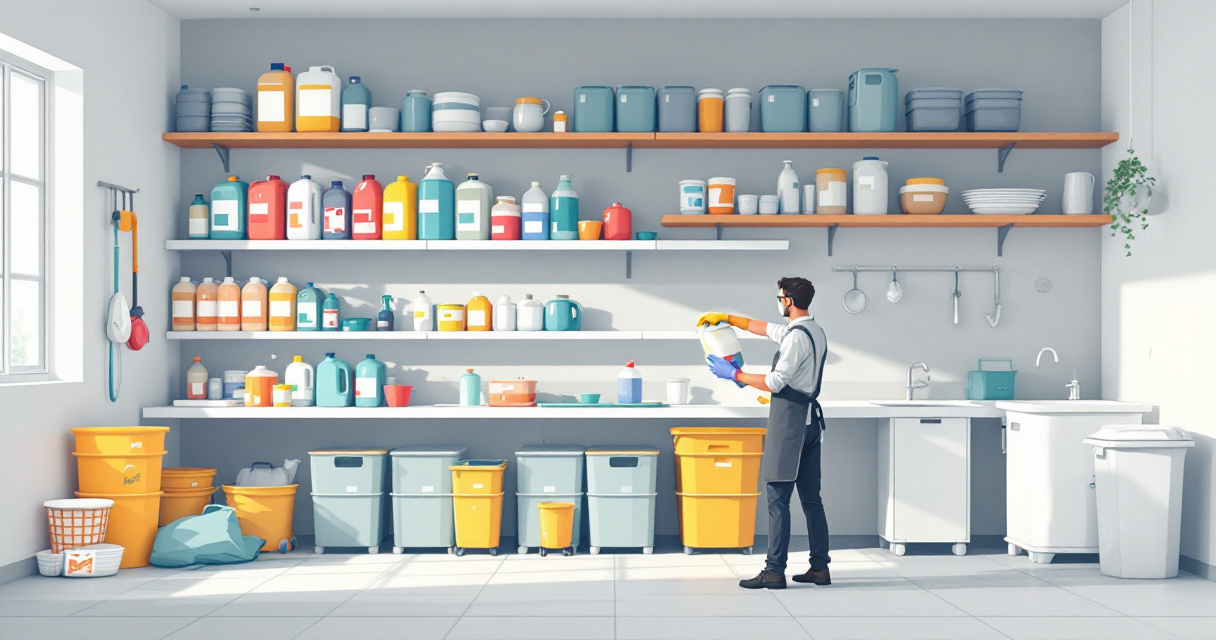
Set written SOPs for housekeeping attendants, supervisors, and stores staff. Competitor content in 2025 and 2026 has leaned heavily on chemical SOP models, and that makes sense because standardization is what turns products into reliable results.
Best practice: Keep housekeeping chemical logs simple enough that supervisors actually use them every day.
Basic control points include:
- Store chemicals in a locked, ventilated area
- Keep original labels or approved secondary labels visible
- Never mix unknown products together
- Issue gloves and any task-specific PPE needed
- Separate housekeeping chemicals from food-service stock
- Record reorder points before products run out
For hotels growing across Nairobi, Mombasa, Kisumu, or upcountry circuits, consistent SOPs matter even more because staff transfer between sites and expect the same product system.
Minimum SOP items to put on every housekeeping wall chart
Your wall chart or laminated guide should include:
- Product name and use area
- Correct dilution or ready-to-use status
- Contact time if required by the product instructions
- Surfaces to avoid
- PPE required
- First-response action for spills or accidental contact
Using Thika Wax Works or another supplier that can support multiple housekeeping categories can make SOP creation easier because labels and product groups are more consistent.
What to expect next in hotel housekeeping chemicals in Kenya
Hotels in Kenya are paying more attention to smarter purchasing, simpler training, and products that support both cleanliness and guest perception. Current top-ranking content also shows stronger demand for eco-friendlier options and practical hotel-specific chemical systems rather than generic household advice.
One visible shift is the move toward fewer, better-matched products. Instead of overstocking, hotels are tightening their core list and adding specialty chemicals only where the building, water quality, or guest profile requires them. Another shift is supplier consolidation, where one manufacturer supports housekeeping, laundry, and related hygiene products in one account.
That trend is useful for independent hotels, serviced apartments, lodges, and hospital-style accommodation because it cuts ordering complexity. It also makes audit checks easier when the same standards apply across departments.
If you're updating your stores list this year, review it by zone, remove duplicate products, then test whether your current line actually matches your room finishes, washroom scale levels, and laundry volume.
2026 refresh checklist for hotel managers
Before your next procurement cycle, ask your team to do three things:
- Audit every chemical currently in store and remove duplicates
- Match each product to a room, area, or surface type
- Rebuild SOPs around a short, controlled product list
That approach is usually more practical than chasing trendy products with no clear use case.
Conclusion
A strong housekeeping chemicals checklist helps hotels in Kenya clean faster, protect surfaces, and avoid costly confusion on the floor. Start with the essentials for guest rooms, bathrooms, public areas, laundry, and back-of-house, then tighten your list around clear SOPs, safe storage, and reliable supply. If you need a local manufacturer with a broad hospitality and industrial product range, explore Thika Wax Works and build a property-specific checklist that your supervisors can actually use every day.