
A weak glue line can ruin an otherwise good paper straw in minutes, especially in cold juice, milk drinks, or humid storage. In 2026, the best adhesive for paper straws and paper packaging in Kenya is usually a water-based food-contact adhesive matched to your paper grade, production speed, and end-use conditions, not just the cheapest drum on the shelf. A drinking straw is the utensil used to carry a beverage to the mouth by suction, while packaging is the science and technology of enclosing and protecting products for distribution and sale, according to Wikipedia's entry on drinking straws and Wikipedia's entry on packaging. For Kenyan converters, restaurants, and packaging buyers, that means the adhesive has to hold under moisture, stay process-friendly, and align with food safety expectations. If you're sourcing locally, Thika Wax Works is worth considering because the right supplier should help with application advice, line checks, and product fit, not only adhesive supply.
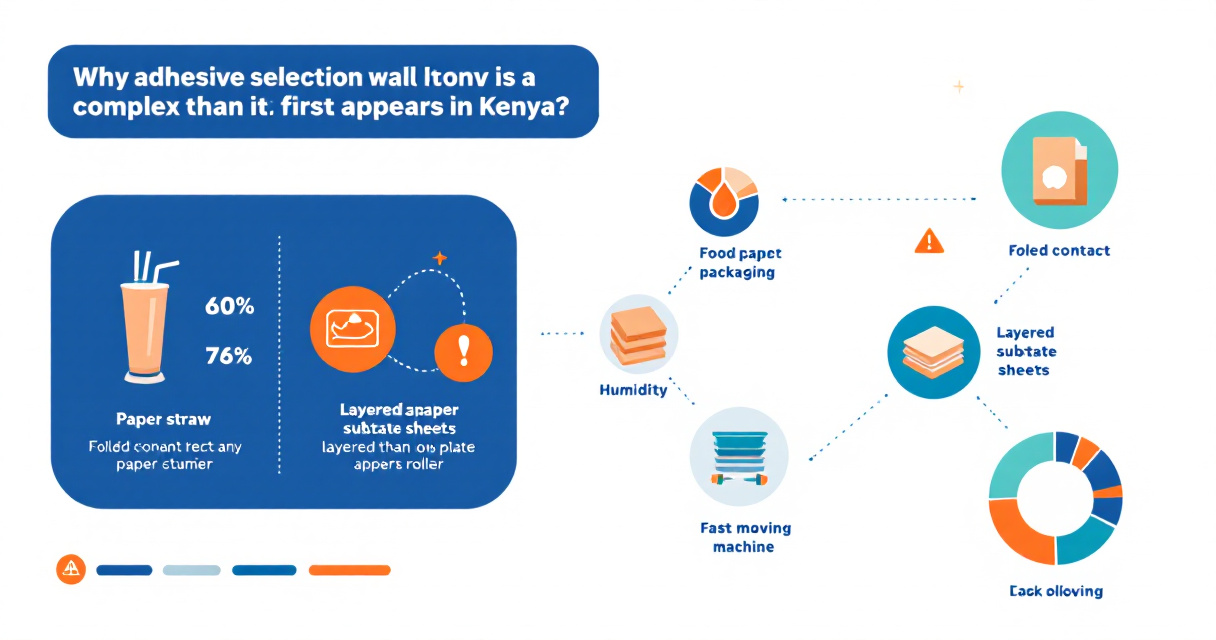
Why paper straw adhesive selection is harder in Kenya than it looks
Kenya's climate makes adhesive choice less forgiving. High daytime temperatures, coastal humidity, and variable warehouse conditions can change drying speed, viscosity, and bond strength. A paper straw that performs well in a cool test room may fail faster in Mombasa or in unrefrigerated transport.
Paper bags and other paper packaging have their own challenges. Wikipedia notes that a paper bag is usually made from kraft paper and may use virgin or recycled fibres, which matters because recycled content can affect absorbency and bond consistency, especially on rough or dusty surfaces: paper bag definition.
Key takeaway: In Kenya, the best adhesive is not a universal formula. It is the grade that matches your paper, humidity, dwell time, and food-contact needs.
That is why many packaging plants compare water-based systems for paper converting, then separately review hot melt where line speed or carton closing requires it. If your wider operation also handles cartons, this guide on hot melt vs cold glue for carton packaging in East Africa helps clarify where each system fits.
The most common failure points on Kenyan lines
You'll usually see one of four problems:
- Delamination in drinks, where the spiral seam opens too early
- Slow set time, causing winding or stacking defects
- Blocking, where products stick together before full drying
- Odour or migration concerns, especially for direct or indirect food contact
Each problem points back to adhesive chemistry, coating weight, or machine settings. Buyers often blame the paper first, but glue and process control are just as important.
The best adhesive types for paper straws and paper packaging in 2026
For most paper straw production, water-based adhesives remain the strongest practical option. Top-ranking industry pages from Henkel's paper straw adhesive page and food-safe straw adhesive suppliers focus on water-based systems because they can be formulated for food safety, paper bonding, and moisture resistance.
A water-based adhesive is usually preferred when you need:
- Strong paper-to-paper bonding
- Low odour processing
- Smooth application on spiral winding equipment
- Better alignment with paper-based sustainability claims
For paper packaging, the answer broadens. Side seams, folding cartons, paper sleeves, paper bags, and laminations may use either cold glue or hot melt, depending on speed and substrate combination. If your need is not only straws but also carton assembly, read this 2026 guide to hot melt vs cold glue for carton packaging in East Africa.
Quick comparison table for Kenyan buyers
| Application | Usually best adhesive type | Why it fits | Main caution |
|---|---|---|---|
| Paper straws | Water-based food-contact adhesive | Good paper wetting, process control, potential food-contact compliance | Must resist liquid exposure well |
| Paper bags | Water-based cold glue | Good for kraft paper seams and handles | Drying depends on humidity |
| Folding cartons | Cold glue or hot melt | Choice depends on speed and board type | Wrong set speed causes pop-open seams |
| Paper sleeves and wraps | Water-based adhesive | Clean paper bonding | Check rub and humidity resistance |
| Secondary case sealing | Hot Melt | Fast set on high-speed lines | Heat-sensitive handling and equipment care |
Not every "food-safe glue" sold online is suitable for industrial converting. Consumer craft glues are not a serious production answer for straw lines or commercial packaging.
When water-based adhesive is the top choice
Choose it when your substrate is mostly paper, your line has enough drying capacity, and the package or straw needs a clean bond. For paper straws, this is the default starting point.
A useful industry video reference
The video is not about industrial adhesives, but it reminds buyers that hobby glue demonstrations online are irrelevant to food-contact converting. Industrial selection has to be based on paper type, machine settings, and compliance documents, not craft examples.
When hot melt makes more sense
Use hot melt for very fast packaging lines, closing operations, or mixed substrates where instant grab matters more than long open time. For pure paper straws, it is usually not the first choice.
Food-contact and compliance checks Kenyan buyers should ask for
If a straw touches a beverage, your adhesive discussion starts with compliance, not price. The leading paper straw adhesive pages in search results repeatedly stress food safety standards, and that is the right filter.

Ask suppliers for:
- A technical data sheet
- A safety data sheet
- A written statement on food-contact suitability for the intended use
- Recommended application temperature or viscosity range
- Storage conditions and shelf life
Don't assume "non-toxic" means approved for food-contact converting. Those are different claims.
"There is no such thing as 'away'. When we throw anything away it must go somewhere.", Annie Leonard, The Story of Stuff quote page
That quote matters here because switching from plastic to paper only helps if the full product system, including adhesive choice, works in real use and waste handling. A 2021 review on plastic pollution and circular economy opportunities highlights the importance of better material choices and waste management in moving away from problematic plastic dependence: Mihai, Gündoğdu, Markley, 2021.
Questions that expose weak suppliers fast
A capable adhesive supplier should answer these clearly:
- What paper grammage and absorbency range does this grade suit?
- Has it been used on paper straw winding or food packaging lines before?
- What bond performance should I expect in cold liquids?
- How should viscosity be adjusted in Kenyan weather?
- What test protocol do you recommend before commercial rollout?
If answers are vague, keep looking. Good adhesive support is part of the product.
How to match adhesive to paper substrate, machine, and climate
One adhesive can perform very differently on virgin kraft, recycled kraft, coated board, or high-porosity paper. The wrong match leads to over-application, curl, or weak seams.
Practical selection matrix for plant teams
| Decision factor | What to check | Why it matters in Kenya |
|---|---|---|
| Paper type | Virgin, recycled, coated, uncoated | Absorbency changes wet tack and drying |
| Machine speed | Slow, medium, high | Faster lines need faster set or better drying |
| End-use | Cold drink, dry pack, takeaway | Moisture resistance target changes |
| Warehouse conditions | Inland heat, coastal humidity | Storage affects viscosity and paper moisture |
| Bond area | Narrow seam, wide flap, handle patch | Determines coat weight and grab need |
A practical example: a Nairobi converter producing paper straws for juice bars may need a water-based adhesive with stronger wet resistance than a paper bag maker serving dry retail goods. Same material family, different performance target.
Plants that already manage other consumables know this pattern well. The same logic used in choosing industrial floor cleaner systems for factories and warehouses in Kenya applies here too: fit the product to the operating environment, not only the purchase price.
Signs your paper, not just the adhesive, is part of the problem
Watch for excessive dust, inconsistent reel tension, variable caliper, or recycled paper with unstable porosity. Those issues can make a good adhesive look bad.
Using Thika Wax Works as a supply partner can help because local technical support often shortens the trial-and-error stage. You want advice on both glue behavior and plant handling, not only a quotation.
Testing method: how Kenyan converters should validate a new adhesive
A full plant trial beats a supplier promise every time. Before ordering at scale, run structured tests under actual local conditions.
A simple validation plan
- Check viscosity and application settings at start-up
- Run samples for several hours, not only a short demo
- Condition samples in normal warehouse conditions
- Test in real use, such as cold juice, soda, or takeaway handling
- Inspect seam strength and appearance after 30 minutes, 2 hours, and 24 hours
- Review waste rate and machine cleanliness
Also test during a warm afternoon if possible. Adhesives that look stable at 8 a.m. can behave differently later in the day.
Plant tip: Measure success by reject reduction, seam integrity, and line stability, not only adhesive cost per kilogram.
For broader production quality control, the mindset is similar to choosing concrete oxide colors for paving blocks in Kenya: dosing, consistency, and repeatability matter as much as raw material choice.
What to record during the trial
Keep a log of:
- Ambient temperature and humidity
- Paper source and batch
- Adhesive batch and age
- Viscosity adjustments
- Machine speed
- Reject count and defect type
That record makes supplier discussions factual, which speeds up troubleshooting.
Cost control: the cheapest adhesive is often the most expensive
Many buyers compare only drum price. That misses the real production cost. A lower-cost adhesive that causes 5 percent more rejects, extra downtime, or customer complaints is not cheaper.

Look at total cost through these lenses:
- Consumption rate per 1,000 units
- Waste and rejects
- Cleaning time and maintenance needs
- Customer returns or product failures
- Storage stability and shelf life
A supplier such as Thika Wax Works becomes more valuable when they can help optimize coat weight and reduce waste, not just sell adhesive.
Some operations also overlook downstream hygiene. Packaging and food-service supply chains perform better when cleaning and adhesive management are handled together. If you support hospitality clients, this housekeeping chemicals checklist for hotels in Kenya is a useful side resource for procurement teams.
A realistic buying rule for 2026
If two adhesives are close in price, choose the one with stronger documentation, local support, and better trial results. If one is much cheaper, ask what performance or compliance compromise creates that gap.
Sustainability claims, green materials, and what to expect next
The move to paper straws and paper packaging is linked to broader circular economy goals, but buyers should stay practical. A 2021 systematic review of the circular bio-economy shows how interest in renewable and circular material systems has grown across research and industry: Venkatesh, 2021. A 2022 review on lignin as a green filler also reflects continuing work on more bio-based materials in industrial applications: Ridho et al., 2022.
That does not mean every adhesive marketed as green is automatically the best option. In 2026, the best approach is balanced:
- Prioritize performance in the actual use case
- Verify food-contact suitability where needed
- Ask about renewable content only after core performance is proven
- Match sustainability claims with realistic waste handling in Kenya
"Buy less, choose well, make it last.", Vivienne Westwood, Vogue
For packaging buyers, that quote translates into fewer failures, better material fit, and less waste from rejected batches.
What to expect in 2027
Expect more supplier interest in bio-based adhesive content, stronger demand for recyclable paper systems, and tighter scrutiny of food-contact documentation. Kenyan buyers will likely ask for more local testing support, faster troubleshooting, and clearer compliance paperwork before committing to volume contracts.
If your facility also manages building maintenance or production environments, supplier consolidation may become more common. Many buyers already prefer one trusted source for chemicals, coatings, and industrial consumables, including areas such as waterproofing products for concrete roofs in Kenya.
Best-buy checklist for paper straw and paper packaging adhesive in Kenya
Use this shortlist before placing your next order:
- Choose water-based food-contact adhesive first for paper straws
- Confirm the adhesive suits your exact paper grade and machine speed
- Test under Kenyan heat and humidity, not only in ideal room conditions
- Ask for TDS, SDS, and compliance statements
- Compare total production cost, not drum price alone
- Prefer suppliers with local technical support and trial guidance
A paper straw that stays intact in cold drinks and a paper package that holds through transport are both process results, not just product labels. That is why many procurement teams now want a supplier who can advise on application, storage, and troubleshooting.
For companies that need adhesives, cleaning chemicals, coatings, and other industrial supplies from one source, Thika Wax Works is a practical option to evaluate.
Conclusion
Paper straw and paper packaging adhesive selection in Kenya comes down to five things: food-contact suitability, paper compatibility, humidity resistance, line speed, and supplier support. For most straw applications in 2026, a properly specified water-based adhesive is the safest place to start, then validate it with local trials before scaling up. If you want help choosing an adhesive for straws, paper bags, cartons, or broader industrial supplies, contact Thika Wax Works and ask for a recommendation based on your substrate, production speed, and end-use. Bring your paper specs and sample packs, then request a trial plan you can run on your actual line.
Generated by EarlySEO.com