

A paving block can look strong on day one and still lose the sale if the color is patchy. In Kenya, where cabro, walkways, compounds, petrol stations, schools, and commercial yards all compete on appearance as much as durability, concrete oxide colors are no longer optional for many manufacturers. They are part of the product.
From a materials point of view, iron oxide is a compound made of iron and oxygen, according to Wikipedia's definition of iron oxide. In concrete products, oxide pigments are used to produce stable shades such as red, yellow, black, and brown, especially for paving blocks and tiles. If you are sourcing colors for Kenyan production, Thika Wax Works is one of the local names contractors and manufacturers can consider when they need oxide powders for concrete and paint applications.
This guide focuses on what actually matters in 2026: which oxide colors work best for paving blocks in Kenya, how to dose them, how to reduce shade variation, and how to match color choice to end use, climate, and customer expectations.
Why oxide pigments remain the standard for colored paving blocks
Pigments for concrete come in several forms, but for paving blocks, iron oxide pigments remain the common choice because they are widely used for mineral building materials and outdoor applications. That matches what leading product pages in search results emphasize, especially around red, yellow, black, and brown shades for construction materials, including the Bayferrox pigment range.
For Kenyan manufacturers, the appeal is practical:
- oxides are available in familiar earth-tone shades buyers already recognize
- they suit cabro, blocks, kerbs, tiles, and precast products
- they can be mixed into dry-cast or semi-dry paving block production
- they give a more permanent look than surface-only coloring methods
Key takeaway: For paving blocks, buyers usually want color that looks natural, hides dust reasonably well, and still holds up outdoors. Oxide pigments fit that need better than decorative-only color systems.
Another reason oxides remain popular is market familiarity. Search competitors in Kenya and East Africa mostly position oxide powders around durability, color richness, and use in concrete products. That tells you what customers already expect when they ask for red, yellow, black, or brown paving blocks.
How concrete coloring differs from painting finished blocks
A lot of buyers confuse integral coloring with painting. They are not the same. With oxide pigments, color is blended into the concrete mix, so the shade becomes part of the block rather than a thin film on top.
That matters for paving blocks because traffic, abrasion, and weather quickly expose weak surface treatments. Integral color will still weather over time, but it usually ages more naturally than painted surfaces.
The oxide colors Kenyan paving block buyers ask for most
Color demand in Kenya is shaped by dust, UV exposure, estate design trends, and maintenance expectations. In practice, most paving projects stay within a narrow band of safe, commercial shades. Bright colors may look attractive in samples, but earthy shades sell more consistently for outdoor use.
Common oxide shades for paving blocks in Kenya
| Oxide color | Typical paving appearance | Common use cases | Practical note |
|---|---|---|---|
| Red oxide | Brick red to deep terracotta | Homes, schools, walkways, cabro yards | One of the most marketable shades |
| Yellow oxide | Sand, buff, golden earth | Landscaping, decorative paths, blended tones | Can show inconsistency if cement color changes |
| Black oxide | Charcoal to deep grey-black | Commercial compounds, edging, modern finishes | Good for contrast bands and borders |
| Brown oxide | Earth brown, chocolate tones | Rustic paving, parks, mixed-color layouts | Often blended from red and black families |
These are also the same color families highlighted by manufacturers such as Bayferrox and regional suppliers promoting construction pigments in Kenya and neighboring markets.
Color choice should also reflect where the blocks will be installed:
- Residential compounds often prefer red, tan, and brown because they feel warm and familiar.
- Commercial parking and service yards lean toward black and dark red because they hide stains better.
- Public access areas may use contrasting shades to define lanes, edges, or pedestrian zones.
Where accessibility is a concern, contrast becomes more than a style issue. Wikipedia's entry on tactile paving notes that textured ground surface indicators help visually impaired pedestrians. For projects using tactile units or marked crossings, oxide color contrast can support visibility when paired with the right surface pattern.
How Kenyan weather affects visible color performance
Kenya's strong sunlight tends to expose weak pigment quality fast. Cheap, inconsistent pigment batches may produce blocks that look acceptable when freshly cured but uneven after installation.
Dust also changes perception. Lighter buff and yellow shades can look elegant in clean compounds, but in heavy traffic areas they may require more maintenance than darker reds or charcoal tones.
How much oxide to add without weakening the paving block mix
Pigment dosage is one of the biggest reasons paving blocks come out too pale, too dark, or inconsistent from batch to batch. The right amount depends on the pigment strength, cement color, aggregate color, and the shade target. The safe rule is simple: use measured trials, not guesswork.

Most paving block problems start when operators scoop pigment by eye instead of weighing each batch. A small variation in a semi-dry mix can change the final shade enough for customers to reject the load.
A practical batching checklist for color consistency
- weigh pigment for every mix, do not use tins or handfuls
- keep cement from the same supplier and preferably the same lot for one production run
- use consistent sand moisture, because extra water changes appearance and compaction
- dry blend pigment with cement or fine material first, then add aggregates
- record every batch in a notebook or digital sheet
Key takeaway: If your paving block factory has shade problems, the issue is often process control before it is pigment quality.
You should also run a small sample panel before full production. Cast a few blocks, cure them normally, and check color after drying. Fresh wet blocks always look darker than the final cured product.
Why white and grey cement can change the same oxide result
Pigment does not create color alone. The cement base changes the final tone. The same red oxide added to a dark grey cement can look muted, while the same dose in a lighter cement can appear brighter.
That is why two factories using the same pigment can produce noticeably different paving blocks. If you need repeat orders for estates or institutions, lock the full recipe, not just the pigment brand.
When stronger color becomes a bad business decision
Adding more pigment does not always produce a better block. After a point, extra oxide gives only a small visual gain while raising material cost. In low-margin cabro production, that can hurt profitability.
Customers also tend to prefer natural-looking tones over overly saturated blocks. Strong color sells only when the finish is uniform and the price still makes sense.
Step-by-step method for mixing oxide colors in paving block production
A controlled method gives better color than a powerful pigment alone. For Kenyan block makers using pan mixers, egg-laying machines, or hydraulic presses, the sequence below reduces streaking and shade variation.
Recommended mixing sequence for semi-dry paving blocks
- Add sand, quarry dust, or fines into the mixer.
- Add cement and the weighed oxide pigment.
- Dry mix until the color looks uniform across the fines.
- Add coarse aggregate if your recipe uses it.
- Introduce water gradually, keeping the mix semi-dry and packable.
- Mould the blocks with consistent machine pressure and feed volume.
- Cure under controlled moisture and shade.
Poor mixing causes marble-like streaks, especially with red and black pigments. Under-mixing can also leave pigment concentrated in one part of the batch, creating block-to-block variation.
For broader concrete finishing work beyond paving blocks, contractors can also review construction chemicals and surface solutions from Thika Wax Works when matching pigment use with sealers, coatings, and project maintenance products.
What curing does to the final shade
Curing affects strength first, but it also affects appearance. Uneven curing can create blotches that look like pigment failure when the actual cause is moisture difference across the stack.
Keep fresh blocks out of direct sun and avoid random splashing that darkens only some units. Blocks should be compared for color after proper curing, not immediately after demoulding.
How to prevent common color defects in Kenyan block yards
Most complaints about oxide-colored paving blocks fall into a few predictable categories. The good news is that nearly all of them can be reduced with process discipline.
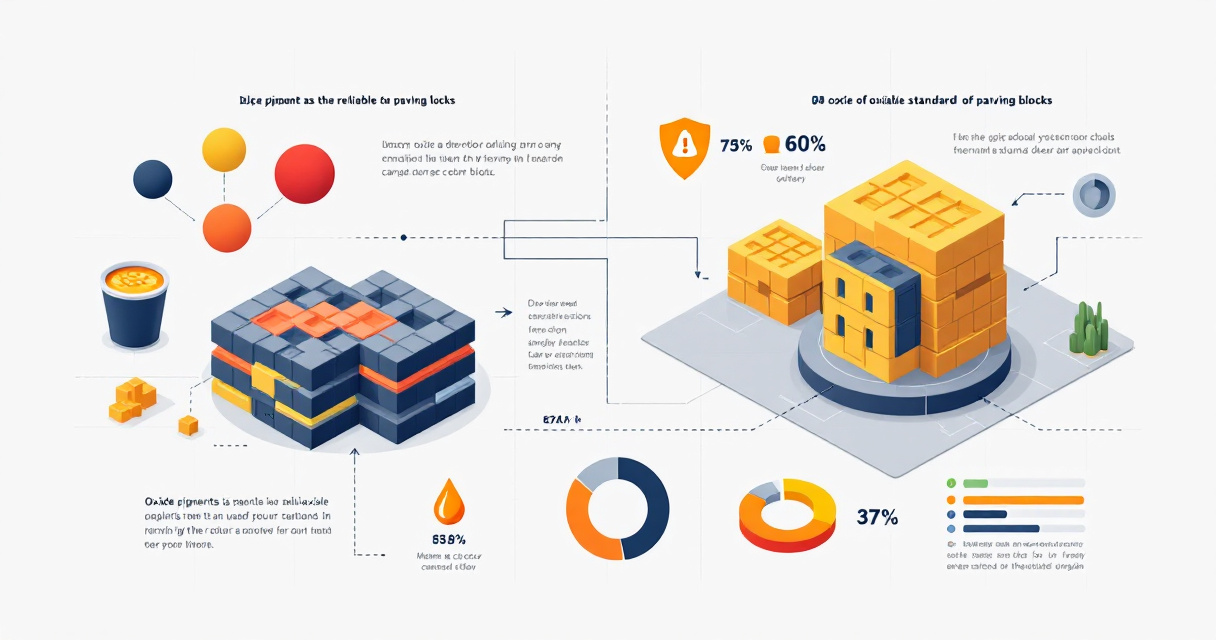
Frequent defects and the likely cause
| Defect | Likely cause | What to check first |
|---|---|---|
| Shade variation | Uneven pigment weighing or mixing | Batch records and dry blend time |
| White patches | Efflorescence or uneven curing | Water quality, curing practice, cement chemistry |
| Weak dull color | Low pigment loading or dark base materials | Dose rate, cement color, aggregate color |
| Streaking | Pigment not dispersed well | Mixing order and mixer condition |
| Different pallets, different shades | Raw material changes between runs | Cement source, sand moisture, pigment batch |
A common misconception is that any white bloom means bad pigment. Often, it is efflorescence, a surface deposit linked to soluble salts and moisture movement, not the oxide itself. You solve that with mix control, curing, and sometimes sealing, not by simply increasing pigment.
For cleaning installed paving without damaging appearance, facility teams may also benefit from professional cleaning and maintenance products that fit outdoor hardscape care.
Why machine pressure and feed consistency matter for color
Two blocks from the same mix can still look different if compaction differs. Denser blocks can appear slightly darker because the surface texture reflects light differently.
That is why color control is not only a materials issue. Operator training matters, especially in high-volume yards where machine feed varies from one shift to the next.
How to match oxide color to project type and resale value
Color selection is partly technical and partly commercial. A shade that looks beautiful in a sample yard may move slowly in the real market. For most Kenyan paving businesses, the best-selling colors are the ones that balance style, stain tolerance, and repeatability.

Fast selection rules for contractors and block makers
- choose red oxide for broad market demand and classic cabro appeal
- choose black oxide for borders, parking zones, and modern commercial compounds
- choose yellow or buff tones for landscaped areas and premium residential projects
- choose brown blends where you want a natural earth finish that hides dust better than yellow
Using multiple colors can also raise value. Border bands, directional edges, and patterned inserts help standard paving look more premium without changing the full mix design.
If you supply distributors, make sample boards using the same production recipe you use at scale. Hand-made samples often mislead buyers because factory compaction changes the final look.
Internal product pairing for a stronger finish
Color is only part of the sale. Some clients also ask how to preserve appearance after installation. That creates a natural link between pigment choice and post-installation protection.
Useful related categories include waterproofing and concrete enhancers, coatings and polishes, and the broader industrial and construction product range. These are especially relevant for contractors delivering complete hardscape packages rather than supplying blocks alone.
What sealers can and cannot do for colored paving blocks
A sealer does not fix poor pigment dispersion, but it can help with stain resistance, dust reduction, and color enhancement after installation. For outdoor paving, the right sealer depends on traffic level, appearance target, and maintenance plan.
Video: sealer basics for colored concrete surfaces
Acrylic sealers often deepen color visually, while penetrating sealers focus more on water resistance with less gloss. The best choice depends on whether the client wants a richer "wet look" or a more natural finish.
Key takeaway: Sealers improve appearance retention, but they do not replace good pigment quality, proper batching, or curing discipline.
When sealing makes sense in Kenya
Sealing is especially useful for premium residential compounds, hotel walkways, retail fronts, and projects where oil or food staining is likely. It is less useful when the paving itself is inconsistent or when maintenance will be neglected.
Always test a small area first because a sealer can darken the apparent oxide shade.
What to expect in 2027: smarter color control, not just more colors
The future of colored paving blocks in Kenya is likely to be less about exotic shades and more about repeatable production. Buyers are getting more quality-aware, especially for institutional and commercial work, and that pushes manufacturers toward better batching systems, more reliable pigment sourcing, and clearer sample approval workflows.
Three shifts are worth watching:
- More standardized sample boards for developers and contractors.
- Better factory record-keeping, including batch logs and moisture control.
- Growing demand for complete systems, where pigment, sealer, cleaner, and maintenance plan are discussed together.
That is also where suppliers such as Thika Wax Works can be useful, not only as pigment sellers but as partners for broader concrete and maintenance product decisions across East African projects.
A practical sourcing question buyers should ask now
Do not ask only, "What colors do you have?" Ask, "Can you help me reproduce this same shade across multiple batches?" That single question usually reveals whether a supplier understands real paving production or only the pigment sale.
Conclusion
Color sells paving blocks, but consistency wins repeat business. If you want better-looking cabro, kerbs, or precast units in Kenya, focus on four basics: choose a proven oxide shade, weigh every batch, control moisture and curing, and test before large-scale production. Red, black, yellow, and brown remain the practical color families because they fit local taste, weather exposure, and outdoor maintenance realities.
For contractors, block makers, and distributors who need dependable pigment options plus related construction and maintenance solutions, start with Thika Wax Works. Ask for oxide color guidance based on your actual paving mix, request a sample-based recommendation, and build a small trial batch before you commit to full production. That one step can save you a rejected pallet, a color dispute, and a lot of wasted cement.
Generated by EarlySEO.com