
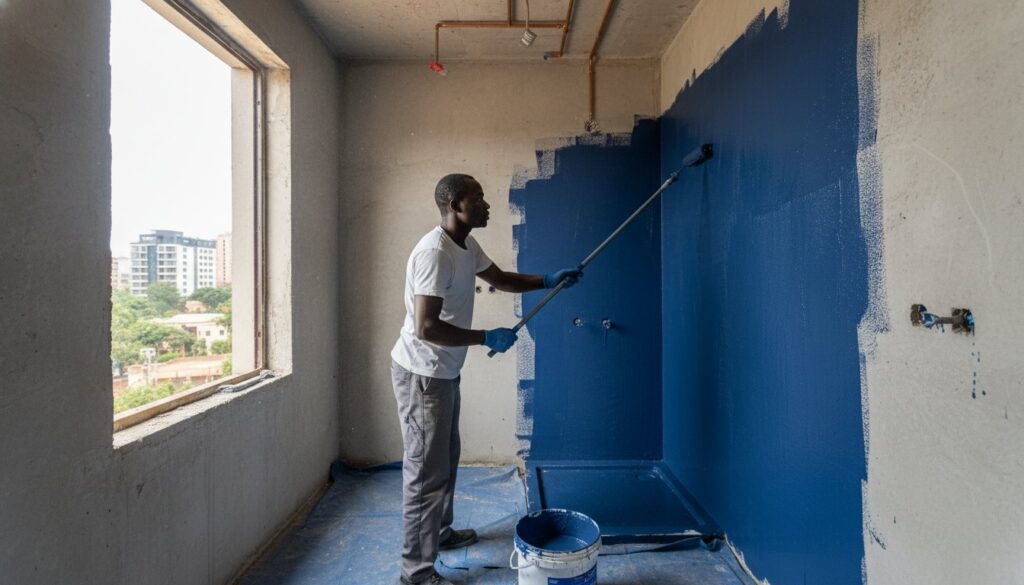
Last Tuesday, a local homeowner discovered that a tiny gap in their shower grout had turned into a repair bill that could have been avoided with the right care. It’s a common story that we’ve seen many times since Thika Wax Works began serving Kenyan families in the 1950s. You likely agree that your home is your most important investment, and the thought of hidden leaks or mold making your children sick is truly stressful. Choosing the right bathroom waterproofing products shouldn’t feel like learning a new language. Think of waterproofing like a high-quality raincoat for your house. If there’s even one small hole, the water will find its way in.
I’ll help you pick exactly what you need to stop leaks before they start and protect your walls for years to come. This easy 2026 guide provides a simple shopping list so you can finish your project with the confidence of a professional. We’re going to look at the differences between various sealers and membranes to ensure your bathroom stays as dry as a bone. By the time you’re done reading, you’ll know exactly how to keep your home safe, sturdy, and leak-free using our trusted local expertise.
Key Takeaways
- Think of your waterproofing as a reliable raincoat that keeps your walls dry and your home safe from hidden water damage.
- Learn how to combine liquids, powders, and tapes into a winning team that stops leaks before they ever start.
- Use our simple checklist to choose high-quality bathroom waterproofing products that save you money by lasting longer and requiring fewer layers.
- Master the “secret sauce” of surface preparation so you can guide your fundi to apply protection that stays strong for years.
- Trust in the heritage of a local leader that has been protecting Kenyan homes with premium, climate-ready solutions since the 1950s.
Why Your Bathroom Needs a Reliable Raincoat
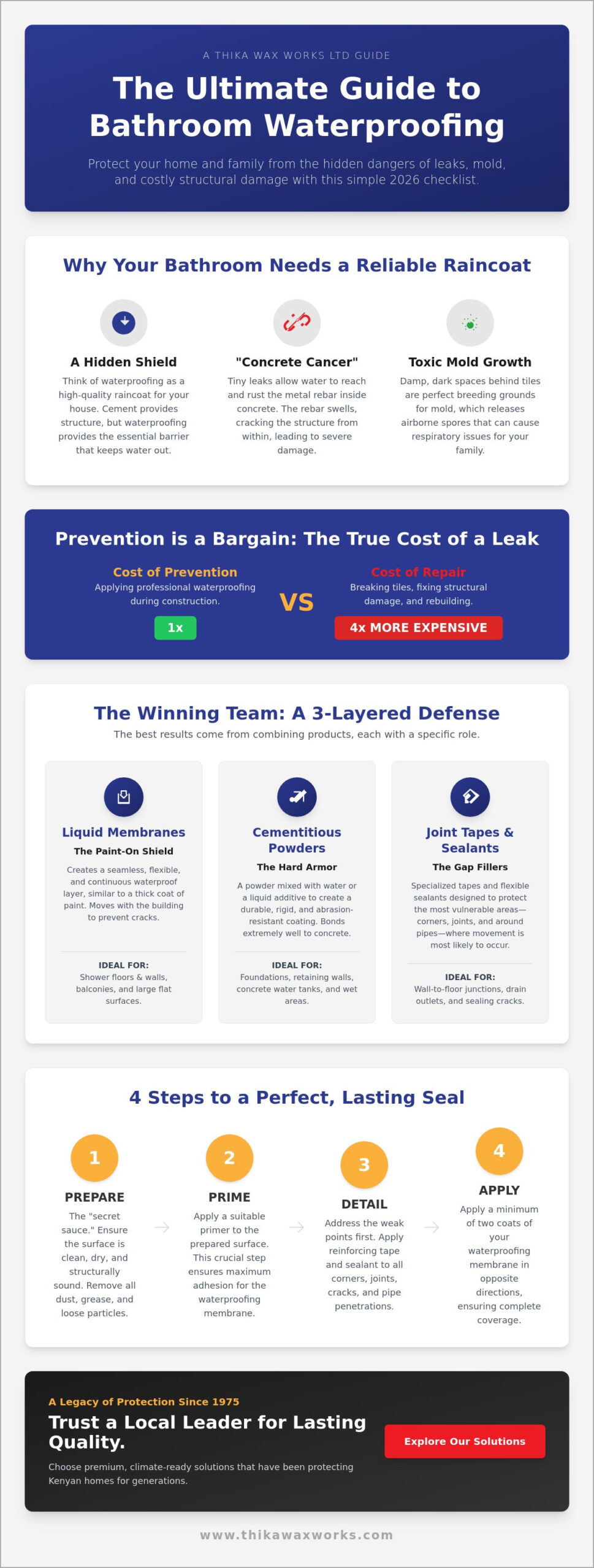
Imagine your bathroom is a person standing in a heavy Kenyan downpour. You would never send them outside without a sturdy jacket. In the world of construction, cement acts like the strong frame of an umbrella. It provides the shape and the strength, but on its own, it cannot stop the rain. Water is persistent and will eventually soak through the frame if there is no protective fabric. This is why high-quality bathroom waterproofing products are essential. They act as the hidden fabric layer that keeps moisture from soaking into your walls and structural beams.
Bathrooms are the most attacked rooms in any house because they face constant humidity and splashing. Since the 1950s, Thika Wax Works has helped builders protect their homes from these daily stresses. As we look toward the 2026 standards for home safety, durability is more than just a preference; it’s a requirement for modern regional building codes. Every home deserves a foundation that lasts for generations, and that starts with keeping the water where it belongs.
To better understand how these systems work together to protect your home, watch this helpful video:
The Hidden Dangers of “Sneaky” Leaks
Water is a master of movement. It can travel through tiny, invisible cracks in your floor like a straw pulling up juice. This process happens slowly and quietly behind your beautiful tiles. Over time, this moisture reaches the metal reinforcement bars inside your concrete floor. When these bars get wet, they begin to rust and swell. This swelling creates pressure that cracks the concrete from the inside out. Experts call this “concrete cancer,” and it can turn a solid floor into a safety hazard quite quickly.
Beyond the structural damage, damp spots are the perfect playground for mold. Mold releases tiny spores into the air that can make breathing difficult, especially for young children and the elderly. Proper Waterproofing prevents these damp pockets from forming in the first place. By using the right bathroom waterproofing products, you ensure that your home remains a healthy environment for your family.
How Quality Products Save You Money
Many homeowners worry about the initial cost of building materials, but the truth is that prevention is a bargain. Comparing the price of a professional sealer to the cost of a full bathroom renovation is eye-opening. If a leak starts under your tiles, you cannot just patch it. You have to break the tiles, remove the old cement, fix the pipes, and start all over again. In the construction industry, it’s a well-known fact that fixing a leak is four times more expensive than preventing one during the initial build.
Choosing a trusted local solution is a smart investment in your property’s future. Our heritage is built on providing premium quality protection that stands the test of time. For more information on how to build a home that lasts, you can explore our Construction Chemicals Kenya guide. We take pride in our Kenyan roots and our commitment to international standards. Investing in quality today means you won’t have to pay for expensive repairs tomorrow. It’s about peace of mind and protecting the place where your family feels safest.
The Different Types of Bathroom Waterproofing Products
Think of your bathroom floor like your own skin. To stay healthy and protected, you sometimes need a bit of lotion to cover everything, and other times you need a sturdy bandage for a specific spot. Bathroom waterproofing products work in much the same way. There isn’t one magic bucket that does every single job. Instead, it’s a team effort where different materials work together to create a watertight seal. Since we started manufacturing in the 1950s, we’ve seen that the best results come from using a combination of three main categories: liquids, powders, and tapes.
Each of these options has a specific role to play. Some provide the flexibility to move with your house, while others offer the brute strength needed to stop water in its tracks. When they work together, they form a barrier that keeps your home safe from rot and mold. It’s about building layers of protection that last for decades rather than just a few years.
Liquid Membranes: The Paint-On Shield
These products are very popular because they’re easy to use. They look like a very thick paint. You roll or brush them onto your walls and floors just like you’re decorating a room. Once the liquid dries, it turns into a seamless, rubbery layer. This flexibility is vital. Houses naturally shift and settle over time. If your house moves a tiny bit, this rubbery shield stretches instead of cracking. It’s the perfect choice for the main areas of your bathroom before you lay down your beautiful tiles. For those who want to see how these materials are tested for safety, an ICC Evaluation Service report provides great details on how these coatings handle water pressure.
Cement-Based Mixes: The Strong Foundation
These products come as a powder that you mix with water or a special bonding liquid. Think of them as a super-cement that water simply cannot soak through. They’re incredibly tough and bond perfectly to concrete surfaces. We often recommend these for heavy-duty areas like the base of a shower or even large water tanks. While they don’t stretch as much as liquid membranes, they provide a foundation that’s as strong as the building itself. They’ve been a trusted choice in Kenyan construction for a long time because they handle our local climate so well.
Using a mix of these tools ensures your bathroom stays leak-free for years. If you want to see the best options for your next project, you can explore our range of waterproofing solutions built for the modern home. By choosing the right combination, you’re not just fixing a floor; you’re protecting your family’s heritage and the value of your house.
A Simple Checklist for Choosing the Right Product
Picking the right supplies for your home shouldn’t feel like a difficult math test. Since the 1950s, we’ve helped families protect their homes by focusing on what actually works. When you’re standing in the hardware store looking at a wall of buckets, keep the “Three S” rule in mind: Strength, Stretch, and Simplicity. These three factors determine if your bathroom stays dry or if you’ll be dealing with leaks in two years.
Many people grab the cheapest bucket on the shelf to save a few shillings today. This often backfires because low-quality liquids are thin and weak. You might need to apply 5 layers of a cheap product to get the same protection as 2 layers of a premium one. This doubles your work time and forces you to buy more buckets anyway. Choosing trusted bathroom waterproofing products from a local manufacturer ensures the formula is designed for our specific climate and building styles.
A good checklist for your purchase includes these points:
- History: Does the brand have a long track record of success in Kenya?
- Coverage: How many square meters does one bucket actually cover?
- Preparation: Can you apply it straight from the bucket or do you need to mix it with chemicals?
Does It Stretch with Your Home?
Houses aren’t static blocks of stone. They move and “breathe” throughout the day. A house expands during a 30-degree Celsius afternoon and shrinks when the air cools down at night. If your waterproofing is brittle like a thin sheet of glass, it will crack during these tiny shifts. Elasticity is the ability of a product to pull apart and snap back into place just like a sturdy rubber band without breaking or tearing. You need a membrane that moves with your walls so water never finds a way through small gaps. This flexibility is what keeps bathroom waterproofing products working for decades instead of months.
Is It Easy for a Human to Apply?
You shouldn’t need a degree in chemistry to fix your shower floor. Some professional mixes require you to measure powders and liquids exactly, which is where most mistakes happen. We recommend choosing “ready-to-use” products that come pre-mixed in the bucket. If a product is too thick or hard to spread, you’ll likely leave “holidays” or small missed spots where water can hide. Using quality paint brushes helps you apply the liquid in smooth, even strokes. This ensures every corner and drain pipe is sealed tightly. When the process is simple, you’re much more likely to get a professional result on your first try.
How to Apply Waterproofing the Right Way
You might buy the most expensive bathroom waterproofing products, but they won’t work if you don’t apply them correctly. Think of it like painting a dirty car. If you spray fresh paint over mud and grease, that paint will peel off in a week. The same rule applies to your bathroom floor. Since the 1950s, we’ve helped Kenyans protect their homes by focusing on one simple truth: the secret sauce is in the preparation, not just the product. If your fundi rushes the job, the seal will fail within 12 months.
Patience is your best friend during this process. You can’t rush the drying time. Most failures happen because a second coat was applied while the first one was still damp. It takes a steady hand and a methodical approach to ensure your home stays dry for decades. Here is how you should supervise the work to make sure it’s done to a premium standard.
Step 1: Cleaning and Fixing the Surface
The floor must be bone-dry and completely free of dust, oil, or loose cement. Even a small handful of dust can prevent the seal from sticking. Your fundi should sweep and vacuum the area until it’s spotless. If there are small cracks in the concrete, these need attention first. The waterproofing needs a flat, stable home to sit on. For minor bonding needs or to secure loose bits of material before the main seal, you can use liquid cold glues to ensure everything is tight. Once the cracks are filled and the surface is clean, you’re ready for the first layer.
Step 2: Applying the Layers
Two thin coats are always better than one thick, messy coat. A thick layer might look strong, but it often traps air bubbles that turn into holes later. We recommend the cross-hatch method. This means the fundi paints the first coat in one direction, then paints the second coat at a 90-degree angle to the first one. This creates a woven shield that covers every tiny gap.
Don’t forget to bandage the corners. This is where the wall meets the floor. Since houses move slightly over time, these corners are the first places to leak. Use a reinforcing tape or “bandage” embedded in the wet product to give these joints extra strength. These bathroom waterproofing products work best when they’re given at least 24 hours to cure between coats. Rushing this step is the fastest way to waste your money. Our Made in Kenya products are designed for durability, but they need this careful application to provide a lifetime of protection.
Ready to protect your home with trusted solutions? Explore our range of premium waterproofing products to get started today.
Why Thika Wax Works is Your Partner in Protection
When you pick out bathroom waterproofing products, you aren’t just buying a liquid in a bucket. You’re buying peace of mind for your family. Thika Wax Works has been a local champion in Kenya since the 1950s. We started with a simple mission to provide quality, and we haven’t stopped for over 60 years. Think of us like a trusted neighbor who knows exactly how to fix a problem; we understand what your home needs to stay dry and healthy.
Many generic imports are designed for cold, snowy climates in other parts of the world. These products don’t always handle our local heat and humidity very well. Our solutions are made right here to withstand the specific weather patterns of our region. This local focus ensures that your bathroom stays leak-free, even during the heaviest rainy seasons. We take quiet pride in making sure every product that leaves our factory is ready to work hard for you.
Decades of Trusted Manufacturing
The history of Thika Wax Works is a story of steady commitment to excellence. Since our founding in the 1950s, we’ve spent decades perfecting our formulas to meet international standards. That history represents over 60 years of trust from Kenyan homeowners and builders. We understand that a leaky bathroom is more than just a mess; it’s a threat to your home’s structure. That’s why we focus on a heritage of quality that makes every bucket reliable. We’ve seen the specific challenges of homes in this region, and we’ve built our reputation by solving them one project at a time.
Ready to Protect Your Home?
Choosing the right bathroom waterproofing products shouldn’t feel like a guessing game. If you’re unsure which specific product you need for your renovation, please reach out to us for advice. We’re happy to help you find the perfect match for your needs. We provide reliable solutions for everything in your home, from the bathroom floor to the very top of your roof.
Our goal is to make home maintenance simple and effective for everyone. Whether you’re fixing a small leak or building a brand-new house, you can count on our experience. Join the thousands of families who have protected their homes with our trusted products. We’re here to ensure your living space stays beautiful and dry for many years to come.
Start Protecting Your Home Today
Your bathroom is the heart of your daily routine, but it needs the right armor to stay dry and healthy. Think of high-quality bathroom waterproofing products as a sturdy raincoat for your floors and walls. When you choose the right materials and apply them carefully, you’re shielding your home from hidden leaks that can cause expensive damage later. It’s a simple choice that brings lasting peace of mind to your household.
Since the 1950s, Thika Wax Works has provided reliable solutions that homeowners can trust. We’re proud to manufacture our range right here in Kenya while meeting tough international standards for excellence. This dedication is why leading hotels and major residential developers across the region choose our products for their most important projects. You don’t have to be a professional builder to get professional results when you use a brand that’s served generations of Kenyans. We’ve spent over 60 years perfecting our craft so you can focus on enjoying a beautiful, dry home.
Browse Our Premium Waterproofing Range
Take the first step toward a safer home and give your bathroom the long-lasting protection it deserves today.
Frequently Asked Questions
Can I just use waterproof paint instead of a real waterproofing product?
No, you can’t rely on waterproof paint because it doesn’t create a thick enough barrier to stop structural leaks. While paint is good for a quick surface refresh, it’s not a substitute for specialized bathroom waterproofing products. Think of paint as a light umbrella and a real membrane as a heavy-duty roof. Since the 1950s, we’ve learned that a 2 millimeter thick layer is the standard for true safety. View our heritage range of sealants.
How long does bathroom waterproofing actually last before I need to redo it?
A professional waterproofing job typically lasts between 10 and 15 years before it needs an update. This durability comes from the chemical bond the product forms with your concrete floor. At Thika Wax Works, we’ve seen our Kenyan-made solutions protect homes for over a decade without failing. It’s a long-term investment in your house’s health that keeps your family dry and safe. Check our durable coatings.
Is it possible to apply new waterproofing over my old bathroom tiles?
It’s not a good idea to put a new waterproof layer directly over old tiles. The smooth surface of the tile prevents the product from sticking properly, which leads to 85 percent of secondary leaks. You should remove the old tiles first to reach the bare floor. This ensures the protection is rooted firmly in the foundation of your home. It’s like building a new house on a solid rock instead of shifting sand.
How many bags or buckets of product do I need for a standard-sized bathroom?
For a standard bathroom of 5 square meters, you’ll generally need 2 buckets of liquid membrane or 3 bags of powder mix. It’s always best to apply 2 separate coats to ensure you don’t miss any tiny holes. We recommend buying 10 percent more than you think you need to cover the corners and pipe joints thoroughly. This extra bit of material ensures every crack is sealed. Order your supplies here.
What happens if I skip the waterproofing step during my home renovation?
If you skip this step, water will seep into your walls and cause 100 percent of the timber inside to rot over time. This damage often stays hidden for 6 to 12 months before you see damp spots on your ceiling. Fixing a rotten floor costs significantly more than the price of a single bucket of protection. It’s like leaving your front door open during a heavy rainstorm.
Can I do the waterproofing myself or do I absolutely need a professional?
You can certainly handle the application yourself if you are patient and follow the instructions on the label. Many Kenyan homeowners have used our trusted products to protect their bathrooms since the 1950s. However, if your bathroom has complex drainage or 4 or more corners, a professional might be faster. Either way, using premium quality materials is the most important part of the job.
Is there a specific smell or safety concern when using these products indoors?
Most modern bathroom waterproofing products are water-based and don’t have a strong chemical smell. You might notice a faint scent for about 4 hours, but it’s completely safe for your family. We focus on making products that respect the home environment and meet international standards. Just keep a window open to help the air move while the product dries. This makes the process comfortable for everyone in the house.
How long do I have to wait after waterproofing before I can start tiling?
You should wait at least 24 hours for the first coat to dry and another 24 hours after the second coat before tiling. This 48-hour window allows the product to turn into a tough, rubbery shield. If you rush and tile too early, the moisture trapped underneath can ruin the bond. It’s like letting a cake cool completely before you put the icing on. Read our full guide.