
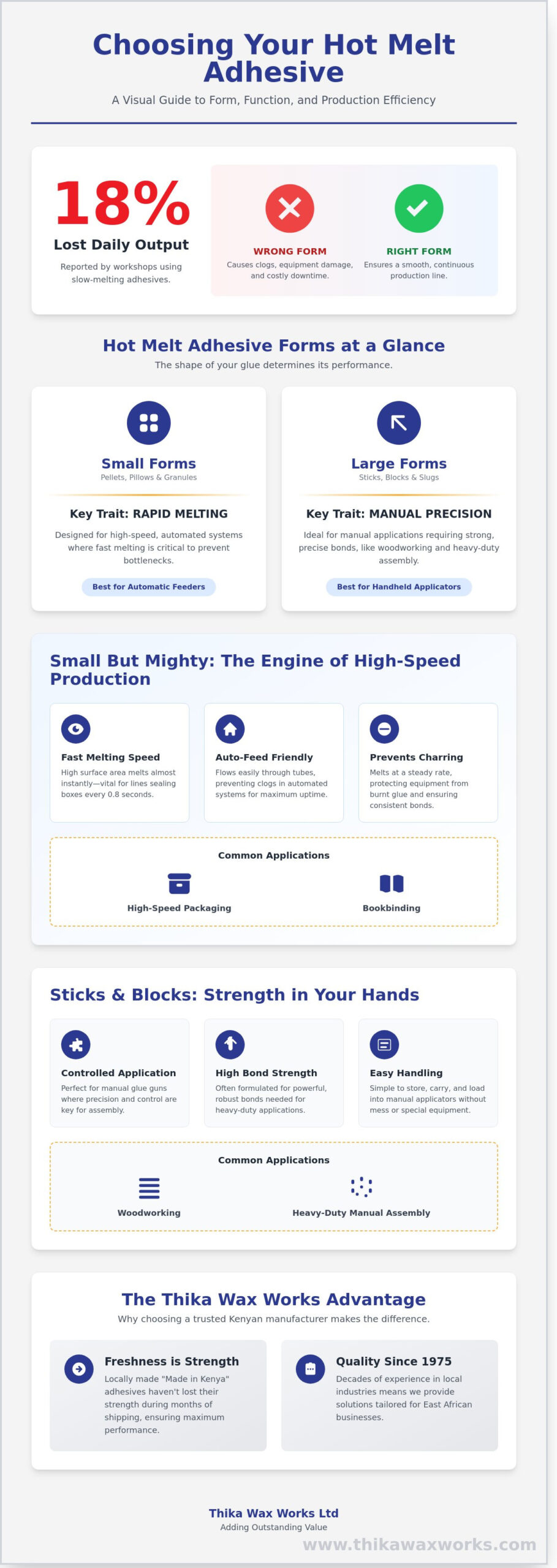
Last month, a small workshop recently reported losing 18% of their daily output simply because their glue took too long to melt. It’s a common headache that turns a productive morning into a series of clogs and wasted KSh. Choosing the wrong hot melt adhesive forms doesn’t just make a mess; it eats into your profits and slows down your hard work. Since the 1950s, Thika Wax Works Ltd has seen how the right shape of glue can be the difference between a smooth operation and a complete standstill.
You likely want a workspace that stays clean and machines that never skip a beat. We agree that your tools should work for you, not against you. In this guide, you’ll learn the clear differences between glue pellets, sticks, and pillows so you can choose the best match for your projects. We’ll show you how different shapes melt and flow, giving you the confidence to pick a “Made in Kenya” solution that keeps your production line running fast. We’ll compare each form to help you reduce machine downtime and get back to what you do best.
Key Takeaways
- Discover how different hot melt adhesive forms like pellets and sticks can change the way you work and keep your machines running smoothly.
- Learn why small pellets and pillows act like tiny cushions to help your high-speed packaging machines run without a hitch.
- Find out when to reach for larger sticks or blocks to get the best results for woodworking and heavy-duty manual assembly.
- See how matching your glue shape to your machine’s tank size can save you time and money on your daily production line.
- Explore why choosing fresh glues made right here in Kenya ensures your supplies haven’t lost their strength during long months of shipping.
What Are Hot Melt Adhesive Forms and Why Do They Matter?
Hot melt glue is quite similar to a candle. It stays solid while it’s sitting in the box; however, it turns into a sticky liquid as soon as you apply heat. In the manufacturing world, we call this material a hot-melt adhesive. The phrase hot melt adhesive forms describes the physical shape the glue takes before it enters your dispensing equipment. These shapes can range from tiny pellets to larger pillows or even long sticks.
Choosing the right shape is much like picking the right wood for a fire. Small splinters of wood catch fire very quickly, while a big log takes much longer to start burning. If you pick the wrong shape for your machine, you might find that the glue isn’t melting fast enough to keep up with your assembly line. This can lead to weak bonds or even damage your expensive heaters and nozzles. Repairing a clogged machine in a Kenyan factory can cost thousands of KSh in lost time and expensive spare parts.
To better understand how these different shapes work in real machines, watch this helpful video:
The Link Between Shape and Speed
Smaller shapes have a lot of surface area for their size. This allows the heat from your machine to reach the middle of the glue much faster. It’s the same reason why granulated sugar melts into your tea faster than a solid sugar cube. If your factory uses high-speed machines to pack boxes, you need a shape that melts in an instant. On the other hand, larger shapes are often easier to store and carry by hand, but they require powerful industrial heaters to work correctly. Choosing the wrong size can force your workers to stop the line while they wait for the glue pot to catch up.
A Tradition of Quality Since the 1950s
Thika Wax Works has been a part of the Kenyan manufacturing landscape since the 1950s. We’ve spent decades studying how different hot melt adhesive forms perform in local factories. We understand that a stop in your production line means lost revenue for your business. Our team uses this long history to help you choose the right product from our hot melt adhesives range. We take pride in being a Kenyan company that provides international quality standards to our neighbors and partners. You can read more about our heritage and commitment to quality on our website to see how we’ve supported local industry for generations.
Small But Mighty: Pellets, Pillows, and Granules Explained
Since the 1950s, Thika Wax Works Ltd has supported the growth of local industries across East Africa. When you walk into a large factory today, you’ll see that hot melt adhesive forms like pellets and granules are the most popular choices. These small pieces of glue look like tiny beads or small cushions. They’re designed specifically for big jobs like sealing thousands of tea boxes or binding school textbooks. Because they’re small and loose, they can be poured into machines or even sucked up through vacuum tubes like a giant straw.
Pellets are the perfect partner for “auto-feed” systems. These systems allow the machine to grab the exact amount of glue it needs without any help from a person. It’s a lot like an automatic feeder for a pet. This keeps the production line moving without stops. Another big benefit is how they melt. If you try to melt a giant block of wax, the outside might burn before the middle even gets soft. These tiny forms melt at a very steady rate. This prevents the glue from charring or burning, which keeps your equipment in great shape for a long time.
Pellets and Granules for Fast Production
Granules are the smallest of the hot melt adhesive forms, often looking like grains of sea salt. Because they’re so small, they melt almost the second they hit the heated tank. This speed is vital for Kenyan packaging lines that might seal a box every 0.8 seconds. These grains flow easily through very narrow tubes. This helps prevent the messy clogs that can stop production and cost a business thousands of KSh in lost time.
Pillows for Clean and Easy Handling
Glue pillows are slightly larger and look like clear, miniature cushions. They’re a favorite because they often have a special non-stick coating on the outside. This is a huge help in our warm climate because it stops the glue from melting together into one big lump inside the bag. Pillows are much easier to scoop by hand if your factory doesn’t use an automatic feeder yet. They also produce about 35% less dust than smaller granules, which helps keep your workspace much cleaner. If you’re ready to upgrade your production line, you can find the right match in our selection of industrial hot melt adhesives designed for local conditions.
Sticks, Blocks, and Slugs: Comparing Larger Glue Forms
Larger hot melt adhesive forms like sticks, blocks, and slugs are the heavy lifters of the bonding world. Think of them like the big logs you put on a jiko or a fireplace to keep the heat steady for hours. While tiny pellets melt in a flash, these larger forms are built for the long haul. Since the 1950s, Thika Wax Works has provided these reliable tools to Kenyan craftsmen who need a bond that lasts. They are the top choice for woodworking, making sturdy furniture, and assembling large products in busy factories.
Keeping track of your supplies is much easier when the glue is in a large, solid form. It’s difficult to count thousands of tiny beads in a bag, but any workshop manager can quickly count 20 blocks or a single box of sticks. This simple inventory process helps you avoid the stress of running out of glue during a busy shift. While these large forms take a few extra minutes to melt at the start of the day, they provide a consistent and powerful flow of adhesive once they reach the right temperature. This steady supply is vital for workers who need to keep their focus on the quality of their craft rather than refilling a machine every ten minutes.
Glue Sticks for Manual Projects
The classic glue stick is the most common tool for quick repairs and manual tasks. They are like the trusty pens of the factory floor. You just pop them into a hand-held glue gun and start working. You must match the stick diameter to your specific gun size, which is usually 7mm for small tasks or 11mm for bigger jobs. These are the most user-friendly hot melt adhesive forms for workers who need to move around the factory floor. Whether you’re fixing a small wooden joint or sealing a gift box, these sticks offer a touch of domestic care to industrial work.
Blocks and Slugs for Heavy Industry
For the biggest jobs, industry leaders turn to blocks and slugs. Blocks are large bricks of glue that you drop into massive melting vats. Slugs are long cylinders that fit into specialized industrial guns. These hot melt adhesives are essential for heavy furniture assembly where you need a lot of glue at once. Using these premium forms ensures your production line stays moving without the need for constant refills. It’s a hardworking solution that reflects the pride of Kenyan manufacturing and ensures every piece of furniture is built to last for generations.
- Blocks: Best for high-volume machines with large melting pots.
- Slugs: Ideal for pneumatic guns that require a specific cylindrical shape.
- Sticks: Perfect for detailed manual work and mobile repairs.
How to Choose the Right Form for Your Business
Since the 1950s, Thika Wax Works has helped Kenyan businesses find the perfect fit for their production lines. Selecting the best hot melt adhesive forms depends mostly on the “stomach” of your machine. If your machine has a tiny nozzle, you cannot feed it a large block. It is like trying to put a whole potato into a drinking straw. You need to match the size of the glue to the opening of your melter to keep things moving smoothly.
Volume is your next big decision point. If you are sealing 10 boxes an hour by hand, a simple glue stick is your best friend. It is easy to handle and leaves no mess. However, if your factory is pushing out 10,000 cartons of tea every day, you need an automated system that gulps down pellets or granules. These small shapes melt almost instantly. This keeps your high-speed belts running without a single pause.
Matching Form to Your Equipment
Automated packaging lines in Kenya almost always require pellets or granules. These hot melt adhesive forms allow the machine to “suck up” the glue through a vacuum hose, which keeps the line moving without human help. On the other hand, manual assembly lines usually thrive on sticks or small pillows. These are easier for workers to grab and load into hand-held guns. If you are not sure which one fits your specific machine, consulting with a local manufacturer can save you from buying the wrong shape and wasting your budget.
Melting Speed vs. Storage Space
Pellets have a lot of surface area, so they melt very fast. This is great for speed, but it can be a challenge in a hot warehouse in Mombasa or during the peak of summer. If the room gets too warm, pellets might “clump” together into one giant mass. Blocks are much tougher and stay solid even in high heat, but they need a “pre-melt” tank. This tank heats the glue before it reaches the main machine, ensuring the line does not slow down. If you find that hot melt is not the right fit for your temperature needs, check our guide on liquid cold glues for a different approach.
Your melting equipment must be strong enough to handle your choice. A small heater will not melt a large block fast enough to keep up with a busy crew. Always check if your machine can reach the required temperature in under 30 minutes. Choosing the right form ensures your production stays steady and your bond stays strong. We take pride in providing reliable solutions that work for the unique climate of our region.
Ready to upgrade your production line with the best materials? View our full range of hot melt adhesives today.
Why Trusted Kenyan Manufacturing Makes the Difference
Since the 1950s, Thika Wax Works has been a steady partner for Kenyan businesses. Choosing local manufacturing isn’t just about pride; it’s about getting a product that actually works when you need it. When you buy imported glues, you often get a product that’s spent 60 days or more inside a metal shipping container. These containers can reach temperatures over 50 degrees Celsius on the open sea. This heat treats the different hot melt adhesive forms like they’re in an oven before they even reach your factory. By the time they arrive at your door, the quality has already started to drop.
Freshness and Performance
Think of glue like fresh milk from the farm versus milk that’s traveled across an ocean. Our glue is made right here in Thika and goes straight to your floor. Because it doesn’t sit in high humidity for months, your pellets stay separate like dry grains of rice. They don’t turn into one giant, useless block that’s hard to pour. Fresh glue melts exactly how it should every single time. This saves you money because your machines don’t have to work extra hard to process degraded material. When your sticks aren’t brittle, they don’t snap in the middle of a job. This reliability keeps your production line moving without frustrating stops. It’s the difference between a smooth workday and a day spent fixing clogged nozzles.
Supporting the Regional Economy
Choosing Thika Wax Works means you’re investing in Kenyan expertise and local jobs. We’ve spent over 60 years perfecting our craft to ensure we meet international standards while staying a local champion. We understand that a factory in Nairobi faces different humidity than one in Mombasa. Our team knows these local conditions and builds every batch of hot melt adhesive forms to handle them. If you have a problem, you don’t have to wait for an email from a different time zone. We are right here to help you choose the right hot melt adhesives for your specific machines. Buying local means you get your supplies in days, not months, which keeps your cash flow healthy.
Working with a local manufacturer provides several practical wins for your business:
- Faster delivery times that help you avoid running out of stock.
- Expert technical support from people who understand your specific local challenges.
- Products designed to perform in the heat and humidity of the East African region.
- Consistent quality that hasn’t been damaged by long sea voyages.
We take great pride in being a trusted provider for generations of Kenyan manufacturers. Our goal is to make sure your business stays as strong and reliable as the glue we produce. When you’re ready to upgrade your supply chain with fresh, high-quality adhesives, our team is standing by to help you find the perfect match for your needs.
Secure Your Success with the Right Choice
Picking the best fit for your machinery is a lot like choosing the right fuel for a truck. Small pellets melt fast for big factory jobs, while sticks are perfect for smaller, hand-held tasks. The hot melt adhesive forms you select will determine how smoothly your work day goes. Since the 1950s, Thika Wax Works has manufactured high-quality adhesives right here in Kenya to help businesses grow. We’ve spent over 60 years making sure our products are reliable so your machines don’t break down and your packaging stays shut.
Our expert team provides technical support to make sure your glue is a perfect match for your specific equipment. Major industrial distributors across the region trust us because we understand the local market and its unique challenges. You shouldn’t have to worry about your bond failing when you’re busy serving your customers. We take great pride in supporting our local economy with international standards. It’s time to give your production line the steady, reliable bond it needs to thrive.
Find the perfect hot melt adhesive for your machine here
Frequently Asked Questions
What is the difference between glue pellets and glue pillows?
Pellets are small, round grains that usually measure between 3mm and 5mm, while pillows are larger, rectangular pieces that look like small cushions. Pellets melt much faster because their small size provides more surface area for the heat to touch, which is perfect for high-speed packaging lines. Pillows are easier to handle by hand and don’t spill as easily if a bag accidentally tips over. Since the 1950s, we’ve provided these hot melt adhesive forms to help Kenyan factories maintain steady production speeds.
Can I use any shape of hot melt in my glue gun?
No, you must use the specific shape your tool was designed to accept. Handheld glue guns are built specifically for cylindrical sticks, while industrial melting tanks are made for pellets, pillows, or blocks. If you try to put pellets into a manual glue gun, they’ll simply fall out of the back because there’s no solid stick to push the adhesive through the heater. It’s like trying to put a square peg in a round hole; the machine won’t function without the right fit. You can find the right match for your equipment on our adhesive product page.
Do different forms of glue have different strengths?
The strength of the bond depends on the chemical ingredients in the glue rather than its physical shape. A 1kg bag of pellets and a 1kg box of sticks can have the exact same industrial holding power if they’re made from the same premium resins. We manufacture our adhesives in Thika to ensure that every form provides the same reliable grip whether you’re sealing a heavy shipping carton or a delicate gift box. The shape is simply about how the glue enters your machine, not how well it stays stuck.
How should I store my hot melt adhesive pellets?
You should store your pellets in a cool, dry place away from direct sunlight to prevent them from melting together. In Kenya, afternoon temperatures often reach 30 degrees Celsius, which can cause pellets to soften and turn into a single large lump if they aren’t kept in a shaded area. Keep the bags tightly sealed to block out dust and hair, as these contaminants can clog your machine’s nozzles later. Think of it like storing sugar; keeping it clean and dry ensures it flows perfectly when you’re ready to use it.
Why is my hot melt glue charring or turning black in the tank?
Glue turns black when it sits at high temperatures for too long without being used, which is a process called charring. This usually happens if a machine is left on at 190 degrees Celsius during a long lunch break or overnight. These burnt bits can break off and block your hoses, leading to expensive repairs and downtime. It’s similar to leaving a pot on a hot stove until the food burns to the bottom. To keep your glue clear and your machine running smoothly, always turn the heat down during long breaks.
What happens if I use the wrong size glue stick?
Using the wrong size glue stick will cause the adhesive to leak out of the back of the gun or jam the trigger mechanism. Most Kenyan hardware stores sell either 7mm mini sticks or 11mm standard sticks, and they aren’t interchangeable. If a stick is too thin, the internal seal won’t hold, and hot liquid glue might drip onto your hand or the internal wiring. Always check your glue gun’s handle or manual to confirm which diameter you need before starting your project. Explore our glue stick collection to find the perfect size for your home repairs.
Are larger glue blocks cheaper than smaller pellets?
Larger glue blocks are often priced slightly lower per kilogram because they require less processing during the manufacturing stage. While pellets are more convenient for pouring into automated systems, the extra step of cutting the glue into small grains adds a small cost to the final product. For a large manufacturing plant in Nairobi that uses 500kg of glue a month, buying blocks can lead to noticeable savings on raw materials. However, you must have a tank large enough to melt the bigger blocks efficiently.
How do I know if my machine needs an auto-feed pellet system?
Your machine needs an auto-feed system if your production line uses more than 50kg of adhesive in a single eight-hour shift. These systems use a vacuum to pull pellets from a large bin into the melting tank whenever the level gets low. Since our founding in the 1950s, we’ve seen that automation prevents the temperature drops that happen when a worker dumps a large amount of cold glue into the tank at once. If your team is manually refilling the tank every 15 minutes, an auto-feed system will save time and keep your bond quality consistent.