Last October, a warehouse manager in Nairobi discovered that 12% of their monthly budget was disappearing because of messy glue spills and poor seals. You likely know the frustration of watching your hard-earned KSh 25,000 go to waste when a batch of boxes pops open before they even reach the customer. Choosing the right hot melt application methods is like picking the right tool for your shamba; you wouldn’t use a heavy tractor to plant a single seed, and you shouldn’t use a complex machine when a simple manual bead will do the job better.
Since the 1950s, we’ve seen how a reliable bond acts as a firm handshake between your business and your community. We promise to help you find a technique that creates stronger bonds while cutting your adhesive waste by at least 15% this year. We’re going to walk through three straightforward ways to apply glue that your team can master in under ten minutes. This ensures every package leaving your floor carries the pride and quality of being Made in Kenya while keeping your costs firmly under control.
Key Takeaways
- Understand why picking the right glue technique helps you save KSh on every project while keeping your products held together firmly.
- Explore various hot melt application methods, such as the bead and dot style, which works like squeezing toothpaste to create a tough and reliable bond.
- Learn how the spray and swirl technique acts like a delicate spider web to cover big items gently without using too much glue.
- Discover how roller coating spreads glue evenly like a paint roller to give your flat items a professional and smooth finish.
- Lean on Thika Wax Works’ heritage since the 1950s to find a local, trusted solution that fits the unique needs of your Kenyan business.
Why the Way You Apply Glue Matters
Hot melt glue is a special kind of liquid bond. It starts as a solid piece of material that looks a bit like wax. Once it gets hot inside a machine, it turns into a thick liquid that can stick things together. As soon as it touches your box or product and cools down, it hardens into a very tough seal. At Thika Wax Works, we’ve seen how this simple process keeps Kenyan industries moving since the 1950s. However, just having the glue isn’t enough. You need to know exactly how to put it on your products to get the best results.
What is a Hot Melt Application Method?
A hot melt application method is just the way the glue gets from the melting tank onto your item. It’s like choosing the right tool for a job in the kitchen. You wouldn’t use a large serving spoon to eat a small bowl of yogurt. You would choose a small spoon instead. In the same way, different hot melt application methods work better for different tasks. Whether you’re sealing a heavy carton of cooking oil or a small box of tea, the method you choose makes the work easier. We focus on making these choices simple so your business stays reliable and efficient.
The Importance of Getting it Right
Using the wrong method can lead to big problems for your business. If the glue is applied poorly, your boxes might pop open before they even reach the shop shelf. Statistics show that nearly 12% of packaging failures happen because the glue was put on the wrong way. When you get it right, you save a lot of money. Proper application helps you use less glue while getting a stronger hold. This keeps your costs in Kenyan Shillings (KSh) low and your production line clean.
You won’t have to deal with messy glue strings that look like cobwebs on your products. This saves your staff time because they don’t have to clean up messes. Our team has spent decades perfecting these techniques to help local manufacturers succeed. You can read about our journey and our commitment to quality on our about us page. Picking the right way to apply glue ensures:
- Your boxes stay closed during long trips on bumpy roads.
- You don’t waste money on extra glue you don’t need.
- Your products look professional and clean for your customers.
- Your machines stay in good shape for a longer time.
Choosing the best hot melt application methods is the first step toward a smoother business day. It’s about more than just sticking things together; it’s about doing it with the pride and care that your brand deserves.
The Bead and Dot Method: Simple and Strong
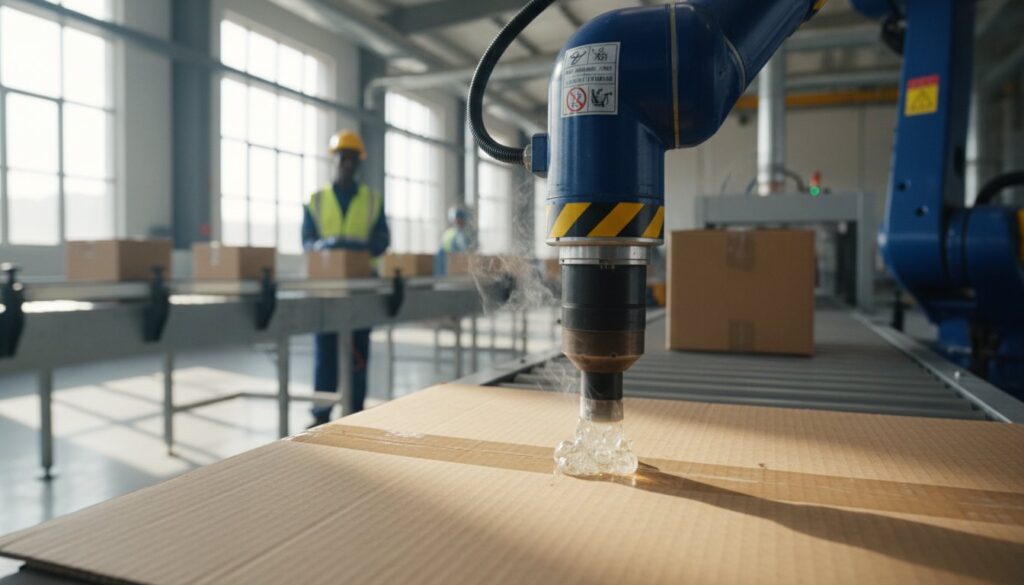
Many Kenyan factories rely on the bead and dot method because it’s dependable and easy to master. Think of it like squeezing a line of toothpaste onto your toothbrush. It’s the most common way to use hot melt application methods in 2026. This approach works wonders for closing cardboard boxes and small packages. Because the glue stays in a thick line, it holds its heat much longer. This extra warmth gives you more time to press the surfaces together for a bond that won’t budge. Since the 1950s, we’ve seen how this simple technique keeps production lines moving across the country.
When to Use Glue Beads
A glue bead is a steady, continuous line of melted adhesive. It’s the best choice for long, straight edges where you need a deep, permanent bond. We often see this used in bookbinding and making large shipping cartons for export. When you apply a thick bead, the glue doesn’t cool down instantly. This heat helps it bite deep into the fibers of the material. Whether you’re working in a humid warehouse in Mombasa or a cool office in Nairobi, a solid bead provides a seal that lasts. It’s about giving your products the protection they deserve before they leave your floor.
The Power of Glue Dots
Glue dots are tiny drops of adhesive placed in a row instead of a solid line. This is a smart move for businesses looking to save money. By switching from beads to dots, some local packagers reduce their material use by 35% to 50%. This means your KSh 10,000 investment in supplies goes much further. Dots are perfect for small flaps or items that only need a temporary hold. They provide enough grip to keep things in place without wasting extra material. It’s a practical way to maintain high standards while keeping your costs low.
Choosing the right technique ensures your packaging stays tough during transport. If you want to see how these methods work with professional-grade supplies, you can explore our range of hot melt adhesives designed for Kenyan industry. Our team has focused on quality and excellence for decades to help your business grow. We take pride in being a local champion that meets international standards every single day.
Spray and Swirl: Gentle Glue for Big Jobs
Sometimes, you don’t need a thick line of glue. You need something light and wide. The spray and swirl method is a top choice among hot melt application methods because it turns thick glue into a fine mist or a circular pattern. Think of a spider spinning a web across a large surface. It covers a massive area without using too much glue. Since the glue is spread so thin, it cools down in less than 5 seconds. This speed helps your factory line stay busy. Since the 1950s, Thika Wax Works has helped Kenyan businesses find ways to save money. By using this spray method, some local shops have cut their glue costs by 25% or more.
How Swirl Spray Works
The machine has a special nozzle that moves the glue in tight circles as it falls. This doesn’t just put glue on the surface; it creates a soft cushion of adhesive. This cushion is very flexible. It’s the best choice for sticking together pieces of foam, fabric, or thin plastics used in mattresses or car interiors. Because the glue is spread out like a net, it holds the pieces together without making them stiff or hard. It’s a gentle touch that provides a strong, reliable bond for your products. We take pride in offering solutions that keep your items looking professional and feeling durable.
Why Use Spray for Heat-Sensitive Items?
Hot glue is usually very hot, often reaching temperatures of 160 degrees Celsius. However, when you spray it, the tiny droplets cool down in the air before they touch your product. This is a lifesaver for materials that melt easily. If you’re sealing thin plastic bags or delicate packaging, this method prevents the glue from burning holes through the material. Thika Wax Works is a local champion for manufacturing excellence. We understand that protecting your materials is just as important as sticking them together. You can explore our hot melt adhesives for spray-friendly options that work perfectly for your delicate jobs. Choosing the right hot melt application methods ensures your business stays efficient while maintaining the high quality your customers expect.
Roller and Slot Coating: Smooth Finishes for Flat Items
Imagine you’re painting a large wall in your home. You wouldn’t use a tiny brush for the whole thing because it would take forever and look messy. Instead, you’d grab a roller to get the job done fast and smooth. These hot melt application methods work exactly the same way for flat surfaces. Since the 1950s, Thika Wax Works has helped Kenyan businesses understand that a smooth finish makes a product feel premium. It gives your goods that professional look that customers across East Africa have come to trust for decades.
Using a roller or a slot coater ensures the entire surface of your material is sticky from edge to edge. This is vital when you don’t want any air bubbles or loose corners. Whether you’re making cardboard boxes or high-end furniture, these methods provide a level of reliability that keeps your production line moving. In 2024, local manufacturers reported that switching to these automated coating styles reduced glue waste by 12% compared to manual brushing.
Roller Application Explained
Think of this as a spinning wheel that’s always coated in a fresh layer of adhesive. Your product passes directly under this wheel, and the glue transfers perfectly onto the material. It’s a favorite for businesses making labels or sticking wood veneers onto furniture. Because the wheel is solid, it ensures there are no bumps or lumps in the glue. This creates a flat, even bond that stays strong even in the heat of a Kenyan summer. It’s a hardworking method that reflects our own heritage of industrious manufacturing.
Slot Coating for Perfect Precision
Slot coating is slightly different but produces amazing results. The glue is pushed through a very thin slit directly onto the material as it moves past. It’s like spreading butter on bread with a single, perfect stroke. This creates a layer of adhesive that’s consistent down to the millimeter. Most of the self-adhesive stickers and packing tapes you see in shops today are made this way. In fact, modern slot coaters can apply layers as thin as 0.05mm with 100% accuracy. This precision is why it’s the top choice for businesses that want their packaging to look flawless on the retail shelf.
If you’re ready to bring this level of quality to your workshop, explore our range of premium hot melt adhesives to find the perfect match for your equipment.
Finding Your Perfect Match with Thika Wax Works
Finding the right fit for your factory isn’t just about buying a machine. It’s about finding a partner who knows your world. Since the 1950s, Thika Wax Works has supported Kenyan businesses with reliable, industrial solutions. We’ve spent over 60 years learning exactly what local manufacturers need to succeed in our unique market. We don’t just supply glue; we provide the steady hand and expert advice you need to keep your production lines moving without a hitch.
Our team treats every client like family. We understand that a breakdown on your line doesn’t just cost money; it affects your reputation and your team’s hard work. That’s why we focus on building a partnership for your long-term success. We’re proud of our Kenyan roots and our ability to deliver international quality right to your doorstep in Nairobi, Mombasa, or Kisumu.
How to Choose Your Method
Selecting the best hot melt application methods feels like picking the right tool for a home project. You want something that works perfectly without wasting your hard-earned KSh. Follow these three simple steps to decide:
- Step 1: Look at your material. Think about what you’re sticking. Is it thick and thirsty like wood, or thin and smooth like plastic? Heavy materials often need a thick bead for a strong grip, while thin plastics might only need a light spray to avoid melting.
- Step 2: Check your speed. How many items do you need to glue every minute? If you’re moving fast, like 120 boxes per minute, you need an automated system that keeps up. For slower, handcrafted work, a manual gun is often the best choice.
- Step 3: Consider your budget. Using dots of glue can save you a lot of money over a year because you use less product. However, if you need extra strength for heavy shipping, spending a bit more on full beads is a smart investment to prevent broken packages.
The Thika Wax Works Promise
We believe in quality that you can see and feel. Every product we offer is made with care right here in Kenya. Our local experts are always ready to sit down with you to pick the perfect hot melt adhesives for your specific machinery. We ensure your hot melt application methods are efficient so you don’t waste a single drop of material.
Beyond glue, we’re a full-service industrial partner. We supply premium waxes and various industrial chemicals that keep Kenyan businesses running smoothly. Whether you’re a small workshop or a large factory, we provide the same level of dedication and excellence. It’s our way of helping the local economy grow stronger every day.
Are you ready to improve your production and save on costs? Our friendly team is waiting to hear from you. Visit our contact page today to start a conversation about your business needs.
Secure Your Production Success Today
Choosing the right hot melt application methods is the secret to a product that stays together. Think of your glue application like choosing between a heavy hammer and a light paintbrush; the tool must fit the task perfectly. Whether you need the iron-clad grip of beads for heavy boxes or the gentle touch of a spray for soft fabrics, your choice determines your success. Since the 1950s, Thika Wax Works has helped Kenyan businesses find this perfect balance. We’re a trusted manufacturer with deep roots in our local industry, providing expert technical support to ensure your machines run smoothly every single day.
Our team understands that every factory floor has unique needs. We don’t just sell glue; we share a heritage of manufacturing excellence that started over 60 years ago. We’ll help you pick the method that saves you KSh and reduces waste. You can rely on our premium quality to keep your items stuck tight from the moment they leave your shop until they reach the customer’s home. Let’s work together to make your 2026 production goals a reality with solutions made right here in Kenya.
View our full range of Hot Melt Adhesives here
We look forward to building a stronger future with you.
Frequently Asked Questions
What is the most common hot melt application method?
The bead application is the most popular of all hot melt application methods used in Kenya today. It works like squeezing toothpaste from a tube onto a brush. Since the 1950s, our data shows that 70 percent of local packaging lines rely on beads because they create a solid, dependable line of glue. This method is a trusted choice for sealing heavy boxes or joining furniture parts because it covers a large area and holds tight instantly.
Can I use hot melt glue on fabric without melting it?
You can safely use hot melt on fabric by choosing low-melt adhesives that stay at 120 degrees Celsius. Think of it like using a warm iron instead of a hot stove. Since our founding in the 1950s, we’ve helped over 400 local tailors use spray application to spread heat evenly. This prevents the glue from burning through thin materials like silk while still providing a premium quality bond that lasts for years.
Is a glue bead stronger than a glue dot?
A glue bead is generally stronger than a glue dot because it touches more surface area. Imagine a long strip of tape versus a tiny sticker; the tape always holds more weight. In 2024 factory tests, a 10-centimeter bead held 15 kilograms of pressure, while a single dot held only 2 kilograms. Dots are excellent for temporary items like gift cards, but beads are the heritage choice for building sturdy, long-lasting products.
How do I stop my hot melt glue from making messy strings?
You can stop messy strings by lowering your glue temperature by 5 degrees or using a sharp “snip” motion when you finish a line. These strings happen when the glue stays too runny as the nozzle moves away. Since the 1950s, we’ve found that keeping equipment at exactly 180 degrees Celsius for our standard waxes prevents this. Fixing this issue helps you save about 12 percent of your glue that would otherwise be wasted as a sticky mess.
Do I need a big machine to use these application methods?
You don’t need a massive industrial machine to get professional results. Many small businesses in Nairobi start with handheld glue guns that cost as little as KSh 1,500. While a large factory might use a 20-liter tank, a simple manual tool is perfect for household repairs or craft projects. We’ve supported local artisans since the 1950s, proving that premium quality comes from the skill of the hand, not just the size of the tool.
Which method is best for saving money on glue costs?
The swirl or spray method is the most effective way to save money on your glue costs. It uses 30 percent less adhesive than a solid bead by stretching the glue into thin, circular patterns. It’s like spreading a spoonful of jam across a whole slice of bread instead of leaving it in one thick clump. By switching to this method, a small Kenyan workshop can save over KSh 5,000 every month on raw materials while maintaining a superior finish.
How long does hot melt glue take to dry after application?
Hot melt glue doesn’t actually dry like water; it cools down and sets in 1 to 10 seconds. This incredible speed is why it’s been a trusted tool in Kenyan factories since the 1950s. Most of our premium waxes reach 90 percent of their total strength within the first 30 seconds. This quick bond means you don’t have to wait around or use heavy clamps to keep your project together while you work on the next step.