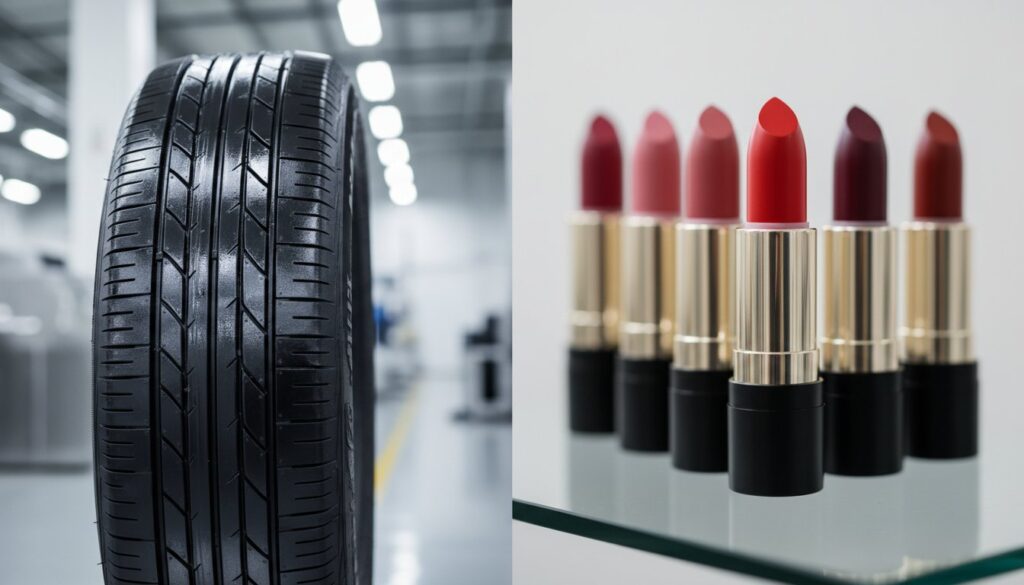
What if the secret to your favorite lipstick’s smooth texture and your industrial machinery’s durability was actually the same invisible ingredient? You’ve likely used wax for candles or floor polish, but understanding specific microcrystalline wax uses can feel like trying to decode a complex chemistry manual. It’s frustrating when you can’t tell the difference between standard paraffin and this tougher, more flexible cousin, especially when your business’s quality is on the line. Since the 1950s, Thika Wax Works Ltd has helped Kenyans bridge this gap by providing reliable, locally manufactured solutions that stand the test of time.
We’ll show you exactly how this versatile material performs in everything from skincare to heavy manufacturing. You’ll discover why its ability to hold oil 25% better than standard waxes makes it a staple for premium products. This guide explores how our specialized wax blends support the regional economy while meeting strict international standards. Whether you’re a student or a business owner, you’ll find the answers you need to improve your craft. Explore our full range of industrial waxes to see how we can support your next project with the quality your work deserves.
Key Takeaways
- Understand the “yoga instructor” flexibility of this refined wax and how it differs from rigid paraffin to provide better resilience in everyday products.
- Explore various industrial microcrystalline wax uses, such as protecting vehicle tires from cracking and ensuring cardboard packaging stays firmly glued.
- Learn how this versatile ingredient provides the perfect balance in cosmetics, allowing lipsticks to stay solid in the tube while gliding smoothly onto your skin.
- Discover why six decades of Kenyan manufacturing expertise since the 1950s makes Thika Wax Works the trusted partner for high-performance industrial materials.
- Identify the specific benefits of superior adhesion and elasticity that help modern products withstand the unique temperature demands of the East African market.
What is Microcrystalline Wax? The ‘Yoga Instructor’ of the Wax World
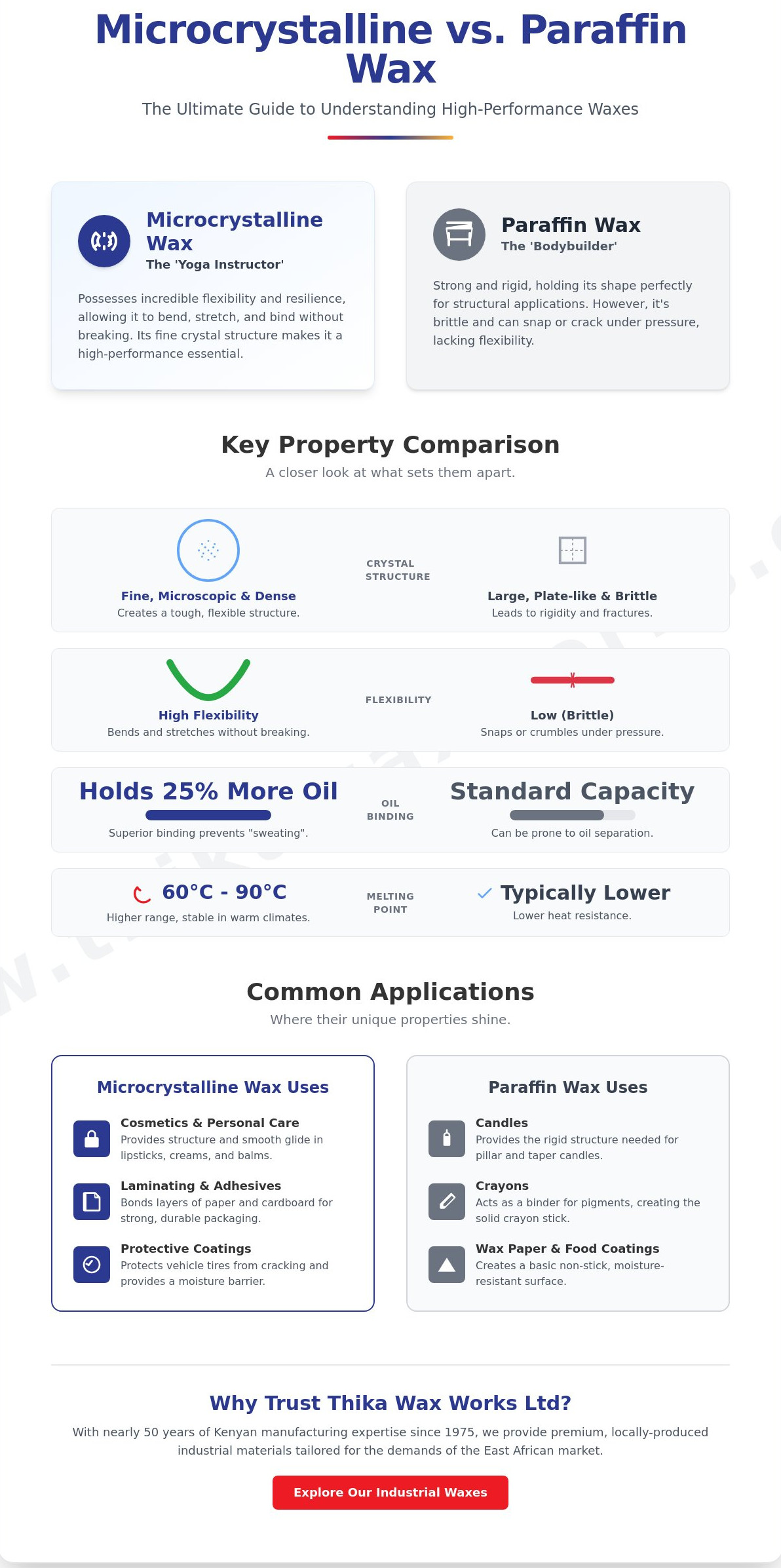
Since the 1950s, Thika Wax Works has focused on delivering industrial reliability and domestic warmth to Kenyan homes. You might be familiar with the rigid paraffin used in common candles, but there’s a more versatile cousin in the wax family that deserves your attention. Microcrystalline wax is a highly refined petroleum wax defined by its incredibly fine crystal structure. Unlike the large, plate-like crystals found in paraffin, these microscopic crystals create a material that is dense, tacky, and remarkably tough.
To understand the difference, think of the “Bodybuilder vs. Yoga Instructor” metaphor. Paraffin is the bodybuilder. It’s strong, rigid, and holds its shape perfectly, but it’s also brittle. If you apply too much pressure, it snaps. Microcrystalline wax is the yoga instructor. It possesses incredible flexibility and resilience, allowing it to bend and stretch without breaking. This unique elasticity is why microcrystalline wax uses are so prevalent in manufacturing processes that require high-performance bonding and protective coatings.
The “micro” in the name isn’t just a technicality; it’s the source of the wax’s power. Because the crystals are so small, they can pack together much more tightly than standard wax. This higher density allows the wax to bind oil more effectively, preventing the “sweating” you sometimes see on cheaper candles. While refiners in the 1940s once viewed this substance as a simple byproduct of oil refining, it has evolved into a premium industrial essential. At our facility, we treat this material with the respect its heritage deserves, ensuring it meets the rigorous standards our customers have trusted for over 60 years.
The Science of Small Crystals
The secret to this flexibility lies in branched hydrocarbons called isoparaffins. These molecules create a complex molecular mesh that holds the wax together. This structure is why the wax doesn’t flake or crack when you apply it to a surface. It also boasts a higher molecular weight and a melting point typically ranging between 60°C and 90°C. This heat resistance ensures that products remain stable even in the warm Kenyan climate, providing a durable finish that lasts longer than traditional alternatives.
Microcrystalline vs. Paraffin: A Quick Comparison
- Visuals and Texture: Paraffin is usually translucent and brittle, while microcrystalline is opaque and feels tacky to the touch.
- Functional Strength: Paraffin provides the structure for pillar candles, but microcrystalline provides the adhesion needed for laminating and coating.
- Flexibility: Microcrystalline can be kneaded like clay at room temperature, whereas paraffin will crumble under the same pressure.
Microcrystalline wax is a high-melting-point hydrocarbon with superior binding properties.
For Kenyan businesses looking to enhance their product durability, choosing the right grade is essential. Whether you are in the cosmetics industry or heavy manufacturing, our team provides the premium quality you need to succeed. You can explore our full range of industrial solutions on our product pages to see how we maintain our status as a local champion in the wax industry. We take pride in the fact that our Made in Kenya products continue to support the regional economy with every batch produced.
Why Industries Choose Microcrystalline Wax: Key Benefits and Properties
Since Thika Wax Works opened its doors in the 1950s, we’ve seen how the right raw materials transform a local business into a market leader. Microcrystalline wax is one of those essential ingredients. It isn’t just a byproduct; it’s a high-performance tool that solves manufacturing headaches. One of the primary microcrystalline wax uses is acting as a structural bridge. While paraffin wax is often brittle and can snap like a dry biscuit, microcrystalline wax is supple. It has a fine crystal structure that allows it to bend and stretch without losing its grip on the surface it’s protecting.
Chemically, its structure consists of branched hydrocarbons, which you can explore in detail through the U.S. National Library of Medicine’s PubChem database. These branches are why the wax stays flexible even when temperatures drop. It acts like a raincoat for industrial surfaces, sealing out moisture with a level of precision that simpler waxes can’t match. This waterproofing excellence makes it a favorite for coating everything from cheese packaging to heavy-duty canvas gear used in the agricultural sector.
Kenya’s climate demands durability. In Mombasa, where afternoon temperatures frequently hit 32°C, standard waxes might soften or lose their shape. Microcrystalline wax has a higher melting point, often ranging between 60°C and 93°C. This ensures that a product sitting in a warehouse in Embakasi or a shop in Kisumu maintains its integrity through the hottest months of the year. It provides the stability needed for products to survive long-distance transport across East Africa without melting into a mess.
The Two Main Grades: Laminating vs. Hardening
Manufacturers generally choose between two distinct grades based on their specific needs. Laminating grades are the “sticky” members of the family. They provide high tack and flexibility, making them perfect for adhesives or flexible food packaging. Hardening grades are the “tough” cousins. These are used to increase the melting point and hardness of other wax blends. If you’re looking to improve the durability of your own formulations, you can explore our range of industrial waxes to find the perfect match for your production line.
The Secret to Better Texture
One common problem in manufacturing is “sweating,” where oil migrates to the surface of a product and creates a greasy film. Microcrystalline wax acts like a sponge, holding oil within its complex crystal lattice to prevent this migration. This property is vital for creating a smooth, glossy finish on professional-grade polishes. Imagine a grainy, separated floor paste; adding just 5% to 10% of microcrystalline wax can transform it into a creamy, luxurious polish that applies evenly and shines brilliantly. It turns a basic mixture into a premium product that customers trust. This ability to bind oils ensures that your final product feels consistent from the first use to the last.
Top Industrial Microcrystalline Wax Uses: From Packaging to Protection
Since Thika Wax Works began manufacturing in the 1950s, we’ve seen how microcrystalline wax serves as the backbone of diverse Kenyan industries. Unlike standard paraffin, its branched molecular structure makes it incredibly sticky and flexible. These unique microcrystalline wax uses range from the heavy duty demands of a shipping port to the delicate needs of a kitchen pantry. It’s a hardworking material that ensures products arrive at your door in perfect condition, reflecting our commitment to quality that has lasted for decades.
In the world of hot melt adhesives, this wax is a critical ingredient for the glues used on cardboard boxes. It controls the “set time” and viscosity, ensuring the bond is strong yet flexible. Whether it’s a small KSh 150 cereal box or a large shipping carton, the adhesive needs to withstand temperature swings without becoming brittle. Microcrystalline wax prevents the glue from snapping when the box is moved, providing a reliable seal that protects the contents from the factory to the household.
Revolutionizing the Packaging Industry
Kenyan farmers export over 300,000 tonnes of produce like avocados and flowers every year. These goods face a long transit, often spending 25 days at sea in high humidity. Wax coated boxes are essential here. Microcrystalline wax provides a balance between moisture resistance and flex crack resistance. It acts like a flexible shield that doesn’t shatter when the box is bumped or stacked. This ensures the cardboard remains rigid and dry, protecting our local agricultural heritage as it travels to global markets.
The Silent Protector of Rubber
You might notice that older tires eventually look grey and develop tiny cracks. This is caused by ozonolysis, which is essentially the air and sun breaking down the rubber. To prevent this, manufacturers mix microcrystalline wax into the rubber compound. Through a natural “blooming” process, the wax slowly moves to the surface to form a thin, protective film. This film is a sacrificial layer that reacts with ozone so the tire itself stays strong. You can explore more about how these protective bonds work in our guide on what is hot melt adhesive and how does it work?
Beyond tires, this wax is vital for laminated paper and foil packaging. When you open a foil wrapped snack, you’re likely touching a thin layer of wax that bonds the layers together. This creates a superior moisture barrier that keeps food fresh for months, even in the humid climate of the Coast region. The flexibility of the wax ensures the foil doesn’t pinhole or tear when it’s folded tightly around a product.
In precision engineering, microcrystalline wax is the gold standard for “lost wax” casting. Because it’s easy to carve and leaves zero residue when melted out, it’s used to create molds for intricate metal parts. This process allows for the production of everything from jewelry to engine components with absolute clarity. While its industrial strength is well known, industry experts also highlight its cosmetic ingredient functions as a thickening agent in creams and lipsticks. This versatility proves that whether it’s protecting a tire or perfecting a skincare formula, microcrystalline wax uses are essential for maintaining the high standards of Kenyan manufacturing.
At Thika Wax Works, we take pride in providing materials that offer this level of durability and excellence. Our wax isn’t just a chemical component; it’s a tool for protection and a symbol of local manufacturing pride that has served our community for over 60 years.
Everyday Magic: Microcrystalline Wax in Cosmetics and Home Care
Microcrystalline wax is a quiet hero in many products you touch every single day. Since the 1950s, Thika Wax Works has understood that quality starts with the right ingredients. This wax isn’t just a technical substance; it’s a versatile tool that bridges the gap between industrial science and domestic comfort. Because it’s more flexible and has a higher melting point than standard paraffin, it’s the preferred choice for manufacturers who prioritize durability and a premium feel.
The Beauty Industry’s Secret Weapon
Have you ever wondered why a premium lipstick glides on smoothly but stays solid in your handbag during a hot afternoon? That’s one of the most common microcrystalline wax uses in the beauty world. It provides a flexible structure that holds pigments together. Unlike paraffin, which can be brittle and snap, this wax has a branched molecular structure. This allows mascaras and eyeliners to stay pliable on your skin without cracking or flaking off after an hour.
If you compare a basic KSh 80 lip balm to a professional grade lipstick, the difference is often the wax blend. The cheaper version often feels like a candle on your lips, waxy and stiff. The premium version feels creamy and rich. Because it’s a mineral-based wax refined to high standards, it’s also non-irritating. This makes it a safe choice for students or professionals with sensitive skin who want long-lasting results without the discomfort of harsh chemicals.
Preserving Heritage and Home
Professional furniture restorers in Kenya often skip natural beeswax in favor of microcrystalline wax for high-value pieces. While beeswax is a traditional favorite, it can be slightly acidic and may yellow or attract dust over time. Microcrystalline wax is pH-neutral and chemically inert. It acts like a microscopic layer of armor that breathes. It protects expensive mahogany or mvule wood from the relentless Nairobi dust without trapping moisture underneath, which could cause rot.
High-end floor polishes use this wax to create a barrier that resists scuffs and spills. In a busy household, this means your floors keep their brilliant shine for much longer than they would with standard grocery store waxes. For those seeking natural alternatives, what is carnauba wax and its superior protective properties offers another excellent option for premium floor care. It’s about providing a superior finish that honors the tradition of a well-kept home. This same logic applies to museum curators who use the wax to seal bronze statues, preventing the green oxidation that occurs in humid environments.
The reach of this material extends into your medicine cabinet and your pantry too. In the pharmaceutical world, it acts as a moisture-proof coating for pills. This ensures the medicine doesn’t dissolve until it reaches the right part of your digestive tract. In the food industry, it’s the reason your apples look shiny and your chewing gum stays bouncy. It keeps food fresh by preventing moisture loss, which is vital for maintaining quality from the farm to the supermarket shelf. We take pride in knowing that our decades of expertise help maintain these high standards across the country.
Whether you are a manufacturer looking for consistency or a homeowner seeking protection for your assets, choosing the right grade is essential. Explore our range of premium wax solutions to see how we bring these benefits to your doorstep with Kenyan-made excellence.
Sourcing Quality: Why Thika Wax Works is Kenya’s Trusted Partner
Choosing a wax supplier is like choosing a foundation for a house. If the foundation is weak, everything built on top of it will eventually crack. At Thika Wax Works, we’ve provided that solid foundation for Kenyan businesses since the 1950s. Our 50-year heritage isn’t just a number on a logo; it represents six decades of manufacturing excellence right here in Nairobi. We’ve seen the industrial landscape change, and we’ve grown alongside it, ensuring that our products meet the rigorous demands of modern manufacturing. We take quiet pride in being a steady hand that helps your products shine and last.
Local expertise makes a massive difference in product performance. Kenya’s weather is unique. We have high humidity in coastal regions like Mombasa and varying temperatures across the highlands. A wax imported from a colder climate often won’t perform correctly here. It might become too brittle in the morning or melt too easily under the afternoon sun. Because we manufacture in Ruaraka, we understand these environmental factors intimately. We calibrate our formulas to ensure stability regardless of the local climate. This level of care is why microcrystalline wax uses in Kenya often require specific melting points and flexibility levels that only a local expert can provide.
We believe in quality that supports the Kenyan economy. Adhering to international standards is our baseline, but our heart remains local. By sourcing from us, you’re keeping jobs in Nairobi and reducing the carbon footprint of your supply chain. We don’t just sell off-the-shelf products. We offer bulk supply and custom blends. If your business needs a wax with a specific tackiness or a particular gloss, our lab can tailor those properties. This bespoke service ensures your final product stands out in a crowded market. Whether you’re creating high-end cosmetics or industrial coatings, we provide the consistency you need to scale your operations without worry.
The ‘Made in Kenya’ Advantage
Sourcing from our Ruaraka facility means you don’t have to wait months for a shipping container to clear the port. We’ve reduced lead times for our partners by as much as 60 percent compared to international competitors. This speed saves you money on storage and prevents production halts. Being a Bulk Wax Supplier in Nairobi allows us to pour our resources back into the regional economy, fostering industrial growth across East Africa while maintaining the highest quality controls.
How to Order and What to Expect
Our process is built on transparency and technical partnership. You won’t just talk to a salesperson; you’ll consult with a team that understands the science of microcrystalline wax uses. From your initial inquiry to the final delivery, we keep you informed. We provide clear timelines and consistent quality checks for every batch. Once you experience our steady rhythm of service, you’ll see why we’ve been a household name for 50 years. Contact Thika Wax Works for a custom quote today and let’s build something lasting together.
Elevate Your Products with the Strength of Kenyan Craftsmanship
Microcrystalline wax acts as the invisible glue that holds thousands of everyday products together. Whether it’s adding a flexible grip to a lipstick or protecting industrial equipment from harsh environmental elements, these microcrystalline wax uses prove that quality starts at the molecular level. This yoga instructor of the wax world balances toughness with flexibility to keep packaging intact and cosmetics smooth for the end user.
Since the 1950s, Thika Wax Works has perfected these formulations right here in Nairobi to ensure your business never skips a beat. We understand that local manufacturers need fast delivery and international standards to compete in the regional market. By choosing a partner rooted in Kenyan soil, you’re getting over 60 years of manufacturing expertise that has supported our leading hospitality and industrial sectors. We take pride in helping you create products that your customers can trust every single day.
Explore our range of premium industrial waxes and adhesives to find the perfect fit for your next project. We’re excited to help you build a more durable future.
Frequently Asked Questions
Is microcrystalline wax safe for skin and cosmetic use?
Microcrystalline wax is completely safe for skin and cosmetic use because it undergoes a rigorous refining process to remove impurities. It’s a staple in the beauty industry; it’s found in about 85% of lipsticks and balms to provide a smooth, creamy texture. Think of it as a gentle, protective barrier that locks in moisture without causing irritation. Since the 1950s, we’ve provided these high-quality materials to local manufacturers who trust them for their most delicate personal care products.
What is the difference between microcrystalline wax and beeswax?
The primary difference is that beeswax is a natural animal byproduct, while microcrystalline wax is a refined mineral wax with a much finer crystal structure. This fine structure makes it far more flexible and “tacky” than beeswax. If beeswax is like a stiff piece of cardboard, microcrystalline wax is like a sheet of soft, pliable rubber. This flexibility is one of the most valued microcrystalline wax uses in the arts, as it prevents sculptures from cracking in the warm Kenyan climate.
Can microcrystalline wax be recycled or is it biodegradable?
Microcrystalline wax isn’t biodegradable in the short term, but it’s highly recyclable and can be reused multiple times. In industrial casting processes, up to 90% of the wax is often reclaimed, melted down, and filtered for the next production cycle. It’s a durable material that doesn’t spoil easily. You can treat it like a reusable tool in your workshop; just melt it down at the end of a project and save it for your next creation.
Is microcrystalline wax vegan?
Yes, microcrystalline wax is 100% vegan because it’s derived from mineral sources rather than animals or insects. It’s an excellent alternative for Kenyan entrepreneurs who want to create animal-friendly products without sacrificing the performance of traditional waxes. Since it doesn’t involve any bee labor, it’s a preferred choice for brands looking to meet the 2024 global demand for vegan-certified cosmetics. You can explore our vegan-friendly wax options to find the right fit for your business.
Why is microcrystalline wax more expensive than paraffin wax?
Microcrystalline wax costs more because the refining process is much more complex and produces a lower yield than standard paraffin. In the Nairobi market, you might see it priced at KSh 480 per kilogram, while basic paraffin might sit around KSh 260. You’re paying for the specialized molecular structure that gives it a higher melting point and better binding properties. It’s like comparing a heavy-duty industrial adhesive to a simple glue stick; the performance justifies the investment. For those looking to understand the different options available, our guide on understanding paraffin wax grades explains how to choose the right melting point and refinement level for your specific project needs.
How does temperature affect microcrystalline wax during storage?
Temperature changes the physical hardness of the wax, so it’s best to store it in a cool, dry place below 25 degrees Celsius. If your storage area gets too hot, the wax blocks can soften and fuse together into a single mass, which makes measuring your ingredients a difficult task. We’ve spent decades since the 1950s perfecting our storage and delivery methods to ensure that the wax arrives at your door in perfect, easy-to-use slabs, regardless of the weather.
Can I mix microcrystalline wax with other types of wax?
You can easily mix microcrystalline wax with other varieties like paraffin, soy, or stearin to enhance their physical properties. Adding just 7% to 12% microcrystalline wax to a candle blend can eliminate unsightly bubbles and stop the wax from shrinking away from the glass. It acts like a molecular bridge that holds different ingredients together. This is one of the most common microcrystalline wax uses for local candle makers who want to achieve a premium, professional finish. For those interested in natural alternatives, beeswax for polishes provides excellent surface protection and can be combined with microcrystalline wax for enhanced durability.
What are the common ASTM standards for microcrystalline wax?
The most common standards are ASTM D1321, which measures needle penetration, and ASTM D938, which determines the congealing point. These numbers tell a manufacturer exactly how the wax will behave under stress and heat. For instance, a penetration value of 20 at 25 degrees Celsius indicates a firm but flexible wax suitable for industrial coatings. We’ve adhered to these international benchmarks since our founding in the 1950s, ensuring our industrial-grade waxes meet the highest global quality requirements.