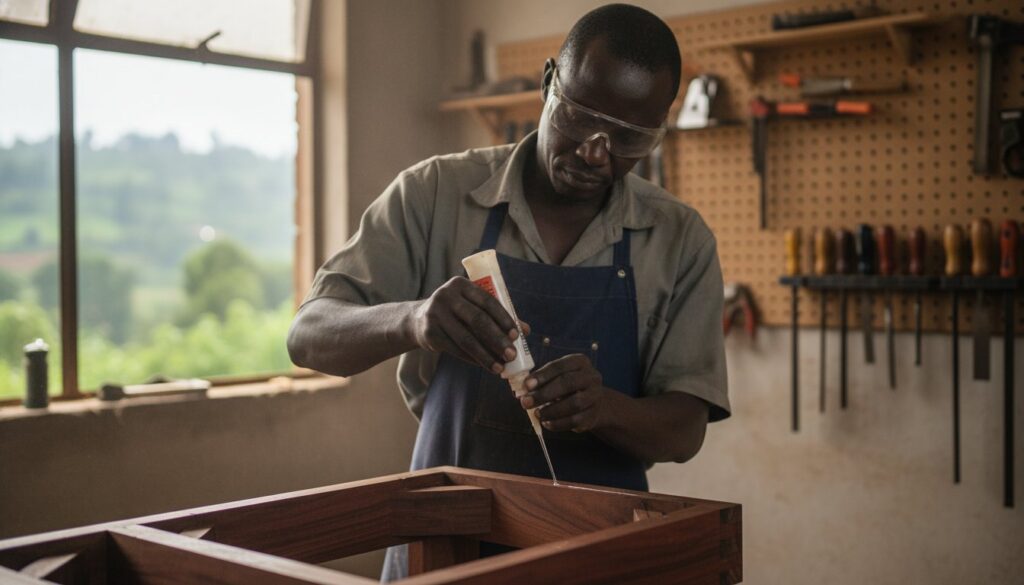
Imagine you just delivered a beautiful mahogany dining table to a home in rainy Limuru. Two weeks later, the customer calls because the joints are pulling apart like a pair of old shoes. Since the 1950s, Thika Wax Works has watched many talented Kenyan carpenters face this exact headache. Finding the right woodworking adhesives for humid climates is the secret to making furniture that lasts for generations.
You likely feel the frustration when glue takes twice as long to dry because the air feels like a wet sponge. It’s even worse when you spot mold growing on your glue lines during the long rains. We promise to help you pick a glue that grips tight and stays strong even when the humidity hits 85 percent. In this guide, we’ll look at the best glue types for our local weather and how to keep your workshop moving fast when it’s pouring outside.
Key Takeaways
- Understand why wood behaves like a breathing sponge in wet air and how to stop this movement from pulling your furniture joints apart.
- Learn how to select the best woodworking adhesives for humid climates that actually use the moisture in the air to create a rock-solid bond.
- Discover the simple “48-hour rule” for preparing your timber so that every joint you glue is clean, dry, and ready for a professional finish.
- Find out how to match the right glue strength to your specific wood type to ensure your projects stay strong in the warmth of a Kenyan workshop.
- Gain peace of mind by using reliable solutions tested for our local weather by a trusted manufacturer serving our community since the 1950s.
Why Humidity is the Secret Enemy of Your Woodworking Projects
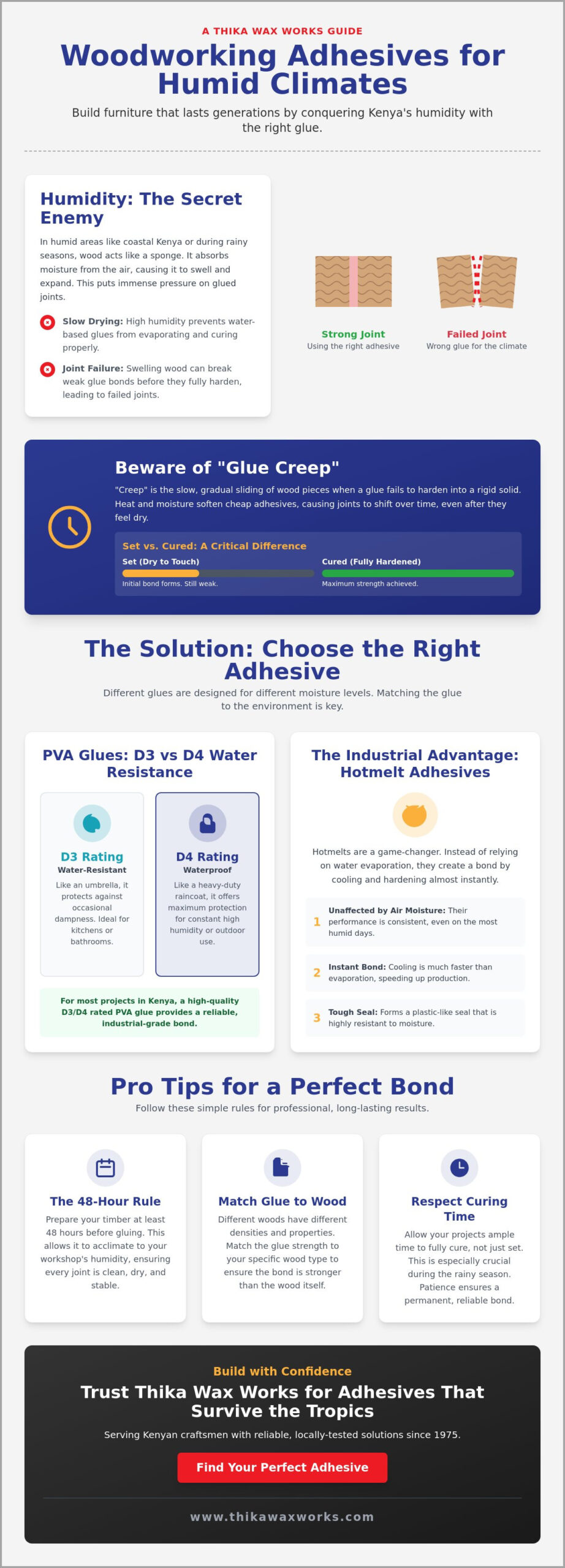
Think of wood as a hard sponge that breathes. It takes in wet air and lets out dry air depending on the weather. In many parts of Kenya, especially during the rainy seasons or in coastal towns like Mombasa, the air is often very damp. This moisture makes the wood swell and get larger. When wood expands, it puts massive pressure on your glue lines. If you aren’t using the right woodworking adhesives for humid climates, that pressure will eventually pull your furniture joints apart.
Since the 1950s, Thika Wax Works has supported Kenyan craftsmen by providing reliable solutions for local conditions. We know that building a beautiful cabinet or a sturdy dining table takes hours of hard work. It is heartbreaking to see that effort ruined because the glue couldn’t handle the local climate. Understanding why joints fail is the first step to building furniture that stays strong for decades. To better understand how moisture affects your work, watch this helpful video:
The Problem with Wet Air and Wood Joints
Humidity is the amount of water vapor hanging in the air. When the humidity is high, water-based glues cannot evaporate their moisture into the room. This slows down the drying time significantly. Sometimes, the wood moves or shifts because of the moisture before the bond even has a chance to set. There are various types of wood glue available, but standard options often struggle in these conditions. If the bond breaks early, the joint will never reach its full strength.
The “Creep” Factor: Why Cheap Glues Fail
Glue creep is a slow sliding of wood pieces over time. It happens when an adhesive stays slightly soft instead of becoming a rigid solid. Heat and moisture work together to soften basic glues, allowing the wood fibers to move apart. You might find that a joint feels dry to the touch, which means it has “set,” but it has not yet “cured.” In the rainy season, a glue might take days to fully cure. To prevent your projects from shifting, it is essential to use high-quality liquid cold glues that are formulated to resist the tropical heat and dampness of the Kenyan environment. Choosing a trusted product ensures your furniture remains a point of pride in your home.
The Best Types of Adhesives for High-Moisture Environments
Finding the right woodworking adhesives for humid climates is a challenge we’ve helped Kenyan craftsmen solve since the 1950s. In places like Mombasa or even during the rainy seasons in Nairobi, the air is thick with water. This moisture can prevent standard glues from drying or cause them to fail over time. To build furniture that lasts for generations, you need to choose a glue that treats moisture as a partner rather than an enemy. Our long history in manufacturing has taught us that the right bond protects the wood and your reputation as a builder.
PVA Glues: D3 vs D4 Ratings
Polyvinyl Acetate, or PVA glue, is the white or yellow glue most of us use every day. However, not all PVA glues are built the same. They’re rated by how well they handle water. Think of a D3 rating like an umbrella; it’s perfect for damp areas like a kitchen or a bathroom where there’s some steam. A D4 rating is more like a heavy-duty raincoat. It’s designed for wet areas where the wood might face rain or constant high humidity. Using the wrong one can lead to joints opening up as the seasons change.
According to scientific research on moisture and bond strength, the amount of water inside the wood fibers can change how well a glue sticks. For most indoor projects in Kenya, our liquid cold glues provide that reliable, industrial-grade bond that stands up to local conditions. They’re easy to use and clean up with water, making them a favorite in workshops across the country.
The Magic of Hot Melt Adhesives in Humid Air
Hot Melt adhesives are a game-changer for industrial users and furniture makers. Unlike liquid glues that need water to evaporate so they can dry, hot melts cool down and harden almost instantly. This is a huge benefit when the air is already full of moisture. They create a tough, plastic-like seal over the wood. This seal is very effective for edge banding because it blocks moisture from entering the end-grain of the timber. This protection helps prevent the wood from swelling and ruining the finish.
If you’re running a busy workshop, these hot melt adhesives for product assembly help speed up your production. They don’t wait for the weather to clear up before they set. They provide a consistent, premium quality bond every single time, ensuring your products meet international standards while remaining a local champion.
- Polyurethane Adhesives: These are unique because they actually need moisture to cure. They pull water from the air and the wood to create a bond that’s incredibly strong.
- Epoxy Resins: These are the heavy hitters for extreme conditions. If your wood is going to be near a swimming pool or exposed to direct rain, epoxy is the best choice. It’s waterproof and won’t budge once it sets.
Choosing the right glue ensures your hard work remains a source of pride for years to come. If you’re unsure which product fits your specific project, feel free to contact our team for expert advice on the best solutions for your home or workshop.
A Technical Guide to Choosing the Right Glue for Your Shop
Picking the right glue is like choosing the foundation for a home. Since the 1950s, Thika Wax Works has helped builders understand that the environment matters just as much as the wood itself. In places like Mombasa or Kisumu, the air is often thick with moisture. This makes choosing woodworking adhesives for humid climates a vital step for any project. You need a glue that works with you, not against you. A bond that fails because of the weather is a waste of your hard work and your materials.
Evaluating Open Time and Set Time
In a humid workshop, glue stays wet for a longer time than it does in dry areas. While this might seem helpful, it’s often a trap for the unwary woodworker. “Open Time” is the window of time you have to move your wood pieces into the perfect spot before the glue starts to form a skin. It’s the time you have to align your joints before the bond begins to set. If the humidity is high, say around 85%, the glue won’t dry as fast. You shouldn’t rush to remove your clamps just because the clock says so. Giving the project an extra 12 hours in the clamps can prevent the joint from creeping or sliding apart later.
Matching Glue to Wood Density
Different woods have different needs. Hardwoods like Mvule have very tight fibers that are hard to penetrate. You need a glue that can dive deep into those small spaces to create a mechanical bond. Oily woods like Teak or certain types of Mahogany are even trickier. The natural oils in these woods can act like a shield, pushing the glue away before it can stick. You must wipe these surfaces clean with a solvent before applying any glue. As a leading industrial adhesive manufacturer, Thika Wax Works ensures that local standards meet the needs of these specific Kenyan wood species. This heritage of quality means your furniture stays together even in the most demanding weather.
When you’re selecting your glue, keep these finishing touches in mind:
- Check for sandability: If a glue stays soft or rubbery, it will gum up your sandpaper. This can leave ugly marks that ruin your final polish.
- Look for mold resistance: In dark, damp corners of a home, fungus can grow on the glue line. Choose adhesives that are treated to resist mold growth.
- Match the strength: Ensure the glue is stronger than the wood itself. A good joint should never break at the glue line.
Thika Wax Works has been a trusted partner in Kenyan workshops for over 60 years. We understand that your reputation depends on the strength of your bonds. By choosing the right adhesive, you’re protecting your craft and your customers. Our products are designed to handle the heat and moisture of our local climate, ensuring every project you finish is built to last for generations.
Professional Tips for Gluing Wood When the Air is Damp
Humidity acts like an uninvited guest in your workshop. It slows down your work and can ruin a perfectly good project if you aren’t careful. Since the 1950s, Thika Wax Works has helped Kenyan craftsmen build things that last for generations. When you are using woodworking adhesives for humid climates, you need to change your routine slightly to ensure those joints stay tight and reliable. It is about working with nature rather than fighting against it.
First, give your wood enough time to breathe. If you just bought timber from a yard in Nairobi or Mombasa, it’s likely holding onto a lot of moisture from the air. Let the wood sit in a dry part of your shop for at least 48 hours before you even touch the glue. This simple wait allows the wood to settle so it won’t warp or pull apart after you finish the piece. Think of it like letting a hot meal cool before you put it in the fridge; it needs that time to stabilize.
Surface Preparation in Humid Weather
Think of dust and moisture as a bad recipe for a bond. When they mix on your wood surfaces, they create a thin layer of “mud.” This mud acts like a slippery barrier that stops the glue from actually touching the wood fibers. You must wipe every joint surface with a clean, dry cloth right before you apply your adhesive. This removes the invisible film of water that settles on the wood when the air is heavy.
To get the best results, use quality paint brushes to spread your glue. A brush ensures the layer is even and reaches into every tiny pore of the wood. If you see water beads on the timber or if it feels cold to the touch, it’s probably too wet to work. A simple test is to press a piece of paper against the wood; if the paper feels damp after ten seconds, wait another day before gluing.
Storage Secrets for Your Adhesives
Your glue bottle is like a loaf of fresh bread; if you leave it open, the environment will ruin it. In humid shops, air carries a lot of water vapor. If you don’t seal your bottles tight, a thick “skin” forms on top of the glue inside the container. This skin is basically wasted product that can cause lumps in your joints and weaken the final bond. We take pride in our manufacturing standards, and we want your glue to stay as fresh as the day it left our factory.
One clever trick used by professional carpenters is storing glue bottles upside down. This move forces the air gap to the bottom of the bottle. When you go to use it, the glue at the nozzle is fresh, liquid, and ready to flow. It also prevents the cap from getting stuck with dried residue.
- Apply glue to both sides: Putting a thin coat on both surfaces creates a stronger “bite” as the glue dries together.
- Clean joint surfaces: Use a dry cloth to remove surface moisture just seconds before assembly.
- Increase clamping time: During the rainy months, increase your clamping time by 50%. If a project usually stays in clamps for two hours, give it three hours to be safe.
Building with pride means using the right tools for the job. You can find our range of high-strength liquid cold glues to keep your projects steady through every season.
Trust Thika Wax Works for Adhesives That Survive the Tropics
Choosing the right bond for your furniture is like picking the right clothes for a safari. You wouldn’t wear a heavy winter coat in the middle of Tsavo. In the same way, using a glue designed for cold, dry countries often leads to disaster in our local heat. Since the 1950s, Thika Wax Works has been the steady hand behind Kenya’s woodworking industry. We understand that the damp air in Mombasa and the shifting temperatures in Nairobi require something special. Our woodworking adhesives for humid climates act like a protective shield, keeping your joints tight even when the air feels heavy with moisture.
We don’t just guess what works. Our team tests every formula against the specific challenges of the East African environment. This means our products don’t get brittle or lose their grip when the humidity spikes. Whether you’re a craftsman making a single coffee table in a small workshop or a factory manager overseeing thousands of chairs, we provide the industrial strength you need. We’ve spent over 60 years perfecting these solutions so you can focus on your craft without worrying about a customer’s table falling apart a month later.
A Heritage of Local Manufacturing Excellence
There’s a special kind of pride that comes from using tools made in your own backyard. When you buy from us, you’re getting a product designed for our specific air and soil. We’re deeply rooted in the regional economy. Our factory follows high-quality industrial standards that match anything you’d find overseas, but we keep our heart right here in Kenya. You can read more about our 48-year journey on our about us page. We believe that supporting local craftsmen helps our whole community grow stronger together. It’s about more than just glue; it’s about building things that last for generations.
Explore Our Range of Adhesives and Protective Coatings
Every project has different needs, and we’ve built a range to cover them all. For general carpentry and everyday repairs, our liquid cold glues are the perfect partner. They’re easy to use and soak into the wood fibers to create a bond that’s often stronger than the wood itself. If you’re running a high-speed furniture production line, our hot melt adhesives offer the quick set times and durability required for modern manufacturing. We make sure every drop of our woodworking adhesives for humid climates delivers a superior finish that stays beautiful for years. Don’t let the weather ruin your hard work. Contact us today for the best woodworking adhesives and give your wood the protection it deserves.
Build Furniture That Stands Against the Kenyan Heat
Think of humidity like an uninvited guest at a dinner party; it tries to get between your wood joints and pull them apart. To keep your work steady, you must choose the right tools for the job. We have learned that using woodworking adhesives for humid climates is the only way to ensure your tables and chairs don’t wobble when the air gets heavy with moisture. Since the 1950s, Thika Wax Works has manufactured trusted solutions right here in Kenya. We formulate every batch specifically for East African climate conditions so your bonds stay tight from Mombasa to Nairobi.
Leading regional furniture manufacturers rely on our products because they know a local shop understands local problems. Whether you’re building a small stool for your home or a large set of cabinets for a client, your hard work deserves a glue that won’t give up. You can trust our heritage of excellence to protect your projects for years to come.
Browse our full range of high-performance adhesives and find the perfect match for your workshop today. Your craftsmanship is a legacy, and we’re here to help you make it stick.
Frequently Asked Questions
Can I use regular white glue in a very humid workshop?
You shouldn’t rely on standard white glue when your workshop feels like a steam room. Standard white glue dries by letting its water soak into the wood and the air. When the air is already full of moisture, the glue stays wet for a long time. It’s like trying to dry a towel in a rainstorm. For these conditions, you need specialized woodworking adhesives for humid climates that set even when it’s damp.
How long should I leave clamps on when the humidity is over 80%?
You should leave your clamps on for at least 120 minutes when humidity levels cross the 80% mark. In a normal dry room, 60 minutes might be enough, but damp air slows everything down. Think of it like cooking porridge on a low flame; it just takes longer to get thick. Keeping the pressure on for two full hours ensures the bond stays tight while the glue fights the moisture to set properly.
What is the difference between water-resistant and waterproof wood glue?
The main difference is how much water the bond can handle before it fails. Water-resistant glue is like a good raincoat that keeps you dry during a light drizzle in Nairobi. It’s perfect for indoor furniture that might get a quick spill. Waterproof glue is more like a sturdy boat hull. It can stay under water or in heavy rain without falling apart. We recommend our D4 rated adhesives for any project that lives outdoors.
Why does my glue joint look “chalky” after it dries in damp weather?
Your glue looks chalky because the temperature or moisture prevented the glue particles from melting together into a clear film. This usually happens when the workshop is below 10 degrees Celsius or very damp. Instead of a strong, clear bond, the glue turns into a weak, white powder. It’s like trying to make a snowball with dry sand; the pieces just won’t stick. If this happens, you must sand it off and start over.
Do hot melt adhesives work better than liquid glues in humid climates?
Hot Melt adhesives often perform better for edge banding in humid areas because they don’t need the air to dry. Liquid glues are like wet paint that needs to evaporate, which is hard when the air is thick. Hot Melt glue is like melted candle wax that hardens as soon as it cools. Since the 1950s, we’ve seen workshops in Mombasa use these to speed up production when the air is heavy and liquid glues won’t set.
How can I tell if my wood is too wet for the adhesive to bond?
You can tell your wood is too wet if a moisture meter shows a reading above 15%. If you don’t have a meter, press a piece of clear plastic against the wood for 24 hours. If water droplets appear under the plastic, the wood is too damp to glue. Trying to bond wet wood is like trying to tape a wet cardboard box. The tape just slides off because the surface isn’t ready to grip.
Does Thika Wax Works offer bulk adhesives for large furniture factories?
Yes, Thika Wax Works provides bulk 20-liter and 200-liter containers for large furniture factories across Kenya. We’ve supported the local manufacturing industry since the 1950s with premium quality products that meet international standards. Our team understands the needs of a busy factory floor. You can find our full range of industrial woodworking adhesives for humid climates on our wood adhesives product page. This helps you keep your production line moving without any glue failures.