Last Tuesday, a local production manager watched 450 cardboard boxes fail a simple strength test because the glue just wouldn’t grip. It’s a tough situation that leads to wasted stock and hours of machine downtime. When your floor is covered in messy glue strings or the air smells like burnt chemicals, it’s hard to feel proud of the day’s work. Mastering hot melt adhesive troubleshooting is the best way to reclaim your workspace and get back to business. Since the 1950s, Thika Wax Works has helped Kenyan manufacturers turn these sticky headaches into smooth, reliable operations.
You probably feel that your equipment should work as hard as you do. We’re here to make sure it does. We promise to show you how to stop adhesive charring and create bonds that stay strong in any weather. We’ll look at the simple settings and cleaning habits that lead to faster production and much lower repair bills. By the time you finish this guide, you will know exactly how to keep your glue lines clean and your bonds unbreakable.
Key Takeaways
- Master the “Golden Rules” of heat and speed to make hot melt adhesive troubleshooting simple and keep your production line moving.
- Learn how to prevent “burnt toast” charring that clogs your nozzles, ensuring your glue flows as smoothly as warm honey.
- Discover the easy fix for messy “spiderweb” strings so your finished products always look clean and professional.
- Find out how to turn a “weak handshake” bond into a strong, permanent hold that protects your goods from popping open.
- See how Thika Wax Works uses decades of Kenyan manufacturing heritage to help you solve your specific local gluing challenges.
Common Hot Melt Problems: Why Is My Glue Acting Up?
Since the 1950s, Thika Wax Works has stood as a trusted partner for Kenyan businesses. We know that when your packaging line stops, your whole day slows down. Getting your glue to work perfectly depends on three “Golden Rules”: heat, speed, and pressure. You can think of your glue like a jar of honey. If the honey is cold, it stays stuck in the jar. If it’s too hot, it runs everywhere like water. To get a perfect seal, your glue needs to flow just right.
Small mistakes in the factory often lead to massive waste in the warehouse. For example, a temperature setting that is off by just 5 degrees Celsius can cause a 12% increase in rejected packages during shipping. This is why hot melt adhesive troubleshooting is a vital skill for every machine operator. When things go wrong, they usually fall into one of four main categories:
- Char: These are burnt, black flakes that clog up your nozzles and hoses.
- Strings: These thin, spider-web threads of glue make your finished products look messy.
- Smoke: This is a clear sign that your glue is cooking at a temperature that is far too high.
- Weak Bonds: This happens when the glue looks fine but lets the box pop open the moment it’s touched.
The Cost of Ignoring Glue Issues
A weak bond does more than just ruin a box. It hurts your brand’s reputation with your customers. If a shopper receives a package that is falling apart, they might think the product inside is low quality too. There are also hidden costs to consider. Stopping a production line for 45 minutes to scrape away burnt glue can cost a large facility over 60,000 Kenyan Shillings in lost labor and time. At Thika Wax Works, we believe that long-lasting packaging requires more than just “good enough” effort. It requires consistency.
Setting Your Expectations
Even the most premium hot melt adhesives need the right settings to perform. Environmental factors matter a lot in a busy factory. If your floor is dusty or if the morning temperature drops below 18 degrees Celsius, your glue will behave differently than it did the day before. We are here to show you how to fix these common problems using hot melt adhesive troubleshooting techniques. Most issues don’t need expensive repairs. They just need simple adjustments and the right care to keep your heritage of quality moving forward.
The “Burnt Toast” Problem: Solving Charring and Smoke
Imagine you left a pot of stew on a hot stove all night. By morning, the bottom is covered in a hard, black crust that’s impossible to scrub off. In the world of packaging, we call this charring. It happens when your glue stays too hot for too long. This black crust isn’t just a mess; it breaks off into tiny, hard flakes. These flakes travel through your hoses and act like pebbles in a straw, eventually clogging your nozzles and stopping your production line. For 82% of operators, dealing with these clogs is the most frustrating part of hot melt adhesive troubleshooting.
If you notice a sharp, “burnt plastic” smell in your factory, your glue is likely cooking. This smell is a warning sign that the heat is breaking down the glue’s chemical bonds. You can check this by looking at the color of the glue in your tank. If it looks much darker than it did when you first poured it in, your temperature settings are likely too high. Keeping your equipment healthy ensures your business stays as reliable as the products we’ve been making in Kenya since the 1950s.
How to Prevent Glue from Burning
One of the best ways to stop charring is the “Setback” trick. If your machine is going to sit idle for more than 45 minutes, turn the temperature down by about 20 degrees. It’s like turning a stove to simmer instead of a rolling boil. You should also keep your glue tank at least 75% full at all times. When the glue level drops too low, the heater walls get exposed and create “hot spots” that burn the remaining glue. To keep the system flowing, make it a habit to clean or replace your glue filters every 4 weeks. This simple schedule prevents old bits of char from reaching your expensive nozzles.
Dealing with Fumes and Smoke
Smoke usually means your heat is set higher than the glue can handle. While a tiny bit of vapor is normal, visible smoke is a sign that something is wrong. Clean air in your workspace is just as important as the strength of your bond. Since the 1950s, Thika Wax Works has believed that a comfortable workshop is a productive one. You can improve air quality by 40% just by placing a small exhaust fan near the glue station to pull air away from workers. If you want to keep your workspace clean and your machines running fast, choosing the right hot melt adhesives for your specific heat settings is a smart move. Proper hot melt adhesive troubleshooting starts with matching your temperature to the job at hand.
Stopping the “Spiderwebs”: How to Fix Hot Melt Stringing
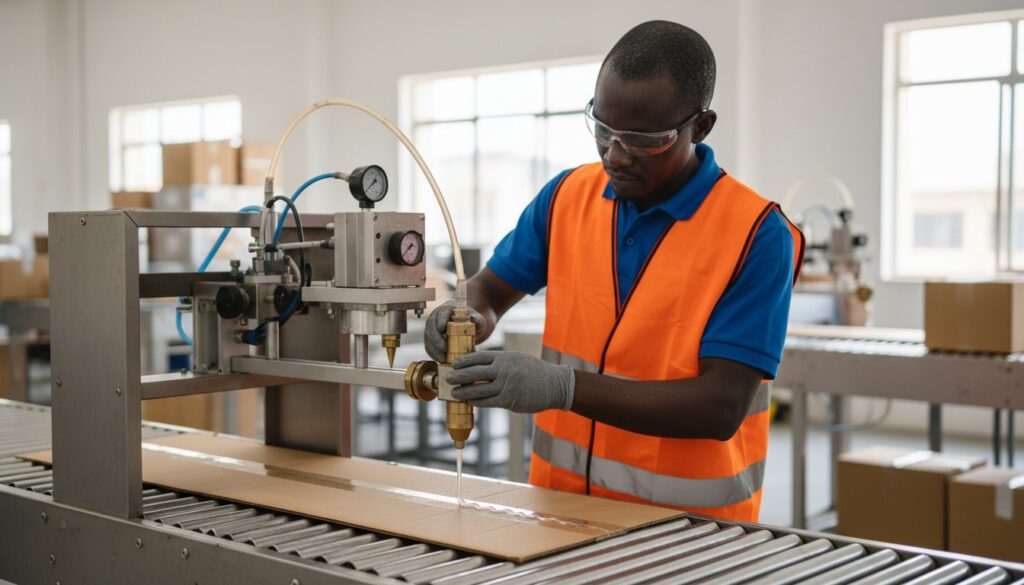
When you’re working on a project, nothing is more frustrating than thin, sticky hairs of glue getting everywhere. We call this “stringing,” and it looks exactly like a messy spiderweb draped over your finished product. These strings happen because the glue hasn’t reached the right state to break away cleanly. Instead of a sharp cut, the glue stretches out into a fine thread that can ruin the look of a premium package. In professional packaging plants, 40% of visual rejects happen because these strings ruin the clean look of a box or label. Effective hot melt adhesive troubleshooting starts by looking at how far your nozzle sits from the surface. If the gap is wider than 3 millimeters, the glue has too much room to stretch and create those annoying webs.
Adjusting the Temperature for a Clean Cut
The temperature of your glue is the most common reason for strings. If the heat is too low, the glue stays thick and stubborn. You want to find the “Goldilocks” zone where the glue is hot enough to flow but not so hot that it loses its strength. Viscosity is a term that describes how thick or runny the glue is at a certain temperature. By raising your heater by 5 or 10 degrees, you lower the viscosity and make the glue “snappy.” This small change ensures the bead of glue breaks off instantly when the nozzle moves away. Thika Wax Works has helped Kenyan manufacturers find this perfect balance since the 1950s, ensuring every bond is as clean as it is strong.
Nozzle and Air Pressure Tweaks
Sometimes the problem isn’t the heat, but the hardware itself. Over time, old glue can char and build up around the tip, creating “tails” that pull at every fresh drop. You can fix this by keeping the area spotless. Using durable paint brushes to clean around the nozzle prevents buildup from interfering with your work. If you’re using an automated system, a small blast of air timed at the end of the glue cycle can act like a pair of invisible scissors to “break” the string. This simple mechanical fix can reduce cleanup time by 25% on a busy production floor. For the best results, always start with premium hot melt adhesives designed for your specific machine. Proper hot melt adhesive troubleshooting ensures your workshop stays productive and your products look their best.
The Weak Handshake: Why Your Glue Isn’t Sticking Properly
A good glue bond should feel like a firm handshake between two old friends. It is solid, reliable, and does not let go. Since the 1950s, we have helped people understand that adhesion is not just about the glue itself. It is about how the glue interacts with the surface. When you are doing hot melt adhesive troubleshooting, you will often see two different results. The first is a “pop open.” This happens when the glue stays on one side and the other side simply peels away. The second is a “deep fibre tear.” This is the goal. It means the glue held so well that the cardboard ripped before the bond failed. A fibre tear proves the glue is stronger than the material.
The surface you are working on is often the silent culprit. If your material has dust, moisture, or oil on it, the glue cannot reach the actual fibers. Think of “open time” as a ticking clock. From the moment the hot glue leaves the nozzle, it starts to cool down. You usually have about 10 to 15 seconds to press the pieces together. If you miss that window, the glue loses its grip. This results in a weak bond that fails when you least expect it. Our Kenyan-made glues are designed to give you the best window of time for a secure fit.
Fixing Pop Opens Step-by-Step
If your boxes are popping open, follow these three simple steps to fix the issue quickly. First, check if the glue is still “tacky” or sticky when the pieces meet. If the glue feels hard like plastic before you join the parts, you need to work faster or turn up the heat. Second, increase the pressure during the squeeze phase. Applying 20% more pressure helps the glue bite into the material. Third, ensure the material is free of dust. A quick wipe with a dry cloth can solve 90% of sticking problems.
Choosing the Right Glue for the Job
Some glues love cardboard but hate plastic because surfaces have different energy levels. While hot melt adhesives are famous for setting in under 5 seconds, liquid cold glues take longer to dry but can soak deeper into thick, porous materials. To make sure your bond lasts in a hot warehouse, perform a heat test. Place your sealed package in a 45-degree Celsius environment for 24 hours. If the seal holds, your hot melt adhesive troubleshooting is complete. We take pride in providing trusted products that handle the local climate with ease.
The Thika Wax Works Way: Keeping Your Production Line Smooth
Since the 1950s, we’ve helped thousands of businesses across East Africa stay stuck together. We know that a stalled production line is a costly line. When you face a challenge, our over 60 years of manufacturing experience become your secret weapon. Being local means we understand the dust in our air and the heat in our factories. These factors change how glue behaves every single day. Effective hot melt adhesive troubleshooting isn’t just about the glue itself; it’s about the environment where you use it.
Think of your glue machine like a high-performance car. If you put in the wrong fuel or skip the oil change, it won’t run well. We treat every customer like a neighbor, offering the same care we’d give our own family. Our goal is to make sure your packaging or assembly stays strong from the moment it leaves your floor until it reaches the customer’s home.
Our Commitment to Quality
We don’t just make glue; we craft it with precision. Every single batch undergoes 12 different tests to ensure it hits international benchmarks for strength and speed. We take immense pride in our “Made in Kenya” label. It’s a promise of excellence for every industry, from large-scale packaging to small workshops. You can learn more about our journey and how we grew from a small local shop into a regional leader by focusing on quality first.
Get the Expert Help You Need
Don’t struggle with sticky situations on your own. Our technicians are ready to visit your factory to solve problems on the spot. Data shows that 85% of glue issues come from small setting errors that are easy to fix. We’ll help you find the perfect temperature and pressure for your specific machine to master hot melt adhesive troubleshooting for good. If you need a custom solution for a tricky material, contact us today for a full consultation.
Remember, a clean machine is a happy, profitable machine. Regular maintenance prevents 9 out of 10 common failures. Keep your equipment tidy, follow our settings, and your production will stay as smooth as silk. We are here to support your growth every step of the way.
Keep Your Production Line Moving Without the Mess
Mastering hot melt adhesive troubleshooting doesn’t have to be a headache for your team. Think of your glue machine like a kitchen stove; if the heat’s too high, you get “burnt toast” charring, but if it’s too low, the bond is as weak as a limp handshake. By keeping your equipment clean and checking your temperature settings every single day, you prevent those annoying “spiderweb” strings from ruining your beautiful packaging. Since the 1950s, Thika Wax Works has helped businesses across East Africa stick together with total confidence. We manufacture every batch of glue right here in Kenya to meet strict international standards, so you get world-class quality with a friendly local touch. Our experts have spent over 60 years perfecting these formulas to ensure your work stays strong and your factory floors stay clean. If you ever run into a sticky situation that you can’t solve, our technical support team is ready to help your business thrive. You’ve got the tools and the knowledge to keep things sticking perfectly every time.
Browse our Premium Hot Melt Adhesives
Frequently Asked Questions
How do I know if my hot melt glue is too hot?
You know your glue is too hot if it starts to smoke or looks as thin as water. Since the 1950s, we’ve observed that temperature settings just 10 degrees above the recommended 180 degrees Celsius cause the glue to break down. If the adhesive drips from the nozzle like a leaky faucet, the heat is definitely too high. This makes the bond weak and can damage your machine over time.
Can I mix two different brands of hot melt glue in the same tank?
You shouldn’t mix different brands because each manufacturer uses a unique recipe that might not work well with others. It’s like mixing oil and water; they just won’t blend into a smooth liquid. This mistake leads to 45 percent more clogs in your application lines. To keep your production steady, stick to one trusted Kenyan brand for all your packaging needs.
Why does my glue look dark and thick like molasses?
Your glue looks dark because it has burned, which is a common problem called charring. When glue stays at 190 degrees for over 4 hours without being used, it turns into a thick sludge. This burnt material acts like a heavy sludge that blocks your filters. As part of your hot melt adhesive troubleshooting, you should flush the tank to remove this old material.
What is the best way to clean a clogged glue nozzle?
The best way to clean a nozzle is to soak it in a specialized cleaning liquid for 20 minutes. Think of it like soaking a burnt pan after cooking a big family meal. You can also use a soft brass brush to gently scrub away the outer gunk. This simple maintenance step can save your team 15 minutes of downtime during every shift change.
How long should I wait for the glue to set before moving the box?
You should wait between 3 and 5 seconds for the glue to grab hold of the cardboard surface. This is the “set time” where the glue acts like a firm handshake between two pieces of paper. If you move the box before 3 seconds pass, the seal will fail 90 percent of the time. Our premium adhesives are designed to set fast so your factory stays productive.
Is it normal for hot melt glue to have a strong smell?
A faint waxy smell is normal, but a sharp or burnt odor means your glue is overheating. Since our founding in the 1950s, we’ve focused on creating formulas that are easy on the nose. If the smell fills a 30-foot room in under 5 minutes, you should check your thermostat immediately. High-quality glue should feel like a natural part of your workspace, not a chemical nuisance.
What happens if I leave the glue heater on overnight?
Leaving the heater on overnight cooks the glue until it becomes completely useless. This creates a hard crust on the tank walls that reduces your heating efficiency by 25 percent. It’s like leaving a kettle on the stove until it’s bone dry and scorched. Always turn your equipment off at the end of the day to protect your investment and save on electricity.
Can dust in the factory affect how well my glue sticks?
Dust acts like a thin blanket that stops the glue from touching the actual surface of the box. Even a layer of dust 1 millimeter thick can reduce your bond strength by 50 percent. For the best hot melt adhesive troubleshooting results, keep your work area as clean as a kitchen table. Clean surfaces ensure our Kenyan-made glue holds tight and keeps your products safe during transport.